How Do I Apply for a Credit Card at a Puerto Rico Bank?
Moving to Puerto Rico, you quickly realize that while it's part of the U.S., many things operate with a distinct local flavor – and your financial life is certainly one of them. One of the common frustrations newcomers face is navigating the seemingly simple task of getting a credit card from a local bank, especially when your meticulously built mainland credit history often feels like it's been left behind on the ferry. This guide is here to walk you through the nuances of applying for a credit card at a Puerto Rico bank, offering practical steps and insights to make the process as smooth as possible.
Understanding the Landscape of Credit Cards in Puerto Rico
Let's face it, when you first arrive, you might think your excellent credit score from the mainland will instantly open all financial doors here. Oh, my friend, if only it were that easy! Puerto Rico's banking system, while integrated with the U.S. federal framework, has its own operational quirks, especially when it comes to credit underwriting for new residents.
Why a Local Credit Card Matters
Having a credit card from a local Puerto Rico bank isn't just about convenience; it's a foundational step in establishing your financial footprint on the island. While your existing mainland credit cards might work just fine for purchases, relying solely on them can lead to a few headaches. First, many mainland cards can incur foreign transaction fees, even though Puerto Rico uses the U.S. dollar, because some issuers categorize transactions differently. Over time, those little fees add up. Second, building local credit is paramount. Whether you eventually want to buy a car, secure a mortgage, or even just get a utility account without a huge deposit, a local credit history is invaluable. It demonstrates to local lenders that you are a reliable borrower within the Puerto Rico ecosystem. It’s like getting your local driver’s license; your mainland one works for a while, but the local one just makes everything smoother.
Key Players in Puerto Rico's Banking Scene
When you're looking to dip your toes into local credit, you'll primarily be looking at the big names in Puerto Rico banking. Think of them as the pillars of the island's financial system. Banco Popular de Puerto Rico is by far the largest and most ubiquitous, with branches everywhere from San Juan to the smallest towns. They offer a wide range of services, including various credit card options. Then you have Oriental Bank, another significant player, known for its customer service and robust digital banking features. FirstBank is also a strong contender, often offering competitive products.
These banks are generally where you’ll start your journey. Each has its own application procedures and credit card products, from basic cards with lower limits to rewards cards. It’s a good idea to visit a few branches, talk to representatives, and get a feel for their offerings and what might best suit your initial needs. Remember, building a relationship with a bank here is often a more personal affair than what you might be used to on the mainland.
The Initial Hurdles for Newcomers
This is where the rubber meets the road, and where many expats hit their first wall of frustration. You’ve moved here, you're excited, and you just want to get your finances sorted, but the banking system often looks at new residents with a cautious eye. The biggest hurdle? Your lack of a local credit history. While your mainland credit score might be stellar, it doesn’t automatically translate into a credit report that Puerto Rico banks can easily access or trust for their specific underwriting models.
You might be asked for more documentation than you anticipated, or find that the initial credit limits offered are much lower than what you're accustomed to. This isn't a slight against you; it's just how the system here is structured. They need to see that you have a stable financial presence on the island. It requires patience and a strategic approach, but it is absolutely doable.
Navigating the Application Process: Step-by-Step
Alright, let's get down to the brass tacks. Applying for a credit card here isn't like signing up for an online account with a mainland fintech company. It’s a bit more old-school, often requiring a face-to-face interaction, which can be both charming and maddeningly slow.
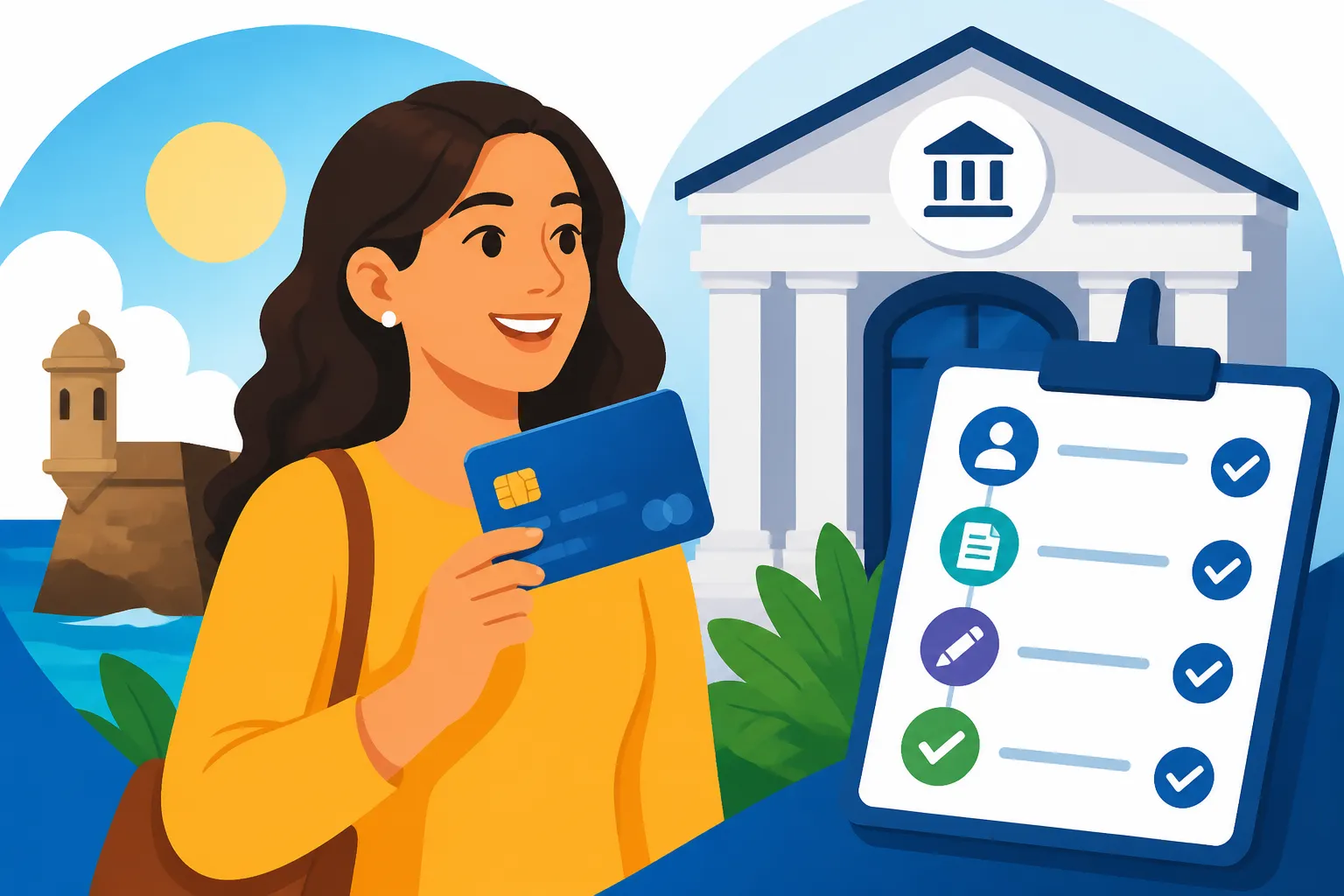
Gathering Your Essential Documents
This is arguably the most critical step. Show up prepared, and you'll save yourself multiple trips and headaches. You're going to need more than just your ID, trust me.
First and foremost, you'll need valid identification. While your mainland driver's license might be accepted initially, having your The Guide to Getting Your Puerto Rico Driver's License and ID (2027) or a Puerto Rico Real ID will make things much smoother. This instantly signals your intent to reside permanently.
Next, proof of residency. This means a utility bill (LUMA, AAA, internet) in your name at your Puerto Rico address. A signed lease agreement is also excellent proof. If you're still getting settled, figuring out How Do I Set Up LUMA Electricity After Moving to Puerto Rico? and other utilities should be a top priority, not just for power but also for this very purpose.
Then, income verification. This can be pay stubs from a local employer, a letter from your employer, or if you're self-employed, recent tax returns. If your income situation is complex, perhaps involving mainland and island sources, ensuring your Filing Your Puerto Rico Tax Return with Hacienda: The Complete Walkthrough (2027) is in order is crucial. For many expats with unique tax situations, working with a specialist like Taxes for Expats can ensure all your documentation is pristine and clearly presents your financial standing. They understand the nuances of PR taxation for newcomers, which can be a huge help when proving income to a local bank.
And of course, your Social Security Number (SSN). Even though you're in Puerto Rico, it's still a U.S. territory, and your SSN is central to your financial identity.
Essential Documents for Credit Card Application
| Document Category | Specific Items Required | Notes for Newcomers |
|---|---|---|
| Identification | Puerto Rico Driver's License or Real ID, Passport | Mainland ID may be accepted initially but local ID preferred. |
| Proof of Residency | LUMA bill, AAA water bill, Internet bill, Lease agreement | Must be in your name and show your Puerto Rico address. |
| Proof of Income | Recent pay stubs (3-6 months), Employer letter, Tax returns (local/federal) | Self-employed individuals need robust income documentation, potentially guided by services like Taxes for Expats. |
| Financial History | Bank statements (local PR bank), SSN | Strong local banking relationship is a big plus. |
| Other | CESCO ID (non-driver ID), Business registration (for self-employed) | More is always better when establishing new credit. |
Building a Relationship with a Local Bank
This is not a step to skip. Seriously. Before you even think about applying for a credit card, you should have an established relationship with a local bank. This means opening a checking and savings account, making regular deposits (especially if your salary is direct-deposited here), and actively using your account for bill payments. This shows the bank that you are a serious, long-term resident with a consistent financial flow.
The process of The Newcomer's Guide to Opening a Bank Account in Puerto Rico is usually straightforward, but don't just open an account and let it sit. Set up direct deposit, pay your bills through their online portal, and show consistent activity. This active engagement creates a track record, giving the bank internal data on your financial habits. They see you're not just passing through, but actively embedding yourself in the local economy. This is often the unspoken "pre-qualification" for a credit card.
You might also find that transferring your initial funds from mainland accounts to your new Puerto Rico bank can be made easier with services like Wise. They can help facilitate international transfers smoothly and cost-effectively, ensuring your money gets where it needs to be without a huge chunk taken out by fees, leaving more in your account to establish that solid financial footprint.
The Application Itself: What to Expect
Once you've gathered your documents and nurtured your banking relationship, it's time to apply. For credit cards, it's very common to apply in person at a bank branch. While some banks, especially larger ones like Banco Popular and Oriental Bank, might have online application options, the in-person approach is often beneficial for newcomers. It allows you to speak directly with a banking officer, explain your situation, and present all your documentation clearly.
The bank representative will typically ask about your employment, income, and any existing debts. Be honest and thorough. They're trying to assess your risk profile based on what they can see locally. Don't be surprised if they start you with a smaller credit limit than you might be used to; this is standard procedure for new credit relationships in Puerto Rico. The key is to get your foot in the door. You can always request a credit limit increase later once you've demonstrated responsible usage. Think of this first credit card as your credit-building stepping stone, not necessarily your forever card.
Strategies for Success: Boosting Your Approval Chances
Alright, so you've got your documents and you're building that bank relationship. What else can you do to stack the odds in your favor? There are a few tried and true strategies that many expats employ successfully.
Starting with a Secured Credit Card
This is perhaps the most common and effective strategy for newcomers to Puerto Rico who are struggling with a lack of local credit history. A secured credit card is backed by a cash deposit you make to the bank. For example, if you deposit $500, your credit limit will typically be $500. It works just like a regular credit card in terms of reporting your payments to credit bureaus, but the bank's risk is minimized by your deposit.
This is a fantastic way to build positive credit history from scratch. You demonstrate your ability to make on-time payments, and after a certain period (usually 12-18 months), many banks will allow you to "graduate" to an unsecured card and return your deposit. Major banks like Banco Popular and Oriental Bank offer secured credit card options, and they are usually quite willing to explain the terms to new residents. This is often the quickest path to getting a credit card in your pocket and starting to build that all-important local credit score.
Utilizing Existing Banking Relationships
While your mainland credit history might not transfer perfectly, if you bank with a large national institution on the mainland that also has a presence or partnership in Puerto Rico, it's worth exploring if they offer any assistance for relocating clients. This is less common for consumer credit cards, but for high-net-worth individuals or those with significant business ties, some banks might have programs. However, for most of us, the focus will need to be on establishing new, strong local relationships.
It's also important to ensure smooth financial transitions. Even if your mainland bank doesn't offer a local credit card, they can often facilitate transfers to your new Puerto Rico bank account. Services like Wise can also be crucial here, ensuring that when you do transfer funds for things like your secured card deposit, the process is efficient and cost-effective, leaving you with more funds to establish your new life.
Exploring Credit Union Options
Don't overlook the cooperativas (credit unions) in Puerto Rico. They are often community-focused and can sometimes be more flexible or understanding with new residents who are trying to establish local credit. While they might not have the same national reach as the larger banks, their local focus means they are often more attuned to the needs of the communities they serve.
If you become a member of a local credit union, you might find their entry requirements for a secured credit card, or even a small unsecured card, to be slightly less stringent than the larger commercial banks. It’s definitely worth inquiring at a few of these institutions, especially if you live in a smaller town where the cooperativa plays a significant role in the local economy.
Common Pitfalls and How to Avoid Them
Even with the best intentions, it's easy to stumble when dealing with a new financial system. Being aware of common issues can help you sidestep unnecessary frustration.
The "No Credit History" Trap
This is the big one we've already touched on, but it bears repeating. Expect that your mainland credit history won't automatically count for much with a local bank in Puerto Rico. This isn't personal; it's simply how the underwriting systems are set up. Trying to apply for a premium, unsecured credit card right off the bat, without any local financial footprint, is a recipe for rejection and can even result in a hard inquiry on your credit report that doesn't lead anywhere positive.
The solution, as discussed, is starting small and smart. Embrace the secured credit card as your entry point. Think of it as investing in your future financial flexibility on the island. Once you have a year or so of consistent, positive payment history on that card, along with a stable local banking relationship, your options will open up significantly. This diligent approach will help you build your credit for bigger financial goals, like applying for a How to Get a Mortgage to Buy a Home in Puerto Rico down the line.
Language Barriers and Misunderstandings
While many bank employees, especially in larger urban centers like San Juan, are bilingual, not everyone will be. And even if they speak English, financial jargon can be tricky in any language. Don't be shy about asking for clarification or even bringing a Spanish-speaking friend or translator with you, especially for important documents or complex discussions.
Misunderstanding terms and conditions, fees, or payment schedules can lead to costly mistakes down the line. Make sure you fully grasp everything before signing. This also applies when setting up services like online banking or understanding how to manage your credit card through platforms like ATH Móvil. You’re not just learning a new financial system; you might be doing it in a new language, so patience and diligence are key.
Not Tailoring Your Approach
One of the biggest mistakes newcomers make is assuming the process will be identical to what they experienced on the mainland. Puerto Rico, while a U.S. territory, operates with its own pace, its own cultural nuances, and its own administrative processes. You can't just apply online and expect an instant approval based on a credit score that isn't directly accessible to the local underwriting system.
Your approach needs to be tailored to the Puerto Rico context. This means:
- In-person visits: Often preferred, especially for initial setup.
- Relationship building: Crucial for trust and future access to products.
- Local documentation: Emphasize obtaining and using your local IDs and proof of residency.
- Patience: Things might take a little longer. It's part of the island experience.
By understanding these distinctions and adapting your strategy, you'll find the process far less frustrating and much more successful.
Managing Your New Puerto Rico Credit Card
Once you’ve successfully gotten your local credit card, the journey doesn't end there. Now it's about responsible management to solidify your credit standing and ensure long-term financial health on the island.
Understanding Local Billing and Payment Systems
Paying your bills in Puerto Rico is generally straightforward, but it's good to be familiar with the options. Most banks offer robust online banking platforms where you can easily view your statements and make payments. Direct debit from your checking account is a convenient option. You'll also find that ATH Móvil is incredibly popular here for person-to-person and business payments, though direct credit card payments are typically handled via the bank's own system or in-person.
Ensure you understand your billing cycle, payment due date, and any grace periods. Missing payments is the fastest way to derail your credit-building efforts. If you're accustomed to auto-pay, make sure it's set up correctly through your Puerto Rico bank. This also applies to other recurring payments, whether it's for your How Much Is the Average Rent in Dorado in 2026? or your internet bill; having everything linked locally helps consolidate your financial activity and makes management easier.
Building and Maintaining Good Credit
This is where the real work, and the real reward, comes in. Consistent, responsible use of your new Puerto Rico credit card will systematically build your local credit score.
- Pay on time, every time: This is the golden rule. Even if it's just the minimum payment, make sure it's on time. Ideally, pay your statement balance in full to avoid interest charges.
- Keep utilization low: Try to keep your credit usage below 30% of your total limit. For example, if you have a $500 limit, try not to carry a balance over $150.
- Don't open too many accounts too quickly: A flurry of new credit applications can look risky to lenders. Focus on responsibly managing the card you have.
- Monitor your statements: Regularly check for any unauthorized charges or errors.
By following these principles, you'll establish a strong, positive credit history that will serve you well for all your future financial endeavors in Puerto Rico. This includes everything from securing favorable interest rates on loans to even simplifying processes when applying for services that require a credit check.
Monitoring Your Credit Score in Puerto Rico
Just like on the mainland, credit bureaus operate in Puerto Rico. TransUnion, Equifax, and Experian all compile credit reports based on local data. As you start using your new credit card and other credit products, your activity will be reported to these bureaus.
It's a good practice to periodically check your credit report. You can typically request a free annual credit report from each of the major credit bureaus. Reviewing it helps you ensure accuracy, check for any fraudulent activity, and track your credit-building progress. Understanding your credit score and history is a crucial part of managing your finances in Puerto Rico, empowering you to make informed decisions and take advantage of better financial products as your score improves.
Disclaimer
The information provided in this article is for general informational purposes only and does not constitute financial, legal, or tax advice. While we strive to keep the information up-to-date and correct, we make no representations or warranties of any kind, express or implied, about the completeness, accuracy, reliability, suitability, or availability with respect to the website or the information, products, services, or related graphics contained on the website for any purpose. Any reliance you place on such information is therefore strictly at your own risk. It is always recommended to consult with a qualified local financial advisor, lawyer, or tax professional for advice tailored to your specific situation in Puerto Rico.