What Is the Best Way to Send Money Between the Mainland and Puerto Rico?
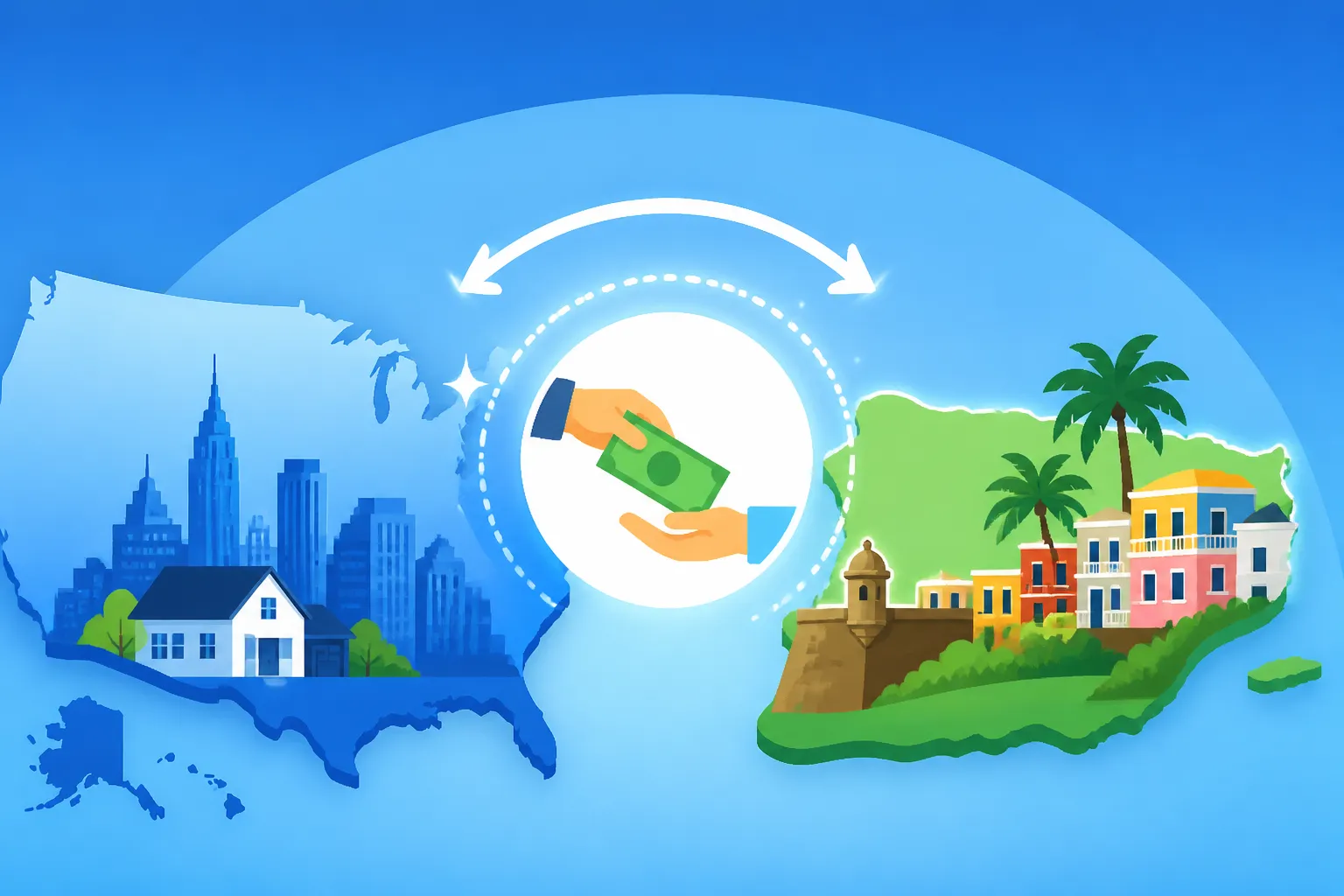
Moving your money between the mainland U.S. and Puerto Rico might seem like a simple affair, given we're both under the U.S. flag, but trust me, it’s not always as straightforward as moving funds from, say, California to Florida. The banking systems, local nuances, and specific service providers can throw a wrench into what you'd expect to be a seamless process. This guide is here to cut through that confusion, offering you a realistic look at the best ways to transfer money, whether you’re sending funds for daily expenses, a new home, or simply managing your finances across the water.
Navigating Traditional Bank Transfers: Familiar Ground with Local Twists
When you first think about moving money, your mind probably jumps straight to your bank. And you're not wrong; traditional banks offer several ways to transfer funds. However, the experience can vary quite a bit, especially when bridging the gap between a mainland institution and a Puerto Rico bank.
Wire Transfers: The Old Faithful for Larger Sums
Wire transfers are the workhorse for sending larger amounts of money securely. They're reliable, and the funds typically arrive within one to three business days, sometimes even the same day if you get your request in early. I remember when I first moved here and needed to transfer a significant sum for a down payment on a car; a wire transfer from my mainland bank directly to my new account at Banco Popular was the route I took. It felt daunting at the time, given the amount, but it went smoothly.
The catch, of course, is the fees. Banks usually charge a flat fee for outgoing wire transfers, which can range anywhere from $25 to $50, sometimes even more for international wires (though technically Puerto Rico isn't "international," some mainland banks still treat it with similar fees). Your receiving bank in Puerto Rico, whether it’s Banco Popular, Oriental Bank, or another local institution, might also levy a small fee for incoming wires. It's a cost you need to factor in, especially for smaller, more frequent transfers where those fees can really eat into your money. For an overview of local banking, you might want to check out The Newcomer's Guide to Opening a Bank Account in Puerto Rico.
ACH Transfers: A More Economical, Slower Option
Automated Clearing House (ACH) transfers are generally much cheaper, often free, especially between accounts at the same bank or through many online banking platforms. The downside? They are considerably slower, typically taking three to five business days. For regular bill payments or routine transfers for living expenses, ACH can be a fantastic, cost-effective choice.
However, sometimes the mainland and Puerto Rico banks have different processing times or cut-off times, leading to delays you wouldn't necessarily expect. Some renters have tried to time an ACH transfer for rent, only to find the funds didn't clear until after the due date, leading to late fees. It's crucial to understand your bank's specific timelines and factor in an extra day or two for good measure when transferring to a Puerto Rico account. While you can often set up automatic transfers for things like rent, ensure you account for the processing window.
Setting Up Direct Deposit and Online Bill Pay
Once you've established your banking in Puerto Rico, you'll find that many employers offer direct deposit, and most local utility companies, like LUMA for electricity or AAA for water, accept online payments. Setting this up simplifies your financial life immensely, as it minimizes the need for manual transfers. Most local banks, like Banco Popular and Oriental Bank, have robust online banking platforms that allow you to manage these automatic payments. If you’re looking to get all your ducks in a row for everyday finances, take a look at How to Transfer Money and Set Up Direct Deposit in Puerto Rico.
The Rise of Online Money Transfer Services: Speed, Transparency, and Lower Costs
For many expats, myself included, online money transfer services have become the go-to for moving funds. They often offer more competitive exchange rates (though less relevant for USD-to-USD transfers, their low fees are still a major draw) and greater transparency regarding fees and transfer times compared to traditional banks.
Wise (formerly TransferWise): A Top Contender for Efficiency
Wise is a service that constantly comes up in expat conversations, and for good reason. While it’s renowned for international currency exchanges, its platform is incredibly efficient for USD-to-USD transfers as well, offering transparency and usually lower fees than traditional wire transfers. You see the exact fee upfront, and the money moves relatively quickly – often within a day or two, sometimes even faster depending on the method (like ACH vs. wire).
For anyone who’s had to move money from, say, a European account to Puerto Rico, Wise has been a lifesaver with its multi-currency accounts and competitive rates. Even for just moving dollars between mainland and island accounts, its fee structure and speed make it a compelling alternative to traditional bank wires. It helps cut down on those annoying per-transaction costs that can add up over time. If you're a self-employed individual or running a business, managing these costs can significantly impact your bottom line, and services like Wise keep things transparent.
Xoom and Other Digital Platforms: Convenience at Your Fingertips
Beyond Wise, platforms like Xoom (a PayPal service), Remitly, and even PayPal itself offer ways to send money. Xoom, in particular, often allows you to send money directly to bank accounts in Puerto Rico, or even for cash pickup at various locations, which can be incredibly useful if your recipient doesn't have a bank account or needs immediate access to funds.
These platforms boast user-friendly interfaces and can often complete transfers within minutes or hours, rather than days. However, always double-check their fees and any daily or transaction limits, as these can vary significantly depending on the amount you're sending and the payout method. For larger sums, these platforms might not always be the most economical or have the highest limits, so it's essential to compare.
Digital Wallets and Local Payment Apps: Instant Gratification for Smaller Transactions
When it comes to quick, everyday transactions, digital wallets and local payment apps are kings. They’ve completely changed how many of us handle small payments and send money to friends and family.
ATH Móvil: Puerto Rico’s Local Champion
If you're living in Puerto Rico, ATH Móvil is probably already a staple in your digital wallet. It's Puerto Rico's equivalent of Zelle or Venmo, allowing instant transfers between individuals and to participating businesses that use the service, regardless of their bank, as long as both parties have the app and a local bank account. It’s absolutely ubiquitous here. Need to split a dinner bill, pay for a quick errand, or send some cash to a friend for gas? ATH Móvil is the answer. It's a lifesaver for daily life, and you'll find most small businesses, kiosks, and even street vendors accept it. For more on local payment methods, see How to Use ATH Movil and Local Payment Apps in Puerto Rico.
The main limitation is that it typically requires a local Puerto Rican bank account for the recipient. So, while fantastic once you're on the island, it's not a solution for sending money from a mainland U.S. bank account to a Puerto Rico account directly, unless your mainland bank offers integration (which is rare). It’s more for intra-island transfers.
Zelle, Venmo, and PayPal: Mainland Favorites with Island Limitations
Mainland dwellers are probably very familiar with Zelle, Venmo, and PayPal. Zelle, for instance, allows for quick bank-to-bank transfers. However, its direct integration with Puerto Rican banks can be limited. While some U.S. national banks with branches in Puerto Rico might support Zelle for transfers to their Puerto Rico accounts, it’s not a universal guarantee across all local banks. Always verify if your specific bank in Puerto Rico supports Zelle transfers.
Venmo and PayPal are more widely available, but they operate differently. Venmo is primarily for peer-to-peer payments within the U.S. and often involves holding funds in a Venmo balance before transferring to a bank, which can add a step. PayPal is more flexible, allowing payments between accounts globally, but fees can apply, especially for business transactions or certain types of transfers. These can be useful for sending money to someone in Puerto Rico if they have a PayPal account, but again, always check the associated fees and transfer times.
Considerations for Larger or Tax-Sensitive Transfers
When you’re moving substantial amounts – perhaps for a property purchase, a business investment, or a significant family transfer – the stakes are higher, and the considerations broaden. It’s not just about fees and speed, but also security, compliance, and potential tax implications.
For these larger movements, traditional bank wire transfers (as discussed earlier) often provide the highest level of security and traceability, which can be crucial for legal and financial documentation. However, even with banks, you’ll want to be exceptionally diligent about confirming all recipient details. One wrong digit in an account number or swift code, and your funds could end up in limbo, or worse. Always double-check and even triple-check.
When dealing with large sums, especially if they are related to business operations or significant investments, understanding the tax landscape becomes paramount. While this article focuses on how to send money, it’s important to remember that certain transfers, like those related to income, gifts, or investments, can have tax implications both on the mainland and in Puerto Rico. For example, if you're benefiting from Act 60 incentives, any significant movement of funds tied to those incentives needs to be handled with care and proper documentation. Consulting with tax professionals who specialize in U.S. and Puerto Rico tax laws is always a wise move for complex financial situations. This is where services like Taxes for Expats can be invaluable; they can help ensure you’re compliant and understand the nuances of your financial transactions within the framework of your specific tax situation, rather than just focusing on the transfer mechanism itself. For more detailed information, you can always refer to resources like Filing Your Puerto Rico Tax Return with Hacienda: The Complete Walkthrough (2027) or Understanding Act 60 Tax Incentives in Puerto Rico: The Full Guide (2026).
Here's a quick comparison of popular money transfer methods:
| Method | Average Fee (USD) | Typical Speed | Ideal Use Case | Pros | Cons |
|---|---|---|---|---|---|
| Bank Wire Transfer | $25 – $50 (outgoing) | 1-3 Business Days | Large, secure transfers (e.g., property down payment) | Highly secure, traceable, good for large sums | Higher fees, can be slower than digital options, potential receiving bank fees |
| ACH Transfer (Bank) | $0 – $3 | 3-5 Business Days | Regular, recurring payments (e.g., rent, bill payments) | Very low cost, reliable for routine transfers | Slow, not suitable for urgent needs, timing crucial |
| Wise (formerly TransferWise) | Low, transparent (varies by amount) | Hours – 2 Business Days | Frequent transfers, medium to large sums, multi-currency | Low fees, transparent, often faster than bank wires | Requires online setup, less familiar to some |
| Xoom (PayPal Service) | Varies by amount and payout | Minutes – 1 Business Day | Quick transfers, cash pickup options, emergencies | Fast, convenient, good for unbanked recipients (cash pickup) | Fees can add up for larger sums, limits can apply |
| ATH Móvil | Typically Free | Instant | Peer-to-peer, local small business payments in PR | Instant, ubiquitous in PR, easy for local transactions | Requires PR bank account, not for mainland-to-island direct transfers |
| Zelle/Venmo/PayPal | Often Free (personal) / Varies (business) | Instant – 1 Business Day | Small peer-to-peer (Zelle), personal/small business (PayPal) | Fast, widely used on mainland, convenient for small amounts | Limited PR bank integration (Zelle), fees for business (PayPal), limits (Venmo) |
When you're comparing options, it really comes down to what you're trying to achieve. Are you sending a few hundred dollars to a friend for an emergency? ATH Móvil if they're on the island, or Xoom for speed. Are you moving your life savings for a home purchase? A bank wire with all its security features. Or are you making regular transfers to cover your monthly expenses? An ACH transfer or Wise could be your best bet.
The financial landscape in Puerto Rico is constantly evolving, with new digital solutions emerging and traditional banks adapting. The best strategy is to stay informed, compare your options for each transaction, and choose the method that best aligns with your needs for speed, cost, and security.
Disclaimer
The information provided in this guide is intended for general informational purposes only and does not constitute financial, legal, or tax advice. While we strive to provide accurate and up-to-date information, circumstances can change, and individual situations vary. It is highly recommended to consult with qualified financial advisors, legal professionals, or tax specialists for advice tailored to your specific circumstances, especially when dealing with significant financial transactions or tax planning.