Do I Pay Federal Income Tax If I Live in Puerto Rico?
It's one of the biggest head-scratchers for anyone contemplating a move to our beautiful island: "Do I still pay federal income tax if I live in Puerto Rico?" Believe me, you're not alone if this question has kept you up at night, staring at your ceiling fan. The relationship between Puerto Rico and the U.S. federal tax system is unique, often misunderstood, and can be a source of real anxiety for newcomers trying to navigate their finances. This guide is here to untangle that knot, offering a clear, empathetic breakdown of what you can expect when it comes to federal income taxes once you've made Puerto Rico your home.
The Unique Tax Status of Puerto Rico Residents
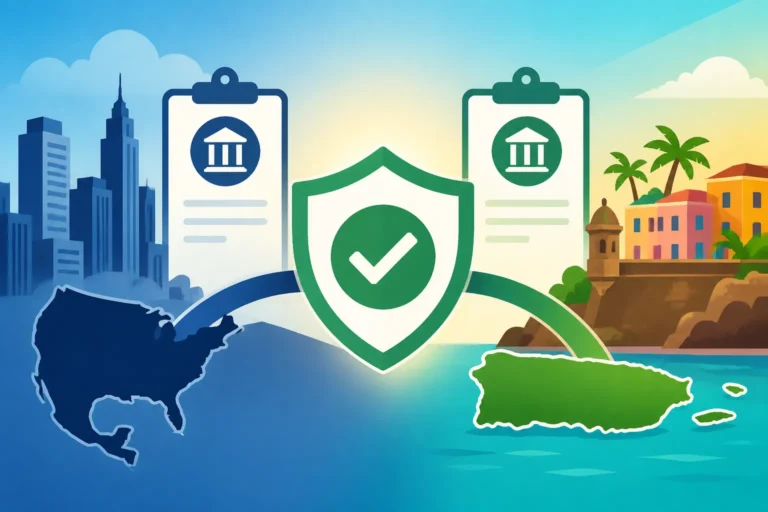
When you move to Puerto Rico from the mainland U.S., you're entering a distinct tax environment, even though you remain a U.S. citizen. It's not like moving from, say, New York to Florida, where federal taxes stay the same but state taxes change. Here, the rules are fundamentally different, and it all boils down to Puerto Rico's status as a U.S. territory. This unique political relationship means that while Puerto Rico is part of the United States, its internal taxation system operates independently from the federal income tax system that applies to the 50 states.
For decades, the U.S. Congress has granted residents of Puerto Rico an exemption from most federal income taxes on income sourced within the island. This isn't a new or special "Act 60" incentive, although those incentives certainly layer on top of this fundamental principle. This is a general rule that has been in place for a long time, designed to allow Puerto Rico to maintain its own treasury and tax its residents on their local earnings. It’s a huge draw for many, but also a source of endless confusion if you don't understand the nuances.
Why Puerto Rico is Different from a US State for Tax Purposes
Imagine trying to explain to your friends back on the mainland that you don't pay federal income tax on your earnings here. You'll likely get a lot of bewildered looks and questions about "what's the catch?" The "catch," if you want to call it that, is Puerto Rico’s territorial status. Unlike a U.S. state, Puerto Rico has its own self-governing tax authority, known as Hacienda. Hacienda collects income taxes, sales taxes (IVU), property taxes, and other levies directly from residents and businesses on the island. This local system is what funds the island’s public services, infrastructure, and government operations.
The U.S. Congress, recognizing this autonomy, established a framework where bona fide residents of Puerto Rico generally aren't subject to U.S. federal income tax on their Puerto Rico-source income. This is laid out in Section 933 of the U.S. Internal Revenue Code. It’s a critical distinction that many people moving here don’t fully grasp until they start diving into the paperwork. You're still a U.S. citizen, still subject to U.S. laws, but for income tax purposes, where your income originates becomes incredibly important. This is one of the foundational pieces to understanding How Puerto Rico Taxes Work: Federal vs Local (Hacienda) Explained (2027).
The Cornerstone: Establishing Bona Fide Residency
You can't just land at SJU, declare yourself a Puerto Rico resident, and suddenly stop paying federal taxes. The IRS has very specific requirements to establish what they call "bona fide residency." This isn't just about showing up; it's about making a real, demonstrable commitment to living here. If you don't meet these requirements, you could find yourself in a very uncomfortable situation, potentially owing back taxes, penalties, and interest to the IRS. That's why understanding this part is non-negotiable. It’s the gatekeeper to the federal tax benefits of living in Puerto Rico. For a deeper dive, check out Bona Fide Residency in Puerto Rico: The Definitive Tax Guide (2027).
The Three Tests for Bona Fide Residency
The IRS uses three specific tests to determine if you are a bona fide resident of Puerto Rico for tax purposes. You must satisfy all three of these tests for the entire tax year. It’s not enough to meet just one or two; it’s an all-or-nothing deal.
The Presence Test
This is probably the most straightforward of the three. To pass the presence test, you must be present in Puerto Rico for at least 183 days during the tax year. That's more than half the year, folks! Those days don't have to be consecutive, but you need to meticulously track them. This means keeping a detailed log of your travel dates, flight itineraries, and even hotel stays if you're bouncing around. If you're someone who still travels frequently for work or pleasure back to the mainland or internationally, you need to be very mindful of this count.
Imagine you moved to San Juan in July. You'd only have roughly 180 days left in the year. If you spent a couple of weeks visiting family for Thanksgiving and Christmas back home, you might easily fall short of the 183-day mark for that first year. Many newcomers make the mistake of not tracking this diligently, especially in their year of move. This is why having a clear plan for How to Plan Your Move to Puerto Rico Step by Step (2027) is so important, as it often includes this logistical tracking.
The Tax Home Test
Your "tax home" is essentially the location of your primary place of business, employment, or post of duty, regardless of where you maintain your family home. If you don't have a regular or principal place of business, your tax home is where you regularly live. To pass this test, your tax home must be in Puerto Rico for the entire tax year. This means your main economic activity, or the center of your professional life, needs to be based on the island.
For example, if you're working a remote job for a company based in New York, and that company is your only source of income, and you still have an office or regular work functions there, the IRS might argue your tax home is still in New York. However, if you truly work remotely from your apartment in Dorado, with no physical ties to a mainland office, then your tax home could very well be Puerto Rico. The key is that it needs to be here, not elsewhere. This becomes especially nuanced for freelancers or consultants; their clients might be all over, but where they perform their work matters.
The Closer Connection Test
This test is a bit more subjective, acting as a catch-all to ensure your move isn't just a tax dodge. To pass the closer connection test, you must demonstrate that you have a "closer connection" to Puerto Rico than to the United States or any foreign country. This means showing that your personal and professional ties are predominantly to Puerto Rico. The IRS looks at a variety of factors, including:
- Where you maintain your permanent home (rent or own).
- Where your family lives.
- Where your personal belongings are stored (furniture, cars, etc.).
- Where your social, cultural, and political ties are (e.g., voter registration, community involvement).
- Where you hold your driver's license.
- Where your bank accounts are located.
- Where you conduct your business activities.
Let’s say you spend 200 days in Puerto Rico, but your spouse and children still live in a house you own in Miami, your car is registered there, and all your bank accounts are mainland-based. The IRS would likely conclude you have a closer connection to the mainland, failing this test. This is why establishing domicile is so critical, and it’s explored further in How to Establish Domicile When You Move to Puerto Rico. You want to build a life here, not just visit.
What Income Is Subject to Federal Income Tax (and What Isn't)?
This is where the rubber meets the road. Assuming you've successfully established bona fide residency, the federal income tax implications vary significantly depending on where your income originates. This distinction between Puerto Rico-source income and non-Puerto Rico-source income is absolutely vital.
Puerto Rico-Source Income: Generally Exempt from Federal Tax
The general rule, as established by Section 933 of the IRS code, is that if you are a bona fide resident of Puerto Rico for the entire tax year, any income derived from sources within Puerto Rico is excluded from your gross income for U.S. federal income tax purposes. This means you generally won't pay federal income tax on money you earn from a job or business operating here on the island.
Think about it this way: if you're working as a software developer for a company based in San Juan, or you own a restaurant in Mayagüez, or you're a freelancer whose clients are all located in Puerto Rico, the income you derive from those activities would typically be considered Puerto Rico-source income. This income is then taxed by Hacienda (the local Puerto Rico Treasury Department) according to its own tax laws and rates, which are separate from federal tax rates. This is a massive benefit for many who choose to make Puerto Rico their home. It also means you'll be deeply familiar with Filing Your Puerto Rico Tax Return with Hacienda: The Complete Walkthrough (2027).
Non-Puerto Rico-Source Income: Still Subject to Federal Tax
Here’s the part that often trips people up. Just because you live in Puerto Rico doesn't mean all your income is suddenly free from federal taxes. Any income you receive from sources outside of Puerto Rico is still subject to U.S. federal income tax, just as it would be if you lived in any of the 50 states.
What does "non-Puerto Rico-source income" mean? It could include:
- Investment income from mainland sources: Dividends from U.S. stocks, interest from U.S. bank accounts, capital gains from selling U.S. property or mainland-based investments.
- Rental income from mainland properties: If you still own and rent out a house in Florida, that income is federally taxable.
- Pensions or retirement distributions from mainland plans: Your 401(k) or IRA distributions, social security benefits (though a portion may be exempt), and private pension payouts are generally subject to federal tax.
- Income from a mainland employer (if your tax home isn't clearly in PR): This is a tricky one. If you maintain a remote job for a company on the mainland, but your primary work location is definitely in Puerto Rico and your tax home is here, then that income generally becomes Puerto Rico-source. However, if there’s any ambiguity, or if you still have significant operational ties to the mainland, the IRS might view it differently. This is an area where professional tax advice from a firm specializing in expat taxes, like Taxes for Expats, is crucial.
- Federal government employment income: Employees of the U.S. federal government (including military personnel) stationed in Puerto Rico generally remain subject to federal income tax on their federal wages.
It's a common misconception that simply living here makes you immune to federal taxes altogether. It really boils down to the source of the income. If it flows from the mainland or another foreign country, Uncle Sam still wants his share.
Other Federal Taxes: Social Security and Medicare
Even if your Puerto Rico-source income is exempt from federal income tax, you are still subject to Social Security and Medicare taxes (FICA taxes). This applies to both employees and self-employed individuals.
- For Employees: Your employer will still withhold FICA taxes from your wages, and you’ll still see those contributions on your paycheck.
- For Self-Employed: You will still pay self-employment tax (which covers Social Security and Medicare) on your net earnings, regardless of where the income is sourced, if you're a U.S. citizen. This is a point of confusion for many new entrepreneurs.
So, while your federal income tax bill might look very different, you're still contributing to the federal social safety nets. This ensures you still accumulate credits for Social Security retirement benefits and Medicare eligibility, which are vital for your future, especially if you're thinking about Understanding Social Security, Medicare and Retirement in Puerto Rico.
Navigating Your Federal Tax Obligations as a PR Resident
So, you've established bona fide residency, you understand the difference between PR-source and non-PR-source income, and you know FICA taxes still apply. What does this mean for filing your federal taxes?
Federal Filing Requirements: Form 1040 and Form 8898
If you are a bona fide resident of Puerto Rico for the entire tax year, you generally do not file a Form 1040 (the standard U.S. individual income tax return) if all your income is Puerto Rico-source and therefore excluded from your gross income for federal purposes. This is a significant difference from mainland residents.
However, even if you don't have to file a Form 1040, you might still need to file Form 8898, "Statement for Individuals Who Become Bona Fide Residents of Puerto Rico." This form is required for U.S. citizens or residents who become bona fide residents of Puerto Rico (or cease to be) in a given tax year. It’s how you inform the IRS of your change in residency status and affirm that you meet the bona fide residency tests. It's not an income tax return, but a crucial informational filing that helps the IRS track your status. Missing this can raise red flags, so it's not something to overlook.
If you do have non-Puerto Rico-source income (e.g., U.S. investment income or a mainland pension), you will still need to file a Form 1040 to report that federally taxable income. On this Form 1040, you would then exclude any Puerto Rico-source income, typically by reporting it on a separate schedule or statement attached to your return, following IRS guidance. This can get complicated quickly, so working with a tax professional who understands both U.S. federal and Puerto Rico tax laws is highly recommended.
Getting Professional Tax Advice
This isn't a simple "fill out this form and you're done" situation. The rules around bona fide residency, income sourcing, and federal filing obligations are complex, and the IRS takes them seriously. Making a mistake could lead to significant financial penalties. This is why engaging with knowledgeable tax professionals is not just advisable, it's practically essential.
Firms like Taxes for Expats specialize in navigating these intricate cross-jurisdictional tax situations. They can help you:
- Determine if you truly meet the bona fide residency requirements.
- Properly source your income to Puerto Rico or the mainland.
- Prepare and file any necessary federal forms, like Form 8898, and your Form 1040 if you have non-PR source income.
- Ensure compliance with both U.S. federal and Puerto Rico Hacienda tax laws.
Trying to figure this out alone, especially in your first year, is a recipe for stress and potential errors. Investing in good tax advice can save you a world of headaches (and money!) down the line.
Managing Finances Across Jurisdictions
Living in Puerto Rico means you'll likely be dealing with both local financial institutions and potentially mainland ones. Opening a bank account at a Puerto Rico bank, such as Banco Popular or Oriental Bank, is usually straightforward for new residents, as outlined in The Newcomer's Guide to Opening a Bank Account in Puerto Rico. However, you might still have mainland accounts for certain investments or receiving income.
Services like Wise can be incredibly helpful for managing money across these different jurisdictions. If you're receiving non-Puerto Rico-source income into a mainland account and need to transfer it to your local Puerto Rico bank for daily expenses, Wise offers competitive exchange rates and lower fees than traditional banks. This seamless movement of funds can simplify your financial life, reducing the friction of living between two distinct financial systems.
It’s worth noting that while you’re exempt from federal income tax on your PR-source income, you might still have other federal reporting requirements, such as FBAR (Report of Foreign Bank and Financial Accounts) if you have significant balances in non-U.S. accounts. While Puerto Rico banks are still part of the U.S. banking system, it's always good to be aware of your broader international financial reporting obligations, especially if you have accounts in actual foreign countries.
Here's a quick comparison of federal tax obligations for PR residents:
| Income Source | Bona Fide PR Resident? | Federal Income Tax? | Hacienda (PR) Income Tax? | FICA (Social Security/Medicare) Tax? | Key Considerations |
|---|---|---|---|---|---|
| Puerto Rico-Source | Yes (all year) | NO | YES | YES | Must meet all 3 IRS bona fide residency tests. |
| Puerto Rico-Source | No (or not all year) | YES | YES | YES | File Form 1040 and Form 8898. |
| Non-Puerto Rico-Source | Yes (all year) | YES | NO (usually) | YES | Report on Form 1040; PR-source excluded. |
| Non-Puerto Rico-Source | No (or not all year) | YES | NO (usually) | YES | Standard federal filing, dual PR filing may apply. |
This table is a simplified overview. Your specific situation may involve more complexities, especially with certain types of passive income or business structures.
Staying Compliant and Avoiding Pitfalls
The allure of not paying federal income tax on your local earnings is powerful, but it's essential to approach this with your eyes wide open and a commitment to compliance. The IRS does audit individuals, and they are particularly vigilant about those claiming bona fide residency in Puerto Rico, especially given the popularity of Act 20/22 (now Act 60) tax incentives.
The Importance of Documentation
Maintain meticulous records of everything that supports your claim of bona fide residency. This includes:
- Travel records: Flight tickets, boarding passes, passport stamps.
- Utility bills: LUMA and AAA bills showing your consistent residence. Check out The Newcomer's Guide to Setting Up Utilities (LUMA/AAA) in Puerto Rico.
- Rental agreements or property deeds: Proof of your permanent home here.
- Bank statements: Showing activity in your Puerto Rico bank accounts.
- Driver's license: Your Puerto Rico driver's license or ID card is a key indicator of domicile. Find out more in The Guide to Getting Your Puerto Rico Driver's License and ID (2027).
- Voter registration: Evidence that you've registered to vote in Puerto Rico.
- Children's school enrollment: If you have kids, where they go to school is a strong indicator of your family's ties. Explore Schools and Education in Puerto Rico: A Complete Guide for Families.
- Employment contracts or business registration: Documentation of your work on the island.
The more evidence you have that you've genuinely established your life here, the stronger your case for bona fide residency. Don’t just rely on the 183-day count; show that your "closer connection" is truly to Puerto Rico.
Avoiding Common Misunderstandings
- Act 60 is separate: Remember, the general federal income tax exemption on Puerto Rico-source income for bona fide residents is separate from the Act 60 tax incentives. Act 60 offers additional, significant tax benefits on specific types of income (like capital gains for individual investors or export services for businesses), but it requires a separate application and decree. This article focuses on the general federal tax rule, not the Act 60 specifics. For more on the incentives, see Understanding Act 60 Tax Incentives in Puerto Rico: The Full Guide (2026).
- Federal tax on non-PR income: This is the biggest pitfall. People often mistakenly believe all income becomes federal tax-free. Always remember the distinction between Puerto Rico-source and non-Puerto Rico-source income.
- FICA taxes: Don't forget those Social Security and Medicare contributions! They are still mandatory for U.S. citizens and residents, regardless of where they live.
Living in Puerto Rico offers some incredible financial advantages, but it's not a free-for-all. By understanding the rules, diligently documenting your residency, and seeking expert guidance, you can confidently navigate the federal tax landscape and fully enjoy your life on the island.
Disclaimer
The information provided in this article is for general informational purposes only and does not constitute professional tax, financial, or legal advice. Tax laws are complex and subject to change. It is essential to consult with a qualified tax professional or legal advisor specializing in U.S. federal and Puerto Rico tax laws for advice tailored to your specific situation.