How to Get a Professional License to Work in Puerto Rico
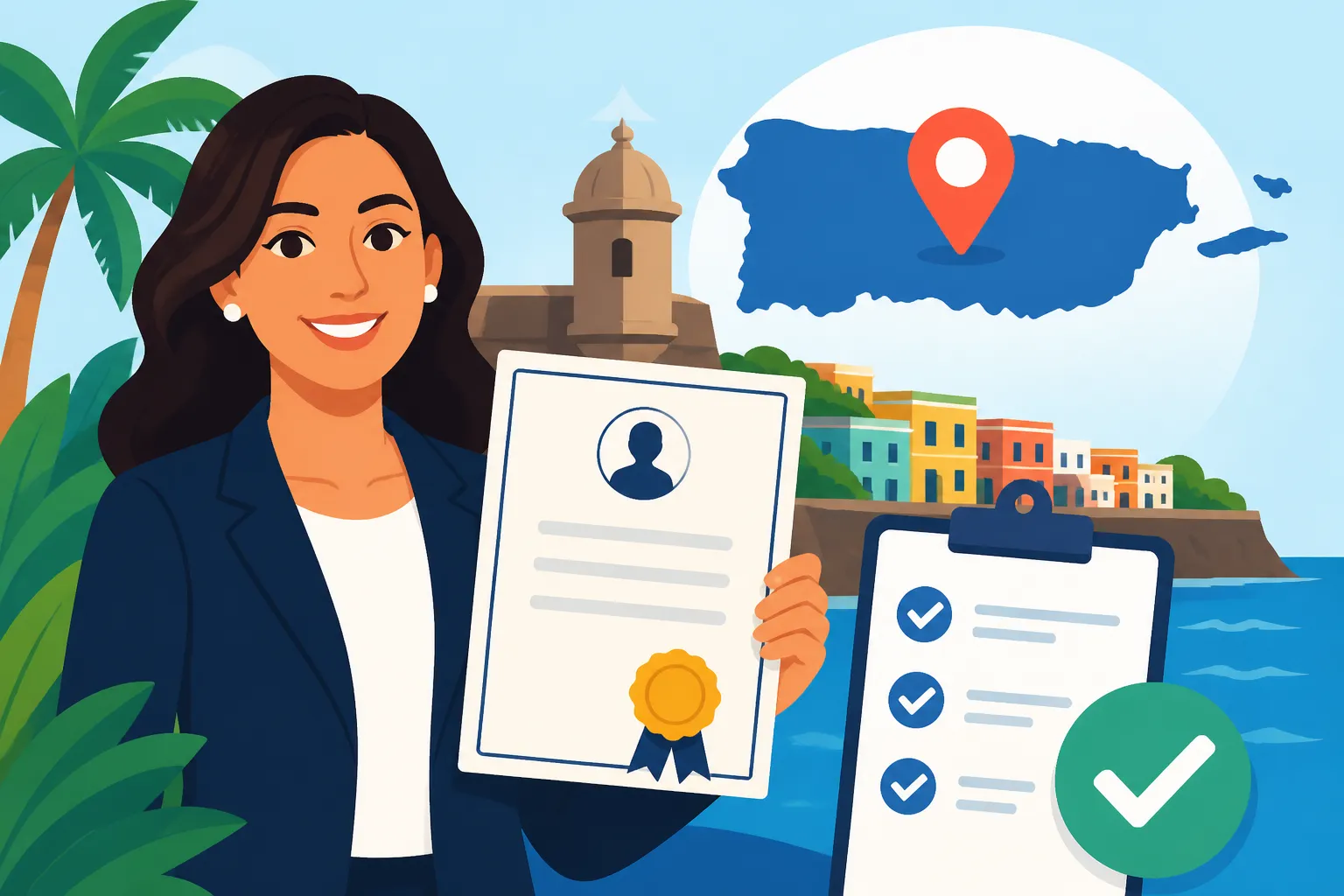
Moving to Puerto Rico, with its enchanting beaches and vibrant culture, is a dream for many, but for professionals, it often comes with a rather significant administrative hurdle: obtaining a local professional license. Trust me, I’ve been through enough of these bureaucratic dance routines here to know it can feel like trying to solve a Rubik's Cube blindfolded. This guide is going to walk you through the intricate process of getting your professional license on the island, shedding light on the specific requirements, common challenges, and practical tips to help you navigate the system without losing your paciencia (patience!).
The Labyrinth of Local Licensing Boards: A Primer
One of the first things you'll realize when you start looking into professional work here is that Puerto Rico operates under its own distinct set of rules and regulations, even within the broader U.S. framework. It's not like simply moving from, say, California to Florida. Each profession, from medicine to accounting, is governed by its own Junta Examinadora (Examining Board), which operates under the umbrella of the Departamento de Estado (Department of State) of Puerto Rico. This unique jurisdictional setup means that while some federal standards might apply, the day-to-day specifics of getting and maintaining your license are handled right here on the island, often with a heavy dose of local flavor and administrative quirks.
Why the System Feels Different: Jurisdictional Nuances
You might be thinking, "But it's a U.S. territory, shouldn't my mainland license just transfer over?" And that, my friend, is where the unique blend of U.S. federal laws and Puerto Rico's distinct legislative and judicial systems comes into play. The island has its own constitution, its own civil law tradition (unlike the common law of most U.S. states), and its own governmental agencies. This means that while your educational background from a U.S. accredited institution is generally recognized, the licensing process itself often requires proving competency within the Puerto Rican legal and cultural context.
For example, a lawyer moving here will quickly discover that the entire legal code, while influenced by U.S. common law, is fundamentally rooted in Spanish civil law principles. So, passing the bar here means understanding a completely different legal framework than you would in New York or Texas. Similarly, healthcare professionals need to be familiar with local public health regulations and patient care standards that may differ from those on the mainland. It’s this intricate web that makes the process feel, at times, less like a transfer and more like starting from scratch. It's a rite of passage, in a way, that truly immerses you in the local professional landscape.
Identifying Your Specific Junta Examinadora
The absolute first step, once you’ve decided to pursue your professional career here, is to pinpoint the exact Junta Examinadora that regulates your profession. This isn't always as straightforward as it sounds because some professions might have slightly different names or fall under different boards than you'd expect. For instance, while medical doctors have a clear Junta de Licenciamiento y Disciplina Médica, other allied health professionals might have their own specific boards.
Your best bet is to start with the Puerto Rico Department of State website. They have a directory of all the Examining Boards under their purview. Don't be shy about digging through the Spanish-language sections, or using translation tools if needed. This is where the real groundwork begins. Once you find your board, you'll need to locate their specific laws, regulations, and application forms. These documents are your bible for the entire process, outlining everything from educational requirements and experience thresholds to the necessary examinations and fees. It’s critical to get the most current versions, as regulations can, and do, change. Often, local professional associations can also be invaluable resources for identifying the correct board and understanding their latest requirements. It truly helps to consult these local bodies early in your journey.
Common Professions Requiring Local Licensure
Let's dive into some of the most common professions that require a local license, and give you a taste of what to expect for each. Remember, this isn't an exhaustive list, but it covers a significant portion of newcomers who seek to work here. The overarching theme across all these fields is the need to demonstrate proficiency and understanding of the unique Puerto Rican context.
Regulated Healthcare Fields: Doctors, Nurses, and Allied Health
If you're a healthcare professional, get ready for a rigorous process. Puerto Rico has a strong demand for medical staff, but the island also places a high value on ensuring that practitioners understand the local patient population, health regulations, and medical practices. For doctors, the Junta de Licenciamiento y Disciplina Médica is your primary contact. You’ll need to submit extensive documentation of your medical education, residencies, and any prior licenses. Often, this includes passing a reválida (revalidation or local board exam) which assesses your knowledge of Puerto Rico's medical laws and specific health challenges. For nurses, the Junta Examinadora de Enfermeras y Enfermeros de Puerto Rico has similar, stringent requirements. You’ll need to provide transcripts, proof of clinical hours, and often pass a local examination.
Beyond general practitioners and nurses, allied health professionals like physical therapists, occupational therapists, psychologists, and even nutritionists will find their own dedicated Juntas Examinadoras. The specific requirements will vary, but expect to present academic credentials, verification of clinical experience, and potentially a local exam. The good news is that your U.S. education is typically well-regarded. The challenge lies in demonstrating your readiness to practice within the Puerto Rican system, which includes aspects like understanding the public health system, the Vital Plan (Medicaid equivalent), and how to navigate the local medical referral networks. It's a complex system, but vital for ensuring quality care. If you're looking for general information on finding care, you might want to look into How to Find an English-Speaking Doctor in Puerto Rico.
Legal and Financial Sector: Attorneys, Accountants, and Real Estate
Practicing law in Puerto Rico is, as mentioned, a distinctly different ballgame. The Tribunal Supremo de Puerto Rico (Supreme Court of Puerto Rico) governs the admission of attorneys. Even if you're a seasoned attorney from the mainland, you'll need to pass the Puerto Rico Bar Exam. This exam is notoriously challenging, often administered primarily in Spanish, and deeply focused on Puerto Rico's civil law and specific statutes, rather than purely U.S. federal law. Many mainland attorneys find it a significant undertaking, often requiring dedicated study of Puerto Rico's legal code.
For Certified Public Accountants (CPAs), the Junta de Contabilidad de Puerto Rico oversees licensing. While the Uniform CPA Examination is a national standard, Puerto Rico has its own specific requirements regarding education, experience, and ethics, often including a module on local tax laws and business regulations. If you’re coming from the mainland, you'll need to demonstrate compliance with these local additions.
Real estate agents and brokers also fall under a licensing board, the Junta de Corredores de Bienes Raíces. You'll need to complete specific local coursework, pass an exam covering Puerto Rico's real estate laws, and be found of good moral character. The nuances of property law here, including deed registration and property tax structures, are different enough that a local license is indispensable. For those considering running their own business or going freelance in these sectors, understanding these licensing requirements is a fundamental part of the process of Self-Employment in Puerto Rico: Registering a Business and Getting Licensed (2027).
Engineering, Architecture, and Technical Trades
Engineers arriving in Puerto Rico will need to get licensed through the Colegio de Ingenieros y Agrimensores de Puerto Rico (CIAPR). This college serves as both a professional association and a regulatory body for engineers and land surveyors. Similar to other professions, you'll need to submit your academic credentials, prove your experience, and often pass local exams that test your knowledge of Puerto Rico's building codes, environmental regulations, and specific engineering practices, especially considering the seismic activity and hurricane preparedness needs of the island.
Architects follow a similar path, regulated by their own specific board. Again, while your U.S. degree is the foundation, local practical knowledge and regulatory compliance are key. Even for various technical trades, such as electricians, plumbers, and contractors, there are specific boards and licensing requirements that ensure safety and adherence to local standards. These often involve demonstrating proficiency, passing exams (which can often be in Spanish), and sometimes an apprenticeship period. All these steps are crucial components of the broader endeavor of The Complete Guide to Working in Puerto Rico (2027).
The General Roadmap to Licensure: From Application to Approval
Regardless of your specific profession, the journey to obtaining a professional license in Puerto Rico generally follows a similar, multi-stage roadmap. It’s a process that demands meticulous attention to detail, significant patience, and a proactive approach.
Gathering Your Arsenal of Documents
This is often the most tedious part, but it's where you lay the foundation for a successful application. You'll need an arsenal of documents, and it's best to start gathering them well in advance. Common requirements across most Juntas Examinadoras include:
- Official Transcripts and Diplomas: From all your colleges, universities, and professional schools. These often need to be sent directly from the institution to the Junta, or sealed and unopened.
- Verification of Prior Licensure: If you're licensed on the mainland, you’ll need a "certificate of good standing" or similar documentation from those states, proving you haven't had any disciplinary actions.
- Proof of Experience: Letters from former employers, résumés, or portfolios detailing your professional work.
- Criminal Background Check: Usually a state-level and federal-level check, often requiring fingerprints.
- Proof of Identity: Government-issued ID, like a passport or driver's license.
- Application Forms: The specific forms from your Junta Examinadora, filled out completely and accurately.
- Certified Translations: This is a crucial one. If any of your documents are not in Spanish (and many from the mainland won't be), you'll likely need to get them translated by a certified translator in Puerto Rico. This isn’t a task to scrimp on; accuracy is paramount.
The key here is to meticulously check the specific requirements for your Junta. Don't assume anything. Some boards might require specific forms of notarization, or apostilles for documents from other countries. Double-checking every item can save you weeks or even months of delays. For a more general overview of validating your credentials for work, you may find our guide on How to Validate Mainland or Foreign Credentials in Puerto Rico helpful.
Here’s a quick overview of a common document checklist:
| Document Category | Typical Requirement | Notes |
|---|---|---|
| Academic Credentials | Official Transcripts, Diplomas | Must be sealed/sent directly from institution; certified translations if not in Spanish. |
| Professional Standing | Certificates of Good Standing from prior licensing boards | Direct verification from past jurisdictions. |
| Professional Experience | Letters of Employment, Resumes, Portfolios | Detail roles, responsibilities, and duration. |
| Background & Identity | Criminal Background Check, Photo ID (Passport/License) | Federal and local checks often required. |
| Application Specifics | Completed Board Application Forms, Passport Photos | Specific forms from your Junta Examinadora. |
| Financial Requirements | Application Fees, Exam Fees | Non-refundable; check current rates. |
| Language Proficiency | Proof of Spanish Proficiency (if applicable for profession) | May be tested through exams or interviews. |
The Examination Gauntlet and Interview Process
Once your documents are in order and accepted, many professions require you to pass a local examination, known as a reválida. These exams are designed to test your knowledge of Puerto Rico-specific laws, regulations, and professional practices. As I mentioned earlier, these are often administered primarily in Spanish, which adds another layer of complexity for those not fully fluent.
Preparing for a reválida usually involves studying local statutes, case law (for lawyers), public health codes (for medical professionals), or specific building regulations (for engineers). Some professional associations offer review courses or study materials, and investing in these can be incredibly beneficial. Don't underestimate the language barrier here; even if you're comfortable in conversational Spanish, academic and legal terminology can be quite dense.
For some professions, or if there are any ambiguities in your application, an interview might be required with members of the Junta Examinadora. This is your opportunity to demonstrate your commitment to practicing in Puerto Rico, explain any unusual circumstances in your professional history, and show your understanding of the local context. Dress professionally, be articulate, and be prepared to discuss why you want to work on the island. This is where your personal pitch meets the official process.
The Waiting Game: Patience is Not Just a Virtue Here, It's a Necessity
Ah, the infamous Puerto Rico waiting game. After submitting your application, undergoing exams, and possibly interviews, the final stage is, well, waiting. The administrative processes here can be notoriously slow. What might take a few weeks on the mainland could easily stretch into several months, or even longer, here. This isn't necessarily due to malice or inefficiency, but often to overloaded departments, staffing shortages, and a deeply entrenched bureaucratic culture that prioritizes thoroughness over speed.
It’s easy to get frustrated. You’ll find yourself checking your email incessantly, calling the Junta office only to get a busy signal or a vague answer. My advice, from personal experience, is to manage your expectations from the start. Build in a significant buffer of time for this process, especially if your ability to work depends on it. Don't plan to move and start working immediately unless you've already completed this step. Proactive, but polite, follow-ups are appropriate, but avoid being overly aggressive. Keep a detailed log of all communications, who you spoke with, and what was discussed. This record can be invaluable if you need to escalate an issue or clarify a discrepancy. Planning your move to accommodate these timelines is essential, and you can find more help in resources like The Complete Relocation Checklist for Moving to Puerto Rico (2027).
Navigating the Thorny Path: Common Hurdles and Solutions
Even with the clearest roadmap, the path to professional licensure in Puerto Rico is often strewn with thorns. You'll encounter unique challenges that can test your resolve, but with the right approach, they are certainly surmountable.
Bridging the Language and Cultural Divide
This is, perhaps, the biggest hurdle for many newcomers. While many professionals in Puerto Rico speak English, particularly in San Juan, the official language of government and most administrative processes is Spanish. Application forms are in Spanish, the laws and regulations are in Spanish, and quite often, the reválida exams are primarily in Spanish. Engaging with administrative staff and board members will also largely be in Spanish.
If your Spanish isn't up to par, this can be a significant roadblock. It’s not just about understanding the words; it’s about understanding the nuances, the tone, and the indirect communication styles that are common in bureaucratic settings here. My strong recommendation is to start practicing your Spanish immediately. Consider intensive language courses, immersion programs, or even online tutors through platforms like iTalki. Even improving your conversational Spanish will make a huge difference in your ability to navigate forms, ask clarifying questions, and present yourself confidently during any interviews. Remember, showing a genuine effort to learn and communicate in Spanish often goes a long way in building rapport with local officials. For more insights, you can check out Learning and Working in Spanish in Puerto Rico: A Practical Guide.
Managing Documentation Delays and Verification Bottlenecks
Picture this: you've sent your official transcripts from your alma mater, waited weeks, only to find out they never arrived or weren't in the "correct" format. Or perhaps your state licensing board is slow to send verification of your good standing. These are incredibly common scenarios. Getting documents verified, especially from mainland institutions, can be a frustratingly slow dance between different administrative bodies.
Here's how to manage it:
- Be Proactive: Contact your former universities and licensing boards well in advance. Ask them about their specific procedures for sending documents to Puerto Rico.
- Send Certified Mail/Tracking: Whenever possible, use services that provide tracking and delivery confirmation. This creates a paper trail if a document goes missing.
- Keep Meticulous Records: Scan every document you send and receive. Keep a spreadsheet of dates, tracking numbers, and names of people you spoke with.
- Don't Be Afraid to Follow Up (Politely): If you know a document was sent but hasn't been acknowledged, follow up with both the sending institution and the Junta.
- Consider Local Assistance: For complex situations, engaging a local administrative consultant or an attorney specializing in these matters can sometimes expedite the process or at least provide clarity. While Taxes for Expats focuses on tax preparation, their expertise in navigating the complex financial and administrative landscape for expatriates in Puerto Rico means they understand the kind of bureaucratic hurdles you're up against. Although they won't handle professional licensing, their very existence speaks to the need for specialized guidance in the island's administrative environment.
Maintaining Your License: Renewals and Continuing Education
Obtaining your license isn't a one-and-done deal. Just like on the mainland, professional licenses in Puerto Rico require ongoing maintenance. This typically involves:
- Annual or Biennial Renewals: You'll need to pay a renewal fee and submit any required updated information to your Junta Examinadora on a regular basis.
- Continuing Education (CE) Credits: Most professions mandate a certain number of continuing education hours or credits (créditos de educación continua) to keep your knowledge current and your license active. These are often tracked by your professional association or directly by the Junta. Failure to complete these can result in fines, suspension, or even revocation of your license.
- Staying Informed: Regulations can change. It's your responsibility to stay informed about any updates to the laws governing your profession. Subscribing to newsletters from your Junta or professional association is a good way to do this.
Understanding these ongoing obligations from the outset is crucial. Don't let your hard-won license lapse due to an oversight. It's an essential part of working in Puerto Rico, and for some, even crucial to How to Transfer Your Professional Licenses to Puerto Rico if they had mainland ones.
Essential Support Systems and Resources
You don’t have to go through this journey completely alone. There are support systems and resources available on the island that can make the process less daunting and provide invaluable assistance.
Engaging Professional Associations and Guilds
Once you’ve identified your Junta Examinadora, the next step should be to connect with the relevant local professional associations or guilds. These organizations are often incredibly helpful for newcomers. They typically:
- Offer Guidance: Many associations have staff or members who are experienced in guiding individuals through the licensing process. They can provide advice, clarify confusing regulations, and offer tips specific to your profession.
- Provide Networking Opportunities: Meeting other professionals in your field who have gone through the process can be immensely reassuring. They can share personal experiences, recommend resources, and even offer mentorship.
- Host Review Courses: For professions requiring a reválida, these associations are often the primary source for preparatory courses, study materials, and practice exams. This is especially true for legal and medical fields.
- Advocate for Members: These groups also act as advocates for their members, addressing concerns with the Juntas Examinadoras and influencing policy. Being a part of one means you have a voice.
Some examples include the Colegio de Abogados y Abogadas de Puerto Rico (Bar Association), the Asociación de Hospitales de Puerto Rico, and the various specialized Colegios for engineers, architects, and other licensed professions. Their websites and offices are usually excellent starting points.
Seeking Expert Legal and Administrative Guidance
For some, especially those in highly regulated fields or with complex professional histories, hiring a local attorney or an administrative consultant specializing in professional licensing can be a wise investment. While it adds to the cost, their expertise can potentially save you significant time and prevent costly mistakes.
An attorney can:
- Interpret Complex Laws: Help you understand the specific statutes and regulations governing your profession.
- Review Your Application: Ensure all documentation is correctly prepared and submitted according to local requirements.
- Represent You: If you encounter significant issues, such as a denied application or disciplinary action, an attorney can represent your interests before the Junta.
- Expedite the Process (Sometimes): While they can't magically make bureaucracy move faster, their familiarity with the system and direct contacts can sometimes help navigate bottlenecks more efficiently.
When choosing a legal or administrative professional, always do your due diligence. Ask for references, check their experience with your specific profession, and ensure they are licensed to practice in Puerto Rico. A good professional can be a trusted ally in a system that often feels overwhelming. Remember that understanding these processes is a core part of navigating The Complete Guide to Working in Puerto Rico (2027).
Final Thoughts and Proactive Steps for Success
Getting a professional license in Puerto Rico isn't for the faint of heart, but with the right mindset and preparation, it's an achievable goal. It's a testament to your determination and commitment to building a life and career on this beautiful island.
Begin Your Journey Early
If there’s one piece of advice I can give you, it’s this: start early. Seriously, earlier than you think you need to. The administrative processes in Puerto Rico move at their own pace, and it’s rarely a fast one. As soon as you begin contemplating a move, start researching your specific Junta Examinadora, download their forms, and begin gathering your documents. Contact your universities for transcripts, request verification from past licensing boards, and look into certified translation services.
Think of it as a long-term project with many moving parts. If you’re planning to move in six months, ideally you should have started this process a couple of months ago. The more you can accomplish before your physical relocation, the smoother your transition will be, and the sooner you can actually begin practicing your profession. This proactive approach is a cornerstone of any successful move to the island, as highlighted in guides like How to Plan Your Move to Puerto Rico Step by Step (2027).
Cultivate Perseverance and Adaptability
You will encounter frustrations. There will be delays, confusing forms, and moments when you feel like giving up. This is a normal part of the process here. The key is to cultivate a strong sense of perseverance and adaptability. Don't get discouraged by setbacks; view them as opportunities to learn and refine your approach.
Embrace the reality of the local administrative system. It operates differently than what you might be accustomed to on the mainland. A flexible mindset, coupled with a healthy dose of patience, will serve you incredibly well. Remember why you’re doing this: the opportunity to live and work in paradise, to contribute your skills to a vibrant community, and to experience a unique culture. The reward of successfully navigating this process and establishing your professional life here is immense. It's a challenge, yes, but one that opens doors to a truly fulfilling life and career on the island, contributing to Understanding the Puerto Rico Job Market for Newcomers (2027).
Buen camino! You’ve got this.
Disclaimer
The information provided in this guide is for general informational purposes only and does not constitute legal, financial, or professional advice. While we strive to provide accurate and up-to-date information, regulations and procedures in Puerto Rico can change. It is essential to consult with the relevant Junta Examinadora or a qualified legal professional in Puerto Rico for advice tailored to your specific situation.