Understanding Health Coverage for the Self-Employed in Puerto Rico
You have finally made the leap to the Caribbean, traded the cubicle for a home office in Condado or Rincon, and secured your Act 60 decree. But then the reality hits: you no longer have an HR department to handle your medical benefits. Navigating health insurance as a self-employed professional in Puerto Rico is notoriously complex, and this guide provides the exact roadmap to secure coverage without losing your mind.
The Reality of Healthcare for the Puerto Rican Entrepreneur
When you are self-employed on the mainland, you might be used to browsing the ACA Marketplace. In Puerto Rico, the landscape is fundamentally different because the federal exchange does not operate here in the same way. You are stepping into a system that is a hybrid of local regulations and private enterprise, often requiring a bit more "boots on the ground" effort to navigate.
Transitioning from Mainland Plans
Many newcomers assume they can simply keep their mainland Blue Cross Blue Shield or UnitedHealthcare plan and use it as "out-of-network" coverage. While some high-end PPO plans do offer coverage in Puerto Rico, you will often find that local providers are hesitant to bill them directly. This leaves you in a position where you have to pay out of pocket and fight for reimbursement later. If you are moving here permanently, How to Get Health Insurance When You Move to Puerto Rico should be your first priority. Transitioning to a local plan is almost always more cost-effective and provides smoother access to the island's primary care networks.
The Local Market Ecosystem
In Puerto Rico, the "Big Three" insurers—Triple-S, MCS, and First Medical—dominate the landscape. For the self-employed, these companies offer "Directo" or individual plans. However, these are not always advertised prominently. Unlike the corporate world where your employer negotiates a group rate, you will be negotiating as an individual. This means your rates are fixed based on your age and the level of coverage you choose. It is important to understand How Puerto Rico's Health System Works: Public vs Private Explained (2027) before you sign any contracts, as the "Private" side of the island operates with its own set of rules regarding specialist referrals and network tiers.
Why Coverage is Essential for Entrepreneurs
The temptation to "go without" is high when you are trying to minimize overhead for a new business. However, the costs of an emergency room visit at a facility like Ashford Presbyterian or Auxilio Mutuo can quickly escalate. Furthermore, being a "Bona Fide" resident requires you to integrate into the local system. Having local health insurance is a strong indicator of your intent to reside on the island permanently. Beyond the legalities, the peace of mind allows you to focus on your work rather than worrying about a $10,000 bill for a simple appendectomy.
Types of Health Plans Available to the Self-Employed
Choosing a plan as a freelancer requires a balance between monthly premiums and the frequency of your doctor visits. In Puerto Rico, you aren't just choosing a brand; you are often choosing a network of hospitals and clinics that the brand "prefers."
Individual Private Plans (Planes Individuales)
These are the most common choices for solo entrepreneurs. You apply directly with the insurer. These plans are categorized into Bronze, Silver, Gold, and Platinum, much like the mainland tiers. For example, a Silver plan from Triple-S might have a reasonable monthly premium but higher co-pays for specialists. If you are a young freelancer with few medical needs, a Bronze plan might suffice, but read the fine print on emergency services. The Cost of Healthcare in Puerto Rico: A Complete Breakdown for Newcomers (2026) can help you budget for these monthly expenses.
Association and Pyme Plans
One of the best "hacks" for the self-employed in Puerto Rico is joining a professional association. Organizations like the Puerto Rico Chamber of Commerce or the Centro de Detallistas offer "Group" health plans to their members. By joining, you are no longer an "individual" in the eyes of the insurer; you are part of a larger pool. This often unlocks better rates or access to PPO networks that aren't available to the general public. This is particularly useful if you have already completed the process of How to Register as Self-Employed (Trabajador por Cuenta Propia) in Puerto Rico, as you will have the documentation needed to prove your business status to these associations.
Government Health Plan (Vital) Eligibility
While most Act 60 recipients and high-earning freelancers will not qualify for the government plan, known as Vital, it is a crucial part of the island's infrastructure. It is designed for those with limited income. If your business is in its very early stages and your income is below a certain threshold, you might be eligible. It is vital to research Understanding the Vital (Plan de Salud del Gobierno) Eligibility in Puerto Rico before applying, as the income requirements are quite strict and adjusted for the local economy.
Understanding the True Cost of Coverage
Don't let the lower monthly premiums in Puerto Rico fool you. While you might pay $250 for a plan that would cost $600 in Florida, the way you pay for care on a day-to-day basis is different.
Monthly Premium Expectations
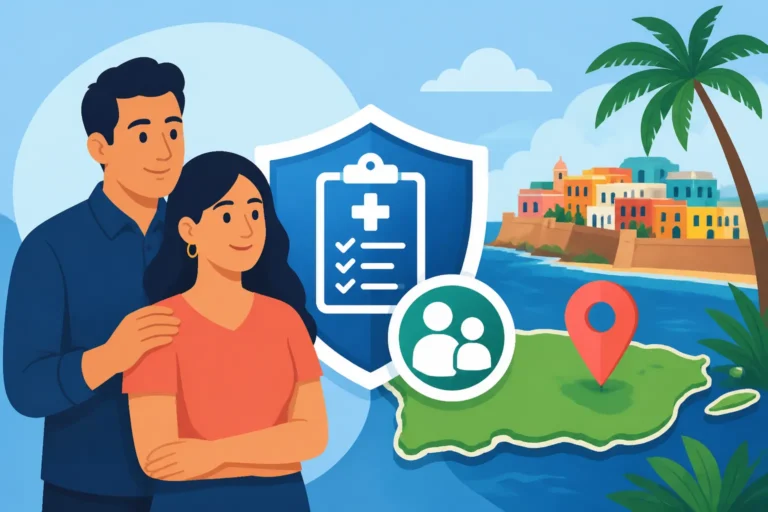
For a healthy individual in their 30s, you can expect to pay anywhere from $180 to $350 per month for a solid individual plan. Families will naturally see this scale up. It is a common frustration for newcomers to find that "Individual" plans do not allow you to add a spouse as easily as a corporate plan does; often, each person must have their own separate policy unless you are under a "Pyme" (Small Business) group plan.
Co-pays, Deductibles, and the "Hidden" Costs
In Puerto Rico, the co-pay system is very prevalent. You might pay $10 to see a primary care doctor but $40 or $60 for a specialist. The real "trap" for the self-employed is the deductible on diagnostic tests. If you need an MRI or specialized blood work, your plan might require you to hit a $1,000 or $2,000 deductible first. For a detailed look at these numbers, check out Understanding Co-Pays, Deductibles and Premiums in Puerto Rico. Always keep a "medical emergency" fund in your business bank account to cover these sudden out-of-pocket requirements.
The Role of Tax Deductions
As a self-employed individual, your health insurance premiums are generally a deductible business expense for your Puerto Rico tax return (the Planilla). This is a significant advantage. When you are calculating your quarterly estimated taxes for Hacienda, ensure you are tracking every penny spent on premiums. This effectively lowers the "true" cost of your insurance by 20% to 33% depending on your tax bracket.
| Plan Type | Typical Monthly Cost (Single) | Best For | Network Flexibility |
|---|---|---|---|
| Individual Private | $180 – $350 | Solo Freelancers | Moderate (HMO/EPO) |
| Association Group | $250 – $450 | Established Small Biz | High (PPO Options) |
| Vital (Government) | $0 (If eligible) | Low-income residents | Limited to Vital Network |
| Supplemental / Nomad | $45 – $150 | Digital Nomads | Worldwide / Mainland Focus |
Navigating Networks and Specialist Access
In Puerto Rico, "who you know" often matters as much as "what plan you have." The island operates on a system of IPAs (Independent Practice Associations), which can be confusing for those used to the open-access models of the mainland.
Local Networks vs. PPO Access
Most affordable individual plans for the self-employed are HMOs or EPOs. This means you must stay within a specific group of doctors. If you live in San Juan but your favorite doctor is in Ponce, your plan might not cover it unless it’s an emergency. For those who frequently travel back to the states, looking for a plan with "PPO" or "Multi-state" access is critical, though these are rare for individual purchasers. This is where a supplemental plan like SafetyWing can be a lifesaver. SafetyWing offers the flexibility that local plans lack, especially for entrepreneurs who spend three months in San Juan and then a month traveling through Europe or the mainland US for business meetings.
The Referral Culture
Expect to spend a lot of time getting referrals. Even if you are self-employed and "your own boss," your insurance company is the boss of your medical journey. You generally cannot see a dermatologist or a cardiologist without a piece of paper from your primary care physician (PCP). This can be frustrating when you are busy running a business. To minimize the headache, How to Find an English-Speaking Doctor in Puerto Rico can help you find a PCP who understands your needs and can streamline the referral process via email or WhatsApp—a common way of doing business on the island.
Seeking English-Speaking Providers
While most doctors in Puerto Rico are trained in the US and speak excellent English, the administrative staff (the "secretaries") may not. As a self-employed expat, this can create a barrier when trying to make appointments or verify coverage. It is often worth paying a slightly higher premium for a plan that is popular with the expat community, as those provider networks are more accustomed to dealing with English-speaking patients and mainland-style expectations.
Step-by-Step Enrollment for the Solo Professional
Enrollment is not always as simple as clicking a button on a website. It often involves a fair amount of paperwork and physical signatures.
Required Documentation
To apply for an individual health plan, you will typically need:
- A copy of your Puerto Rico Driver’s License or state ID.
- Your Social Security card.
- Proof of residence (a utility bill from LUMA or AAA).
- Your "Registro de Comerciante" (Merchant Registration).
Insurers want to see that you are actually living and working here. Having your How to Get a Merchant Registration (Registro de Comerciante) in Puerto Rico ready is essential because it proves you are a self-employed professional and not just a tourist trying to get cheap local rates.
Timing and Enrollment Windows
Unlike the mainland, where Open Enrollment is a strictly defined period at the end of the year, Puerto Rico sometimes allows for more flexibility, especially if you have a "qualifying life event" like moving to the island. However, do not wait. The process can take 30 to 60 days from the moment you submit your application to the moment your "tarjeta" (ID card) arrives in the mail.
Working with a Health Insurance Broker
I cannot stress this enough: find a local broker. In Puerto Rico, brokers are usually paid by the insurance companies, meaning their services are free to you. A good broker can compare Triple-S, MCS, and others side-by-side and tell you which hospital network is currently having contract disputes (a common occurrence here). They can also help you navigate the Understanding Pharmacy System and Generic Drugs in Puerto Rico nuances, ensuring your specific medications are on the plan’s formulary.
Supplemental Options and Safety Nets
For the modern digital nomad or Act 60 entrepreneur, a single local plan might not be enough. You need a strategy that covers the gaps.
Travel-Friendly Coverage for the Digital Nomad
If your self-employment involves frequent travel, you need a "Global" mindset. Local Puerto Rican plans are notoriously "Island-only" for non-emergencies. If you are in New York for a week and get a sinus infection, your PR plan likely won't pay for the doctor visit. This is where SafetyWing becomes an essential part of your toolkit. SafetyWing is designed specifically for nomads and the self-employed who live outside their home country. It acts as a perfect bridge, covering you globally while you maintain your local Puerto Rico plan for long-term care and statutory requirements. SafetyWing is particularly valuable during your first few months on the island when you are still waiting for your local ID card to be processed.
Dental and Vision Add-ons
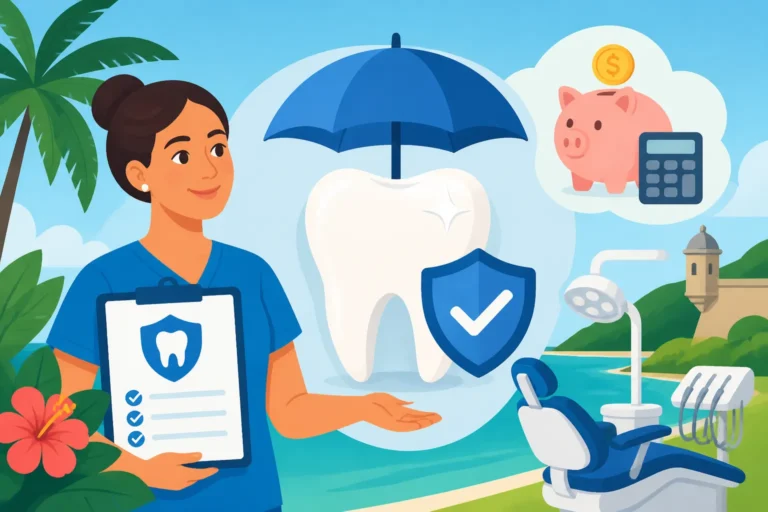
Most individual plans in Puerto Rico have very basic dental and vision coverage—think one cleaning a year and a small discount on frames. If you need major dental work, you will likely need to purchase a separate "stand-alone" dental plan. Fortunately, dental care on the island is significantly cheaper than on the mainland, so many freelancers simply choose to pay out of pocket for these services.
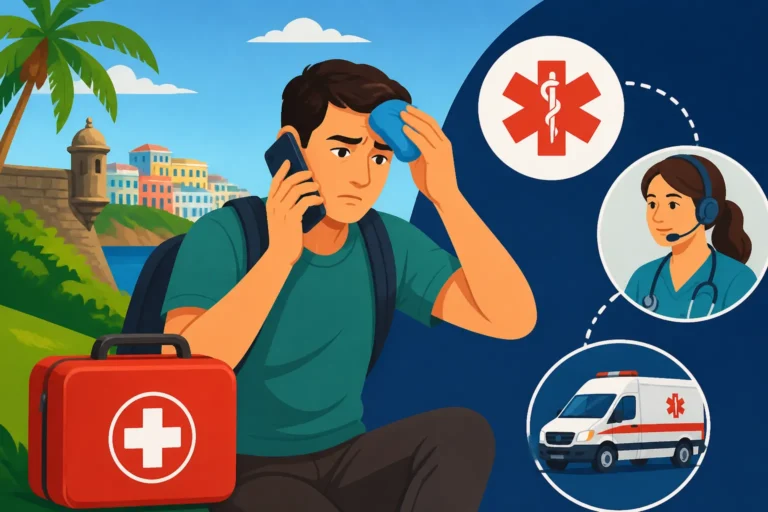
Telemedicine: The Freelancer's Best Friend
The "waiting room" culture in Puerto Rico is real. It is not uncommon to wait two or three hours for a scheduled appointment. As a self-employed person, time is money. Look for plans that offer robust telemedicine options. Many local insurers now have apps like "TeleConsulta" that allow you to see a doctor via video for minor issues. This allows you to stay at your desk and keep billing clients instead of sitting in a waiting room in Guaynabo all afternoon. Integrating a service like SafetyWing also gives you access to their international support networks, providing another layer of digital-first medical advice.
Disclaimer
The information provided in this guide is for educational and informational purposes only and does not constitute professional medical, legal, or financial advice. Healthcare laws and insurance plan details in Puerto Rico are subject to frequent change. Always consult with a licensed insurance broker or a qualified tax professional in Puerto Rico to discuss your specific situation before making any enrollment decisions.