Understanding the Pharmacy System and Generic Drugs in Puerto Rico
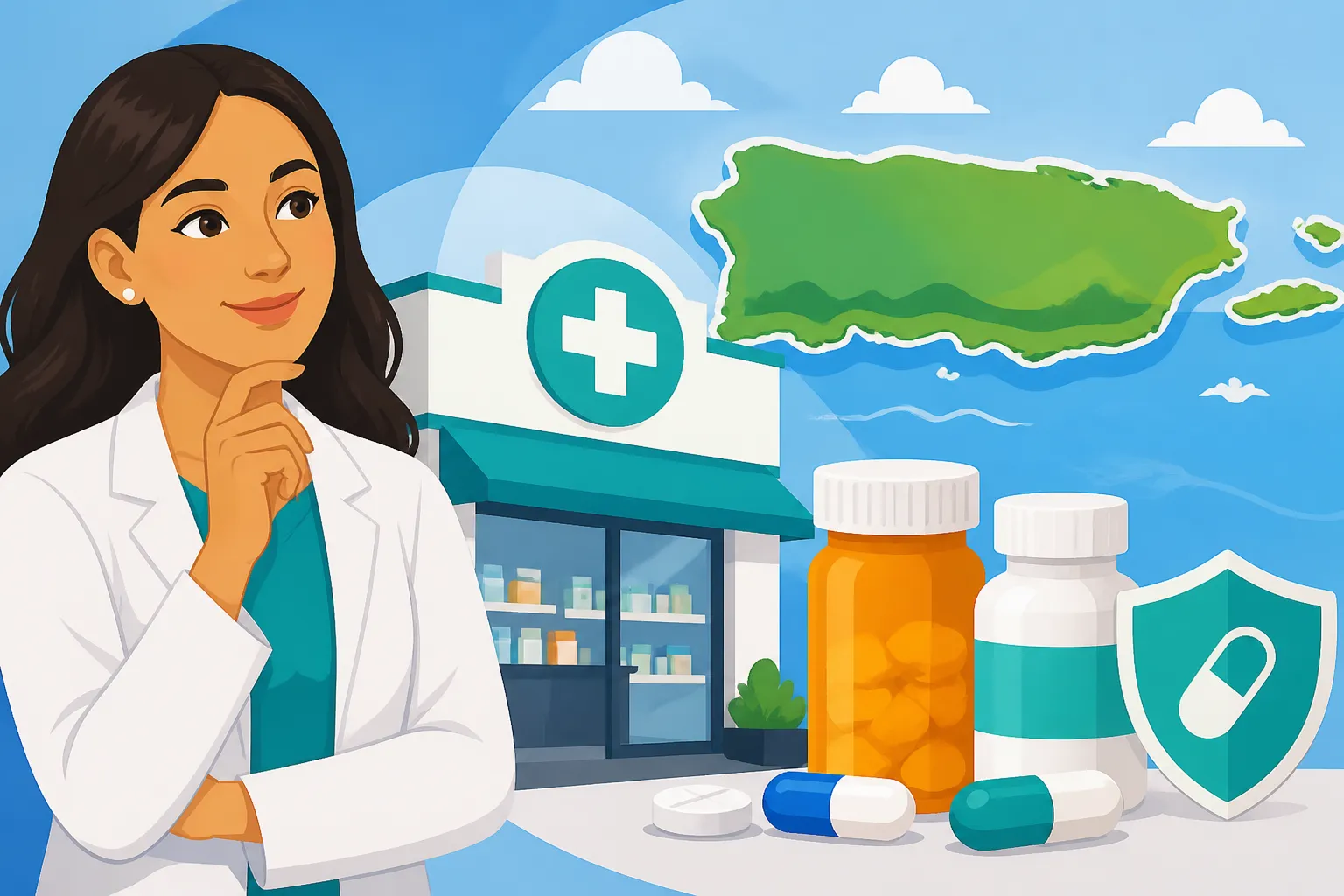
You just arrived in paradise, the sun is shining, and then it hits you: your daily maintenance medication is down to the last three pills. You head to the nearest drug store only to find the process isn't quite what you expected back home. This guide explains how to navigate the pharmacy system and generic drug landscape in Puerto Rico.
The Local Landscape: Chain Pharmacies vs. Farmacias de la Comunidad
When you first move to the island, your eyes will naturally gravitate toward the familiar red and blue neon signs of Walgreens and CVS. These behemoths are everywhere in the metro area, from the high-traffic corners of Condado to the suburban stretches of Bayamon. However, as any veteran expat will tell you, the pharmacy experience here is bifurcated between these massive US chains and the ubiquitous "Farmacia de la Comunidad" (community pharmacy). Understanding which one to use for your specific needs is the first step in Navigating the Puerto Rico Healthcare System: A Newcomer's Roadmap (2027).
Big Box Convenience: Walgreens and CVS
Walgreens is arguably the king of retail pharmacy in Puerto Rico. They have been on the island for decades and have established a massive footprint. For a newcomer, they offer a sense of familiarity. You can use your existing rewards card, the app works similarly to how it does on the mainland, and many locations are open 24/7. CVS is a newer entrant but follows a similar model. The primary advantage of these chains is their integrated systems. If you are a digital nomad or a frequent traveler using a plan like SafetyWing for your international medical coverage, these chains are often more adept at handling international claims or processing credit card payments from mainland banks without a hitch.
However, convenience comes with a trade-mark Puerto Rican twist: the wait times. It is not uncommon to drop off a prescription at a San Juan Walgreens and be told it will take four to five hours—or even until the next day—to be filled. This is due to a combination of high patient volume and the rigorous administrative requirements imposed by local insurance providers. If you are in a rush, the big boxes might actually be your slowest option. Furthermore, while these stores look like their mainland counterparts, the stock behind the counter may vary due to island-wide logistics.
The Heart of the Neighborhood: Independent Pharmacies
The "Farmacia de la Comunidad" is a cultural staple in Puerto Rico. These are small, often family-owned businesses that have served their neighborhoods for generations. You will recognize them by their distinct local names and often more modest storefronts. Do not let the size fool you. These pharmacies often provide a level of personalized service that the big chains simply cannot match. If you are trying to figure out How to Find and Register with a Primary Care Doctor in Puerto Rico, the local pharmacist at a community drug store is often your best source of recommendations.
The beauty of the community pharmacy lies in its agility. Because they aren't bogged down by the massive corporate overhead of a national chain, they can often fill a prescription in 15 to 20 minutes while you wait. They are also much more likely to "work with you" if there is a minor issue with your insurance or if you need a specific brand-name drug that isn't typically stocked. The downside? Their hours are much more limited. Many close by 6:00 PM and are shuttered on Sundays. If you find yourself in a bind after hours, you’ll likely need to head back to the big chains.
Hospital Pharmacies and CDTs
Another critical component of the system is the pharmacy located within a CDT (Centro de Diagnóstico y Tratamiento) or a private hospital. If you have an urgent care need and visit a facility late at night, they often have an internal pharmacy. These are primarily for immediate needs—think antibiotics or acute pain management—rather than your monthly refill of cholesterol medication. Understanding the role of these facilities is vital for Emergency Medical Care in Puerto Rico: What Every Resident Needs to Know. These pharmacies are usually highly efficient but may have a very limited formulary, focusing only on the medications most commonly prescribed in an emergency setting.
Understanding Generic Drugs in Puerto Rico
One of the most significant shocks for newcomers is the aggressive push for generic medications. Puerto Rico has a unique relationship with the pharmaceutical industry; for decades, the island was one of the world's leading manufacturing hubs for drugs. This legacy has left a mark on local legislation and insurance practices, creating a system that heavily favors "genéricos" over brand-name drugs.
The Law of Substitutions
In Puerto Rico, Law 247 (the Pharmacy Act) effectively mandates that pharmacists substitute a brand-name drug with its generic equivalent unless the physician specifically writes "Dispense as Written" (DAW) or "No Subvencione" on the prescription. Even then, your insurance company may refuse to cover the brand-name version unless there is a documented medical necessity. This can be frustrating if you have spent years on a specific brand and are suddenly told you must take the generic version.
From an expat perspective, it is important to realize that this isn't the pharmacist being difficult; it is a legal and contractual requirement. If you insist on the brand name without a medical waiver, be prepared for a significant jump in Understanding Co-Pays, Deductibles and Premiums in Puerto Rico. In some cases, the price difference can be hundreds of dollars per month. If you are using a plan like SafetyWing for emergency or travel-related medical costs, they generally follow the same bioequivalence standards, covering the most cost-effective version of a required treatment.
Bioequivalence and Quality Standards
A common concern among newcomers is whether the generic drugs available in Puerto Rico are as effective as the brand-name versions they used on the mainland. Because Puerto Rico is a US territory, all medications—generic or otherwise—must meet the exact same FDA standards for bioequivalence, safety, and purity as those sold in New York or California. The generic drugs you receive in a San Juan pharmacy are often manufactured in the same plants that produce the brand-name versions.
The pharmacist is a highly respected professional in Puerto Rico, often serving as a first line of medical advice for the community. They are required to ensure that any generic substitution is therapeutically equivalent. If you have concerns, talk to them. Most "farmacéuticos" are more than happy to explain the origin of the generic and why it was selected. This is particularly important for residents who are still Understanding the Difference Between Mainland and Puerto Rico Health Plans, as the local formularies can be quite rigid.
Cost Savings and Insurance Preferences
The push for generics is primarily driven by cost. The healthcare system in Puerto Rico operates on much tighter margins than the mainland. By prioritizing generics, insurers can keep monthly premiums lower for the general population. For the consumer, this usually results in very low co-pays—sometimes as little as $0 to $5 for common generics like Metformin or Lisinopril.
If you are paying out of pocket—perhaps because you are in the 90-day waiting period for local coverage or you are a digital nomad—the cost of generics in Puerto Rico is often surprisingly affordable. Before you assume you need to fly back to the mainland for your meds, check the local cash price. You might find that the generic price here is lower than your co-pay was back home. This is a key factor to consider when calculating The Cost of Healthcare in Puerto Rico: A Complete Breakdown for Newcomers (2026).
Navigating the Prescription Process
The administrative side of getting a script filled can be a bit of a "trámite" (a bureaucratic process). While the US healthcare framework applies, the local implementation has its own quirks that can trip up the uninitiated.
Validating Mainland Prescriptions
Can you use a prescription written by a doctor in Florida or Texas at a pharmacy in Puerto Rico? Theoretically, yes. Since Puerto Rico is part of the US, a valid prescription from a licensed US physician should be honorably accepted. However, in practice, many local pharmacies—especially the smaller independents—may be hesitant to fill a mainland script for controlled substances (like Adderall or certain pain medications) due to strict local tracking systems.
If you are moving here permanently, the best advice is to secure a local doctor as soon as possible. Bringing a 90-day supply from the mainland is a good bridge, but eventually, you will need a local physician to enter your scripts into the Puerto Rican system. This ensures that your records are integrated and that Prescription Medications and Pharmacies in Puerto Rico: The Complete Guide is followed correctly. If you are a visitor or haven't established residency, having a digital copy of your mainland prescription and your insurance card (or SafetyWing documentation) can help, but expect the pharmacist to call your mainland doctor to verify the details.
The Role of E-Prescribing and Surescripts
Puerto Rico has largely moved to e-prescribing. Most doctors will send your script directly to the pharmacy of your choice via the Surescripts network. This is convenient, but it requires you to know exactly which pharmacy you want to use. Unlike the mainland, where you might just say "the Walgreens on Main Street," in Puerto Rico, you often need to provide the specific store number or the exact neighborhood and street name, as there may be three Walgreens within a two-mile radius.
One common "Expats in PR" headache occurs when the doctor sends the script, but the pharmacy claims they haven't received it. Always ask your doctor for a printed "recap" or a digital confirmation. If the system is down—which can happen after heavy rains or during power fluctuations—having that paper backup can save you a second trip to the clinic. This is especially true when you are trying to understand How Much Does Health Insurance Cost in Puerto Rico in 2026? and what benefits include seamless e-prescribing.
Refills and Transfers: What Newcomers Need to Know
Transferring a prescription from a mainland Walgreens to a Puerto Rico Walgreens should be a click of a button, right? Not always. Because Puerto Rico is a separate "market" for many insurance companies, the systems don't always talk to each other perfectly. You may find that your "automatic refills" from the mainland don't carry over, or that the local pharmacy needs to create a brand-new profile for you.
When you first arrive, take your physical pill bottles to the pharmacy. This allows the pharmacist to see the exact dosage, the NPI number of the prescribing doctor, and the remaining refills. They can then initiate a transfer. Be proactive; do this when you have two weeks of medication left, not two days. If you find yourself in a situation where your meds are out and your insurance hasn't kicked in, you might need to know What Happens If I Get Sick Before My Insurance Starts in Puerto Rico.
| Feature | Walgreens/CVS | Farmacia de la Comunidad |
|---|---|---|
| Hours | Often 24/7 or late night | Typically 8 AM – 6 PM |
| Wait Time | 2 – 24 hours | 15 – 30 minutes |
| English Speaking | Very common | Varies by location |
| App Support | High (Refill via app) | Minimal to none |
| Personalized Service | Low | High |
| Inventory | Large, but subject to corporate logistics | Smaller, but can order specifically for you |
Insurance, Co-pays, and Out-of-Pocket Costs
Understanding how your money flows at the pharmacy counter is essential. The way Pharmacy Benefit Managers (PBMs) operate on the island is a major driver of the local healthcare economy.
Pharmacy Benefit Managers (PBMs) in PR
In Puerto Rico, companies like Abarca Health and MC-21 dominate the PBM space. These entities sit between your insurance company and the pharmacy, deciding which drugs are covered and what your co-pay will be. They are the ones who set the "Formulary"—the list of approved drugs. If your medication is "non-formulary," it doesn't matter how much your doctor thinks you need it; the insurance won't pay unless an exception is granted.
For many expats, the local formulary feels more restrictive than what they had on the mainland. This is where Health Insurance in Puerto Rico: Plans, Costs and Options Explained (2026) becomes a vital resource. When choosing a plan, you need to look specifically at the pharmacy coverage tier for your specific medications. Some plans might cover a brand-name thyroid med for a $20 co-pay, while another might categorize it as a Tier 4 drug requiring a 50% coinsurance payment.
Understanding Tiered Pricing and Formularies
Most local plans use a four-tier system:
- Tier 1: Preferred Generics (Lowest co-pay, often $0-$5)
- Tier 2: Non-Preferred Generics (Slightly higher co-pay)
- Tier 3: Preferred Brand Name (Requires doctor justification, higher co-pay)
- Tier 4: Specialty Drugs (Highest cost, often requires prior authorization)
If you are a remote worker or a long-term traveler using SafetyWing, you should keep all your receipts. While these plans are excellent for major medical events and emergencies, the day-to-day "Tier 1" generic costs are often so low in Puerto Rico that it is easier to pay out of pocket and keep the paperwork for your records. For those with chronic conditions, knowing How Specialist Referrals Work Under Puerto Rico Health Plans is also important, as specialists are often the only ones who can successfully argue for a Tier 3 or Tier 4 drug authorization.
Strategies for Uninsured Expats and Tourists
If you don't have local insurance yet, don't panic. The cash price for medications in Puerto Rico is often lower than the retail price in the states. You can also use discount programs like GoodRx, although their effectiveness varies significantly between the big chains and the local mom-and-pop shops. Always ask the pharmacist, "Cual es el precio sin plan?" (What is the price without a plan?). You might find that the generic version is $15, making the whole insurance headache moot for that month.
For tourists who lose their medication or have an emergency, the best route is a visit to a local "Urgent Care" or CDT. They can write a one-time emergency script. If you are covered by SafetyWing, they can often guide you to a preferred provider to ensure your claim is handled smoothly. This is a common part of Emergency Medical Care in Puerto Rico: What Every Resident Needs to Know.
Practical Tips for a Smooth Pharmacy Experience
Living in Puerto Rico is all about knowing the "shortcuts" and the cultural norms that make things move faster. The pharmacy is no exception.
Language Barriers and "Farmacéuticos"
While many pharmacists in the metro area (San Juan, Guaynabo, Dorado) speak excellent English, the pharmacy technicians (the people at the front counter) might not. It is helpful to know a few key terms:
- Receta: Prescription
- Refuerzo/Repetición: Refill
- Deducible/Copago: Co-pay
- Identificación: ID (usually a driver's license)
- Tarjeta de salud: Health insurance card
If you are struggling to communicate, ask to speak with the "Farmacéutico." By law, a licensed pharmacist must be on duty, and they have usually undergone extensive clinical training, often in English-language textbooks, making them your best point of contact. If you are worried about medical communication in general, see our guide on How to Find an English-Speaking Doctor in Puerto Rico.
Stock Issues and "Agotado" Situations
Puerto Rico imports almost everything. When there is a shipping delay or a manufacturing hiccup, certain drugs can go "Agotado" (out of stock) across the entire island. This is where the community pharmacies shine. If Walgreens is out of your medication, don't just wait for their next truck. Walk down the street to the local "Farmacia de la Comunidad." They often use different wholesalers and might have the one bottle you need sitting on their shelf.
Also, be aware of the "medication month." Many insurers in PR will not allow a refill until exactly 28 or 30 days have passed. If you are planning a trip back to the mainland, you might need to request a "vacation override" from your insurance company. This is a common hurdle mentioned in The Guide to Healthcare in Puerto Rico for New Residents (2026).
Over-the-Counter (OTC) Nuances
The OTC aisle in Puerto Rico looks very familiar, but the prices can be higher due to the "Jones Act" (shipping costs). However, some items that require a prescription in certain countries are available over-the-counter here, and vice versa. For example, high-dose Ibuprofen or certain specialized creams might be behind the counter, requiring you to ask the pharmacist even if you don't have a script.
Conversely, don't expect to find "everything" in a pharmacy. While Walgreens is a mini-grocery store, a community pharmacy is strictly medical. If you need milk and bread, go to the supermarket. If you need specialized medicine, go to the "Farmacia."
Emergency Situations and After-Hours Access
What happens when you need a pharmacy at 3:00 AM? In a place where "island time" is the norm, emergency access is surprisingly robust if you know where to look.
24-Hour Pharmacies in the Metro Area
In the San Juan metro area, there are several 24-hour Walgreens locations (e.g., in Condado or San Patricio). These are your lifelines. However, be warned: the pharmacy counter itself might close for a "lunch break" even in a 24-hour store, usually between 1:30 AM and 2:00 AM. If you are coming from the hospital, check Can I Use Mainland Insurance at Hospitals in Puerto Rico before you head to the pharmacy, as the billing systems are often linked.
Outside the metro area, 24-hour pharmacies are rare. In towns like Rincon or Humacao, you may have to drive 30 to 45 minutes to find an open pharmacy late at night. This is why keeping a well-stocked first aid kit and a backup supply of essential meds is crucial for island life.
Using Delivery Services and Local Apps
The digital revolution has finally hit the Puerto Rican pharmacy scene. Apps like "Familia" or local delivery services like Uber Eats (for OTC items) and specialized med-delivery startups are becoming more common. Some community pharmacies now offer delivery via WhatsApp—you text a photo of your "receta," and they bring it to your door for a small fee.
This level of service is a godsend if you are home sick with the flu and can't imagine navigating the San Juan traffic. It is also a great option for those who are Working Remotely from Puerto Rico: The Definitive Guide (2027) and can't step away from their desk during business hours. Just remember that for controlled substances, you will always need to show a physical ID and often provide a signature upon delivery.
Important Considerations for Residents and Visitors
| Category | Advice for New Residents | Advice for Tourists/Digital Nomads |
|---|---|---|
| Prescriptions | Get a local doctor within the first 60 days. | Bring a physical copy of your mainland script. |
| Insurance | Verify your PBM (Abarca/MC-21) formulary. | Use SafetyWing or similar for emergency coverage. |
| Generic Drugs | Embrace them; they are the same FDA quality. | Check the cash price; it might be cheaper than a claim. |
| Refills | Don't wait until the last day; allow for "trámites." | Bring a full supply for your trip if possible. |
| Location | Build a relationship with a local community pharmacy. | Stick to Walgreens/CVS for ease of mainland system sync. |
Disclaimer
This guide is for informational purposes only and does not constitute medical or legal advice. Healthcare laws and pharmacy regulations in Puerto Rico are subject to change. Always consult with a licensed healthcare professional or a qualified pharmacist regarding your specific medical needs and insurance coverage.