Understanding Green Card Holder Residency in Puerto Rico
Oh, the sheer joy of navigating residency rules! Believe me, as an expat who’s called this beautiful island home for years, I understand the head-spinning bureaucracy. For Green Card holders, the move to Puerto Rico often comes with a specific set of questions and sometimes, a frustrating lack of clear answers about how their federal status translates to their new island life. This guide is here to untangle that confusion, offering you a realistic roadmap for understanding what your Green Card means for living permanently in Puerto Rico.
Green Card Status and Puerto Rico: The Federal Foundation
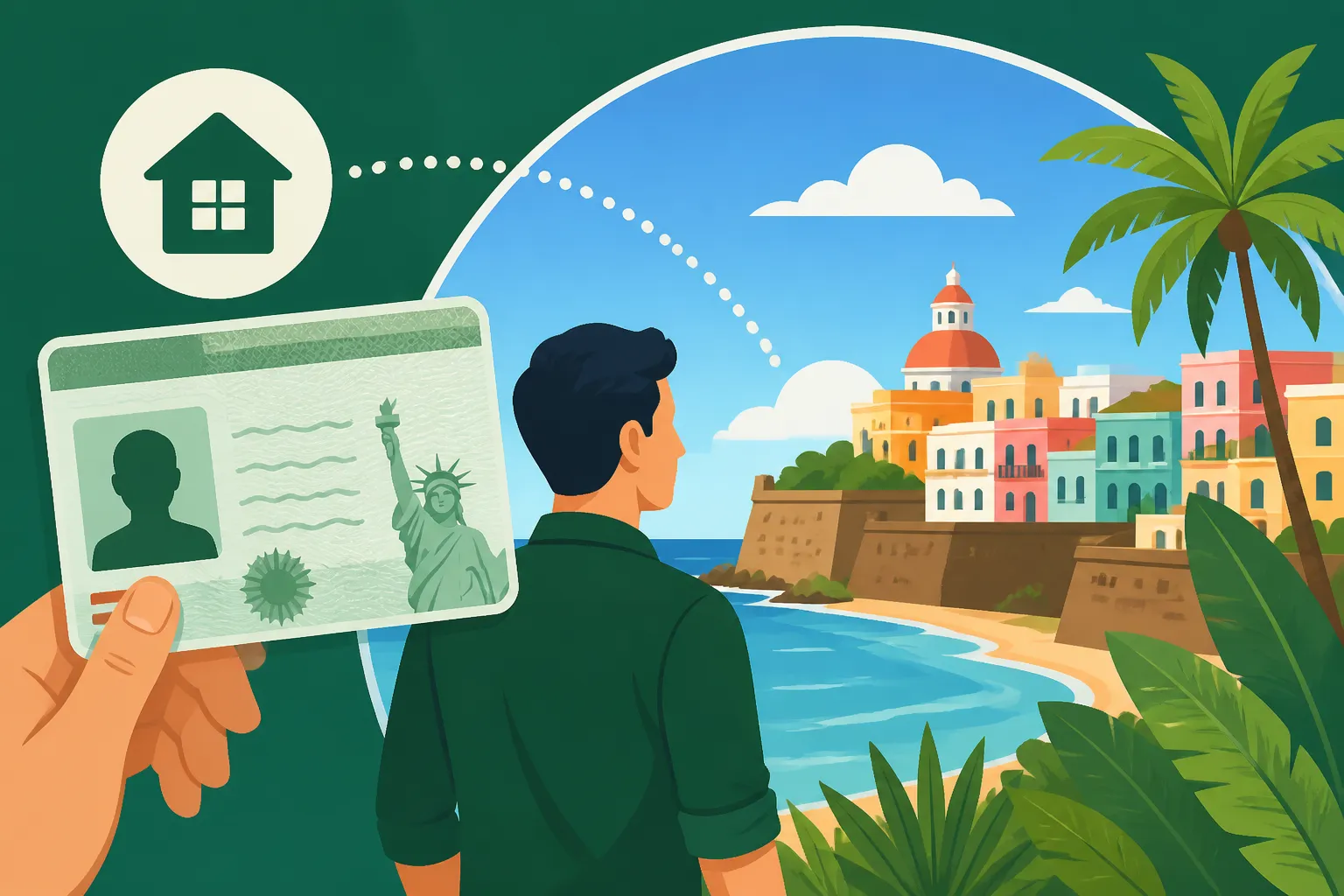
Let's get this fundamental truth out of the way upfront: a Green Card, or more formally, a Permanent Resident Card, grants you the legal right to live and work permanently anywhere in the United States. And yes, that absolutely includes Puerto Rico, which is a U.S. territory. This isn't like moving to a foreign country where your immigration status changes drastically. However, while your federal immigration status remains constant, how that interacts with local residency requirements for things like taxes, driver’s licenses, and certain local benefits can sometimes feel like trying to solve a Rubik's Cube after a few too many Medalla Lights.
What a Green Card Means for U.S. Territories
When you possess a Green Card, you are officially a Lawful Permanent Resident (LPR) of the United States. This status affords you the ability to reside indefinitely, work legally, and travel freely within the United States and its associated territories, including Puerto Rico, the U.S. Virgin Islands, Guam, American Samoa, and the Commonwealth of the Northern Mariana Islands. Think of it this way: your Green Card is your golden ticket to the entire U.S. jurisdiction, and Puerto Rico is very much a part of that.
This means you don't need any special visa, permit, or additional federal immigration approval to pack up your life and move to San Juan, Ponce, or wherever your heart desires on the island. The U.S. Customs and Border Protection (CBP) treats travel between the mainland U.S. and Puerto Rico as domestic travel, so you won't pass through immigration checkpoints. It's truly a seamless federal transition. However, while the federal part of your move is straightforward, the local adjustments are where the real work begins.
Distinguishing Federal vs. Local Residency
Here's where many people, Green Card holders included, get tripped up: there's a significant difference between your federal immigration status and your local, or "bona fide," residency status for tax and administrative purposes in Puerto Rico. Your Green Card ensures your right to live here federally, but becoming a "bona fide resident" of Puerto Rico is a separate determination primarily for tax purposes by the U.S. Internal Revenue Service (IRS) and the Puerto Rico Treasury Department (Hacienda).
This distinction is absolutely vital, especially if you're looking to potentially benefit from certain tax incentives offered by Puerto Rico, such as those under Act 60. Even if you've been living on the island for years with your Green Card, if you haven't taken specific steps to establish and maintain bona fide residency, the IRS might still consider you a resident of the mainland U.S. for tax purposes. This means understanding and fulfilling both federal and local requirements is key to a smooth transition and avoiding future headaches. You'll want to dive deep into topics like Understanding Legal Residency and Domicile in Puerto Rico (2027) to fully grasp these nuances.
Establishing Bona Fide Residency in Puerto Rico for Green Card Holders
While your Green Card gives you the right to live in Puerto Rico, to fully integrate and unlock potential local benefits—especially tax advantages—you'll need to establish what's known as "bona fide residency." This isn't just about showing up; it's about proving to Uncle Sam (and Hacienda) that you've genuinely made Puerto Rico your permanent home. The IRS outlines a three-part test for this, and it applies to everyone, including Green Card holders. Missing any part of this test can have significant tax consequences, so pay close attention.
The goal here is to demonstrate a clear break from your former mainland U.S. tax home and a strong, unequivocal intent to make Puerto Rico your new center of life. This requires more than just saying you live here; it requires proof through your actions and where you lay down roots.
The Presence Test: Counting Your Days
This is perhaps the most straightforward of the three tests, but it requires diligent tracking. To meet the presence test, you must be present in Puerto Rico for at least 183 days during the tax year. That’s more than half the year. It sounds simple, but you'd be surprised how quickly those days can add up when you're traveling for work, visiting family on the mainland, or taking a much-needed vacation.
The IRS defines a "day of presence" as any day you are physically present in Puerto Rico at any time during the day. So, if you fly in at 11 PM, that counts as a day. If you leave at 1 AM, that also counts. It's really about being on the island. Many expats I know keep a meticulous travel log or use a simple calendar app to mark their days in and out. This detailed record-keeping is not just for your peace of mind; it's crucial evidence if the IRS ever questions your bona fide residency. Remember, it's not enough to intend to be here; you must actually be here for the majority of the year. For more on this, you should read Understanding the 183-Day Rule for Bona Fide Residency in Puerto Rico.
The Tax Home Test: Where Your Economic Heart Beats
Your "tax home" is essentially the general area of your principal place of business, employment, or post of duty, regardless of where you maintain your family home. If you don't have a regular or principal place of business because of the nature of your work (like a remote freelancer or retiree), then your tax home is where you regularly live. To pass this test for Puerto Rico, your tax home must be in Puerto Rico throughout the tax year.
This means that if you're employed, your primary place of work should be located on the island. If you’re self-employed, your business operations and client base should primarily be here. For retirees, it means your primary residence and the hub of your daily life need to be in Puerto Rico. If you continue to maintain a business office, significant employment, or your primary professional activities on the mainland, you might struggle to pass this test, even if you meet the 183-day presence rule. The IRS is looking for where your economic life is truly centered.
The Closer Connection Test: Proving Your True Home
This is often considered the most subjective and, arguably, the most important test, as it requires you to demonstrate that you have a "closer connection" to Puerto Rico than to any other place. It's about showing intent and integration. The IRS will look at a variety of factors to determine where your true home is located.
Think about all the ways you embed yourself in a community. This includes where your permanent home is located, where your family lives (spouse and dependents), where your personal belongings (cars, furniture, keepsakes) are kept, and where you maintain bank accounts (local banks like Banco Popular or Oriental Bank are a good sign!). They’ll also look at where you hold your driver's license, voter registration, professional licenses, and where you engage in social, religious, and cultural activities. Essentially, you need to show that Puerto Rico is not just a place you visit, but where you genuinely live your life. Changing your mailing address with the USPS and with federal agencies like Social Security and your previous state's DMV are critical steps.
Navigating the Bureaucracy: Practical Steps for Green Card Holders in Puerto Rico
Once you've wrapped your head around the bona fide residency requirements, it's time to tackle the practical steps of settling in. While your Green Card makes your entry to Puerto Rico seamless, establishing your life here involves a series of administrative hurdles that are universal to all new residents, whether they're U.S. citizens or Green Card holders. These steps are crucial for integrating into daily life and reinforcing your closer connection to the island.
Many of these processes require patience, persistence, and often, some Spanish. Don't be discouraged if things take longer than you expect; that's just island time! Planning your move strategically, perhaps with assistance from a moving service that understands the unique logistics of the island, can be incredibly helpful. Platforms like Sirelo can connect you with international movers who have experience shipping belongings to Puerto Rico, which can alleviate a lot of stress.
Registering with Local Authorities
One of the first things you'll want to do is get your local identification in order. While your Green Card is a federal ID, a Puerto Rico driver's license or non-driver ID card from CESCO (Centro de Servicios al Conductor) is crucial for daily life. It’s widely accepted as proof of local residency and is often required for everything from opening certain bank accounts to signing up for local gym memberships.
The process at CESCO can be a bit of a marathon, so go prepared with all necessary documents, including proof of address (utility bills are great for this), your Green Card, and potentially your passport. You'll likely need to provide your Social Security number as well. Beyond CESCO, establishing utilities like electricity with LUMA Energy and water with AAA (Autoridad de Acueductos y Alcantarillados) will further solidify your presence. These are tangible ways to show you're not just visiting, but truly living here.
Healthcare and Banking Considerations
Accessing healthcare in Puerto Rico as a Green Card holder is generally similar to that of a U.S. citizen. You’ll be able to enroll in local health insurance plans, either through an employer, independently, or through the Puerto Rico Health Insurance Exchange (though options can be limited compared to the mainland ACA marketplace). Understanding Health Insurance in Puerto Rico: Plans, Costs and Options Explained (2026) is paramount. It’s also important to research whether your previous mainland health insurance plan has any coverage in Puerto Rico, as many do not. Even with a Green Card, if your plans involve frequent travel off-island or you desire a broader network, exploring international health insurance options like Cigna Global might offer additional peace of mind and flexibility for medical needs abroad.
For banking, you'll find that opening accounts with local banks like Banco Popular or Oriental Bank is generally straightforward once you have your local ID and proof of address. Having local bank accounts is another strong indicator of your closer connection to Puerto Rico. While you can certainly keep your mainland U.S. accounts, shifting your primary banking activities to a Puerto Rico institution demonstrates your intent to reside here permanently. Be sure to check out The Newcomer's Guide to Opening a Bank Account in Puerto Rico for a step-by-step walkthrough.
Tax Implications for Green Card Holders in Puerto Rico
This is where the rubber meets the road for many Green Card holders moving to Puerto Rico, and frankly, it’s often the most confusing part. The interplay between your federal Green Card status, your potential bona fide residency in Puerto Rico, and the various tax jurisdictions can be complex. It’s a common misconception that simply living in Puerto Rico means you are entirely exempt from federal income taxes. While there are significant tax benefits for bona fide residents of Puerto Rico, especially concerning Puerto Rico-source income, it's crucial to understand the specifics.
Always remember that as a Green Card holder, you are a U.S. Lawful Permanent Resident. This means you generally remain subject to U.S. federal income tax on your worldwide income, regardless of where you live, unless specific exceptions apply. The primary exception for Puerto Rico residents revolves around the bona fide residency status and the source of your income.
Federal Income Tax Status
Here’s the critical point for Green Card holders: If you become a bona fide resident of Puerto Rico, income derived from sources within Puerto Rico is generally exempt from federal income tax. This is a huge benefit and a primary driver for many people moving to the island. However, income from sources outside Puerto Rico (like investments on the mainland, mainland retirement accounts, or a mainland remote job) generally remains subject to federal income tax, even if you are a bona fide resident of Puerto Rico.
This is a key difference from how U.S. citizens living in Puerto Rico under certain tax incentive laws (like Act 60 for individual investors) might operate. For the average Green Card holder who simply moves to Puerto Rico and establishes bona fide residency, the federal tax exemption is generally limited to income earned on the island. It’s vital to distinguish between your federal immigration status (Green Card) and your tax residency status for the IRS. If you're not a bona fide resident, then all your worldwide income, regardless of source, is fully subject to federal tax. This is why proving your bona fide residency is so essential. Getting a clear picture of How Puerto Rico Taxes Work: Federal vs Local (Hacienda) Explained (2027) will be incredibly useful.
Hacienda (Puerto Rico) Income Tax
Once you establish bona fide residency in Puerto Rico, you become subject to Puerto Rico's local income tax system, administered by Hacienda (the Puerto Rico Treasury Department). This means that all your worldwide income, regardless of source, will be subject to Puerto Rico income tax, unless it is specifically exempt under Puerto Rico law (e.g., certain income under Act 60, if you qualified for it).
So, if you’re a bona fide resident, your Puerto Rico-source income would generally be taxed by Hacienda but exempt from federal tax. Your non-Puerto Rico source income, on the other hand, would be taxed by both Hacienda and the IRS, though you might be able to claim foreign tax credits on your federal return to avoid double taxation. This is a complex area, and it's highly recommended to consult with a tax professional who specializes in Puerto Rico and U.S. expat taxation. They can help you navigate the nuances and ensure you're compliant with both jurisdictions. Understanding Filing Your Puerto Rico Tax Return with Hacienda: The Complete Walkthrough (2027) will be an invaluable resource.
Here's a simplified comparison:
| Aspect | Green Card Holder (LPR) Status | Bona Fide Puerto Rico Tax Residency |
|---|---|---|
| Granted by | U.S. Federal Government | IRS (for federal tax) & PR Hacienda (for local tax) |
| Basis | Immigration Law | Tax Law (Presence, Tax Home, Closer Connection tests) |
| Right to Live/Work | Anywhere in U.S. & territories | Right to live anywhere (as LPR); specific tax treatment applies if bona fide resident of PR |
| Federal Tax on PR-Source Income | Potentially (if not bona fide resident of PR) | Generally exempt (if bona fide resident of PR) |
| Federal Tax on Non-PR Source Income | Yes (worldwide income) | Yes (worldwide income) |
| PR Local Tax (Hacienda) on Worldwide Income | No (unless bona fide resident of PR) | Yes (worldwide income, subject to PR tax law) |
| Required for Act 60 Benefits | Not directly, but you must also be a bona fide resident of PR | Yes, absolutely necessary to qualify for Act 60 |
| Key Documents | I-551 (Green Card) | Utility bills, PR driver's license, voter registration, bank accounts, travel log, etc. |
Maintaining Your Green Card Status While Living in Puerto Rico
A common concern for Green Card holders moving to any U.S. territory, including Puerto Rico, is whether their relocation could inadvertently jeopardize their permanent resident status. The good news is that, generally speaking, living in Puerto Rico does not inherently threaten your Green Card status, as it's part of the U.S. jurisdiction. However, the key factor remains intent and duration of absence from U.S. soil if you travel frequently.
The U.S. government expects Green Card holders to intend to reside permanently in the United States. While Puerto Rico is part of the U.S., prolonged absences from any U.S. jurisdiction can raise red flags. It’s less about living specifically in Puerto Rico and more about demonstrating that your permanent home, your "domicile," is still within the broader U.S. territory.
Avoiding Abandonment of Permanent Residency
The risk of abandoning your Green Card status primarily comes from extended periods spent outside any U.S. jurisdiction. If you plan to travel frequently or spend significant amounts of time outside of Puerto Rico and the mainland U.S., you need to be mindful of immigration rules. Generally, absences of less than six months are considered temporary and usually do not cause an issue. Absences between six months and one year can trigger scrutiny, as immigration officials might question your intent to reside permanently in the U.S. Absences of more than one year are presumed to be an abandonment of your Green Card status, unless you apply for a Reentry Permit before you leave.
So, while living in Puerto Rico itself is not an issue, if your lifestyle involves frequently visiting your home country or other non-U.S. destinations for long stretches, you'll need to maintain strong ties to Puerto Rico (or the U.S. mainland) and consider a Reentry Permit to protect your Green Card. Keep utility bills, property records, and proof of employment or business ties in Puerto Rico as evidence of your continuing residence.
Naturalization Path from Puerto Rico
For Green Card holders who eventually wish to become U.S. citizens, living in Puerto Rico does not hinder your path to naturalization. The time you spend as a Lawful Permanent Resident in Puerto Rico counts towards the residency requirements for U.S. citizenship, just as if you were living in any of the 50 states. The standard requirements still apply: you typically need to have been a Green Card holder for at least five years (or three years if married to a U.S. citizen), meet certain physical presence requirements, demonstrate good moral character, and pass civics and English tests.
Your application for naturalization (Form N-400) would be processed through U.S. Citizenship and Immigration Services (USCIS), and interviews would typically take place in Puerto Rico. So, if your long-term goal is U.S. citizenship, embracing life in Puerto Rico is a perfectly valid and recognized step on that journey. Just ensure you continue to meet all the general requirements for maintaining your Green Card status along the way.
Disclaimer
The information provided in this article is for general informational purposes only and does not constitute legal, tax, or financial advice. While I strive to provide accurate and up-to-date information based on my experiences and research, laws and regulations in Puerto Rico and the United States are subject to change and can be complex. You should consult with qualified legal, tax, and immigration professionals for advice tailored to your specific situation before making any decisions related to your residency, taxes, or immigration status in Puerto Rico.