Understanding Hospital Admission and Billing in Puerto Rico
Navigating the healthcare system in a new environment is often the most stressful part of relocating. In Puerto Rico, the transition from mainland or international systems to local hospital protocols involves more than just a language barrier; it requires understanding a unique blend of American administrative standards and local bureaucratic nuances. This guide solves the confusion surrounding how to get admitted to a hospital and, more importantly, how to settle the bill without surprises.
Navigating the Hospital Ecosystem in Puerto Rico
When you first arrive on the island, the sight of a hospital sign might give you a sense of familiarity, but the underlying structure of Puerto Rico’s medical landscape is distinct. You will find a stark divide between the public and private sectors, and knowing which one to choose can drastically change both your experience and your final bill. The private sector is generally where most expats and visitors find themselves, offering a higher standard of elective care and more streamlined administrative processes.
Public vs. Private Hospital Systems
The public hospital system in Puerto Rico, often referred to through the University of Puerto Rico (UPR) network or municipal facilities, serves as the primary safety net for the local population. While these facilities house some of the most brilliant medical minds on the island, they are frequently underfunded and overcrowded. If you are a resident, you might find yourself here for highly specialized trauma care, but for general admissions, the wait times can be grueling. It is common to see patients waiting in hallways for beds during peak periods, a reality that can be jarring for those used to private rooms on the mainland.
Private hospitals, such as Ashford Presbyterian in Condado or Auxilio Mutuo in Hato Rey, function much like high-end medical centers in the States. These institutions are generally where private insurance plans and international travel policies are most readily accepted. When looking at The Complete Guide to Healthcare in Puerto Rico for New Residents (2027), you will notice that private facilities are the preferred choice for those seeking comfort and English-speaking staff. However, even in private hospitals, the admission process can be slow, requiring multiple layers of verification before you are assigned a room.
The Role of CDTs and Primary Care Centers
Before you even reach a major hospital, you will likely encounter a CDT, which stands for Centro de Diagnóstico y Tratamiento. These are essentially urgent care centers that serve as the first line of defense in the Puerto Rican healthcare system. They are scattered throughout every municipality, from the busy streets of San Juan to the remote corners of Adjuntas. A CDT can handle minor sutures, imaging, and basic stabilization, but they are not equipped for long-term inpatient stays.
Understanding the role of these centers is crucial because many "admissions" actually start here. If a physician at a CDT determines you need higher-level care, they will arrange a transfer to a full-scale hospital. This "referral" model is the backbone of How Puerto Rico's Health System Works: Public vs Private Explained (2027). For a newcomer, it is often better to visit a CDT for non-life-threatening issues to avoid the massive facility fees associated with a traditional hospital emergency room visit.
The Admission Process: What to Expect at the Front Desk
Walking through the sliding doors of an emergency room or a pre-admission suite requires a specific set of documents and a fair amount of patience. In Puerto Rico, the concept of "Island Time" occasionally bleeds into administrative tasks, though medical triage remains prioritized based on urgency. Whether you are there for a planned procedure or an unexpected crisis, the intake process is the gatekeeper to your care.
Documentation Needed for Admission
The first thing the admissions clerk will ask for is your "tarjeta de plan médico" (insurance card) and a valid photo ID. If you are a US citizen, your state driver's license works perfectly, but for international visitors, a passport is essential. One common point of frustration for expats is the requirement for a physical insurance card; while some modern clinics accept digital versions, many hospital billing departments still insist on seeing the physical plastic or a high-quality printout.
Beyond identification, you will need to provide your Social Security number (for US residents) and a local address. If you are still in the process of moving and staying at a temporary rental, ensure you have the full physical address and a local phone number. The hospital uses this information not just for billing, but for follow-up care and the release of medical records. For a deeper dive into the specific paperwork required for various medical encounters, refer to What Documents Do I Need to See a Doctor in Puerto Rico?.
Triage and Emergency Room Protocols
If you enter through the Emergency Room (ER), you will undergo "triage" almost immediately. A nurse will assess your vitals and assign you a priority level. It is important to be very clear about your symptoms. In many San Juan hospitals, the triage staff is bilingual, but as you move toward the center of the island or toward Ponce, having a basic grasp of medical Spanish—or a translation app—is incredibly helpful.
Wait times in the ER can vary wildly. On a Tuesday morning, you might be seen in 30 minutes; on a Saturday night in a high-traffic area like Santurce, you could be waiting for six hours. During this time, the hospital is verifying your insurance coverage. If you are a digital nomad using a plan like SafetyWing, you should have your policy details ready. SafetyWing is often recognized by international billing departments in major hospitals, but you may still be asked to pay a "deducible" (deductible) or an "empaque" (a flat emergency room fee) upfront before being moved to a treatment bay.
Planned Surgeries and Pre-Admission Requirements
For elective procedures, the process is significantly more organized but requires advance legwork. Most private hospitals in Puerto Rico require a "pre-admisión" visit about 48 to 72 hours before your surgery. During this visit, you will complete all the paperwork, undergo blood tests, and perhaps an EKG. This is also when the hospital will contact your insurance provider to secure an "autorización."
It is a common pitfall to assume your doctor has handled the authorization. Always double-check with the hospital’s billing office that your specific procedure is cleared. Without this, the hospital may postpone your surgery on the morning of the event. If you are managing your own coverage, knowing How to Enroll in a Private Health Plan in Puerto Rico can help you understand which insurers have the smoothest authorization protocols.
Understanding Hospital Billing and Insurance Coordination
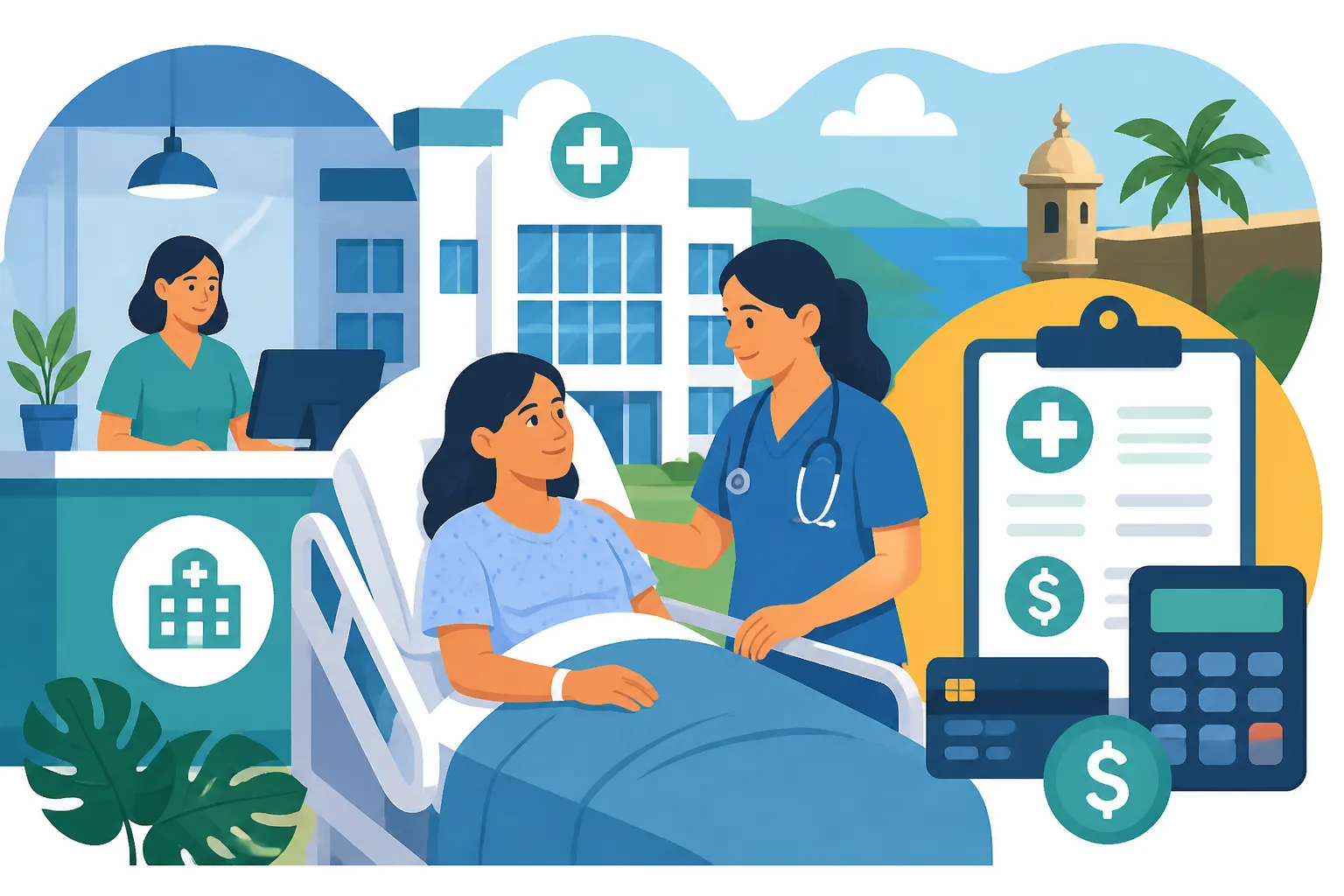
Billing in Puerto Rico is a complex dance between the hospital facility, the individual doctors, and your insurance provider. Unlike some systems where you receive one "global" bill, in Puerto Rico, you should expect a fragmented billing experience. This is often the biggest source of "sticker shock" for newcomers who believe their insurance has covered everything, only to receive a separate bill from an anesthesiologist three months later.
The Intersection of In-Network and Out-of-Network Care
A hospital itself might be "in-network" for your insurance, but the specific specialist who sees you in the ward might not be. This is a persistent issue in Puerto Rico’s healthcare system due to the shortage of specialists. If the only neurologist available at the hospital is a private contractor who doesn't take your specific plan, you may be billed at "out-of-network" rates.
To avoid this, when you are being admitted for non-emergencies, ask the admissions officer: "¿Todos los médicos que me atenderán están en mi red?" (Are all the doctors seeing me in my network?). While they can’t always guarantee this in an emergency, for planned stays, it is your right to know. This is a critical component of Understanding Provider Networks and In-Network Care in Puerto Rico, as it helps you anticipate the final cost of your stay.
Deductibles, Co-payments, and Co-insurance Explained
In Puerto Rico, you will hear the terms "deducible" and "copago" constantly. A co-payment is a fixed fee you pay for a specific service (e.g., $50 for an ER visit). A deductible is the amount you must pay out-of-pocket before your insurance kicks in. However, many local plans also use "co-insurance," which is a percentage of the total cost (e.g., you pay 20%, the insurance pays 80%).
| Charge Type | Description | Typical Cost Range (Private) |
|---|---|---|
| ER Facility Fee | The "cover charge" for using the emergency room | $50 – $300 |
| Inpatient Room | Daily rate for a semi-private or private room | $600 – $1,500 |
| Specialist Visit | Consultation fee for a doctor in the hospital | $100 – $400 |
| Lab Work | Blood tests, urinalysis, etc. | $20 – $200 |
| Imaging (CT/MRI) | Advanced diagnostic scans | $400 – $1,200 |
If you are confused about how these numbers add up, Understanding Co-Pays, Deductibles and Premiums in Puerto Rico provides a breakdown of how the local "Plan Vital" (government plan) differs from private commercial plans in this regard.
Direct Billing vs. Reimbursement for International Residents
For those traveling or living part-time in Puerto Rico, you might be using international insurance. Some providers like SafetyWing offer direct billing for inpatient stays, meaning they coordinate directly with the hospital so you don't have to pay thousands of dollars upfront. However, this usually requires a "Guarantee of Payment" (GOP).
If the hospital cannot secure a GOP quickly, you may be required to pay the bill in full using a credit card and then seek reimbursement from your insurance provider later. This is why it is essential to keep every single piece of paper, from the "factura" (invoice) to the "desglose de cargos" (itemized charges). Many expats find that having a dedicated folder for medical receipts is the only way to survive a residency in Puerto Rico without losing their minds—or their money.
Hidden Costs and Administrative Quirks
There are several "hidden" aspects of hospital stays in Puerto Rico that don't always appear in the initial estimate. These quirks are often cultural or administrative and can lead to frustration if you aren't prepared for them.
Pharmacy and Supply Charges in Inpatient Settings
In many mainland hospitals, items like a box of tissues or a basic dose of Tylenol are bundled into the room rate. In Puerto Rico, hospitals often itemize every single "material médico." If you are admitted, you might see charges for the IV starter kit, the gauze used to clean a wound, and even the plastic basin provided for washing.
Furthermore, some hospitals have their own internal pharmacies that bill separately from the hospital facility. If you are taking regular maintenance medication, the hospital will often insist on providing those meds from their own pharmacy rather than letting you use your own supply from home. This is done for safety and liability, but it adds to the bill. For more information on how prescriptions work on the island, see Prescription Medications and Pharmacies in Puerto Rico: The Complete Guide.
Physician Billing vs. Hospital Facility Fees
It cannot be stressed enough: the hospital bill is for the bed, the nurses, the electricity, and the equipment. The doctor's bill is for their professional expertise. You will often receive a bill from the hospital upon discharge, but the surgeon, the radiologist who read your X-ray, and the pathologist who looked at your blood work will all send their bills separately to your home address weeks later.
This "separate billing" can be confusing, especially if you have already "paid in full" at the discharge desk. Always save your discharge papers, which should list the names of the attending physicians. This helps you verify that the subsequent bills you receive are legitimate. If you are wondering how these costs fit into your overall relocation budget, The Cost of Healthcare in Puerto Rico: A Complete Breakdown for Newcomers (2026) is an excellent resource for planning.
Handling Medical Emergencies for Short-Term Visitors
If you are just visiting the island for a few weeks or are here on a scouting trip, an emergency can feel like a disaster. However, the system is designed to treat you first and figure out the money later—though they will certainly try to figure out the money as quickly as possible.
Accessing Care Without Local Insurance
If you do not have local Puerto Rican insurance or a mainland US plan that covers "Urgent/Emergency" care in Puerto Rico, you will be considered a "private patient." In this scenario, hospitals will often ask for a significant deposit upon admission (sometimes $500 to $2,000).
Major credit cards are accepted at all private hospitals in San Juan, Bayamon, and Ponce. If you find yourself in a position where you need to pay out-of-pocket, always ask for the "tarifa de self-pay" (self-pay rate). Many hospitals offer a discount for patients who pay in full at the time of service, as it saves them the administrative cost of chasing insurance companies. This is a common tactic explained in How Do I Pay for Hospital Care in Puerto Rico?.
Using International Health Coverage
For digital nomads and frequent travelers, using a global policy is often the most cost-effective route. Companies like SafetyWing are designed for this exact scenario. When you present an international policy, the hospital's international billing department (usually located in a small office away from the main ER) will take over.
They will verify your benefits and, if the stay is prolonged, coordinate the "Letter of Guarantee." It’s a good idea to call your insurance provider the moment you realize an admission is likely. This allows them to start the coordination process while you are still in triage, potentially saving you from having to put a large deposit on your personal credit card. Knowing What Should I Do in a Medical Emergency in San Juan? can provide additional peace of mind if you are staying in the metropolitan area.
Practical Tips for a Smooth Hospital Experience
To ensure your hospital stay is as stress-free as possible, there are a few "pro-tips" that local residents swear by. First, always have a "medical advocate"—a friend or family member who can stay with you. While nurses are attentive, the system is designed with the expectation that family will help with basic needs like bringing water or helping you communicate with the cleaning staff.
Second, always request an itemized bill before you leave. It is much harder to correct an error on a bill once you have left the building and the insurance claim has been processed. Check for duplicate charges or services you didn't receive. Finally, if you are moving here permanently, make sure you understand How to Find and Register with a Primary Care Doctor in Puerto Rico. Having a local doctor who has "privileges" at a specific hospital can make the admission process significantly smoother, as they can call ahead and "admit" you directly to a floor, bypassing the chaos of the emergency room entirely.
Health and Medical Disclaimer
The information provided in this guide is for informational and educational purposes only and does not constitute medical or legal advice. Healthcare laws, insurance regulations, and hospital policies in Puerto Rico are subject to frequent changes. Always consult with a qualified medical professional or a licensed insurance broker regarding your specific health needs and coverage options. While we strive to provide the most up-to-date information, we cannot guarantee the accuracy of hospital billing practices at the time of your visit.