What Is the Cost of Living in Puerto Rico vs Florida?
Many folks dreaming of a sunny, vibrant life often find themselves weighing two very appealing options: the familiar shores of Florida or the captivating Caribbean rhythms of Puerto Rico. It’s easy to get swept away by the images of beaches and palm trees, but the cold, hard reality of budgeting can quickly bring you back to earth. This guide is going to strip away the romantic notions and dive deep into the nitty-gritty financial details, helping you understand the true cost of living differences between Puerto Rico and Florida, so you can make an informed decision that truly fits your wallet and your lifestyle.
Dissecting Housing Costs: Renting and Buying
When you’re thinking about a big move, whether it's to the vibrant streets of San Juan or the sprawling suburbs of Orlando, housing is almost always the biggest chunk of your monthly budget. And while both Puerto Rico and Florida offer beautiful coastal living, the cost structures and market realities can be surprisingly different. It’s not just about the numbers; it’s about what those numbers get you, and the hoops you might have to jump through.
Rental Market Realities
Let’s talk about renting first, because that’s often the first step for many newcomers. In Puerto Rico, particularly in the most desirable areas like Condado, Santurce, or Dorado, you might be surprised to find that rents can rival, or even exceed, what you’d pay in a popular Florida city like Miami or Fort Lauderdale. For a decent 1-2 bedroom apartment in a good neighborhood in San Juan, you could easily be looking at anywhere from $1,800 to $3,500+ per month, depending on amenities, views, and how close you are to the beach or urban centers. Head to Dorado, and those prices can climb even higher, especially for gated communities or luxury complexes.
On the flip side, if you venture outside the major metropolitan areas in Puerto Rico, like to Mayagüez, Ponce, or smaller towns in the interior, you can find much more affordable options. A comfortable 2-bedroom home or apartment might be available for $800 to $1,500. However, these areas come with their own set of considerations: often less English spoken, fewer amenities tailored to expats, and longer commutes to major job centers or the airport.
Now, let's look at Florida. Cities like Miami, especially its trendy neighborhoods like South Beach or Brickell, will hit you with high rents similar to San Juan’s luxury areas, often $2,000 to $4,000+ for a decent apartment. However, Florida has a wider array of large and mid-sized cities. You can find more affordable options in places like Jacksonville, Tampa, or even parts of Orlando. A 1-2 bedroom apartment in a decent area of these cities might range from $1,500 to $2,500. The sheer volume of housing stock and diverse urban centers means there's a broader range of price points across the state. Remember to also understand the nuances of a lease agreement in Puerto Rico.
Homeownership Landscape
If you're considering putting down roots and buying property, the comparison becomes even more nuanced. In prime San Juan neighborhoods or exclusive areas like Dorado, purchasing a single-family home can easily start from $500,000 and go well into the millions, especially for beachfront properties or those with significant land. Condos in high-demand areas can still fetch $300,000 to $800,000+. The market can be competitive, and properties often require some renovation or upgrades depending on their age. You'll want to read up on How to Buy Property in Puerto Rico: The Full Guide (2027) to get the full picture.
Again, step away from the major hubs in Puerto Rico, and prices drop significantly. A comfortable family home in a more rural or less developed area could be had for $150,000 to $350,000, presenting a more accessible entry point into homeownership. However, it's vital to do your due diligence on the condition of the property, potential hurricane risks, and the availability of services.
In Florida, home prices have seen substantial increases in recent years. Major metro areas like Miami, Fort Lauderdale, and parts of the Tampa Bay area often see median home prices well above $400,000, with desirable coastal properties or homes in highly-rated school districts pushing past $700,000 or even $1 million. Similar to rentals, however, Florida offers more mid-tier cities like Gainesville, Lakeland, or Pensacola where you can find homes in the $250,000 to $400,000 range. The sheer size and diversity of Florida's market provide more options across different price points than Puerto Rico typically does. Both locations will necessitate exploring hurricane insurance.
Everyday Expenses: Groceries, Utilities, and Transport
Beyond just the roof over your head, the daily grind of living truly defines your budget. This is where many newcomers to Puerto Rico experience a bit of a culture shock, as certain costs are higher due to the island’s unique economic structure. Florida, on the other hand, often benefits from being part of the mainland U.S. supply chain, which can mean more competitive pricing on some goods.
The Grocery Basket Test
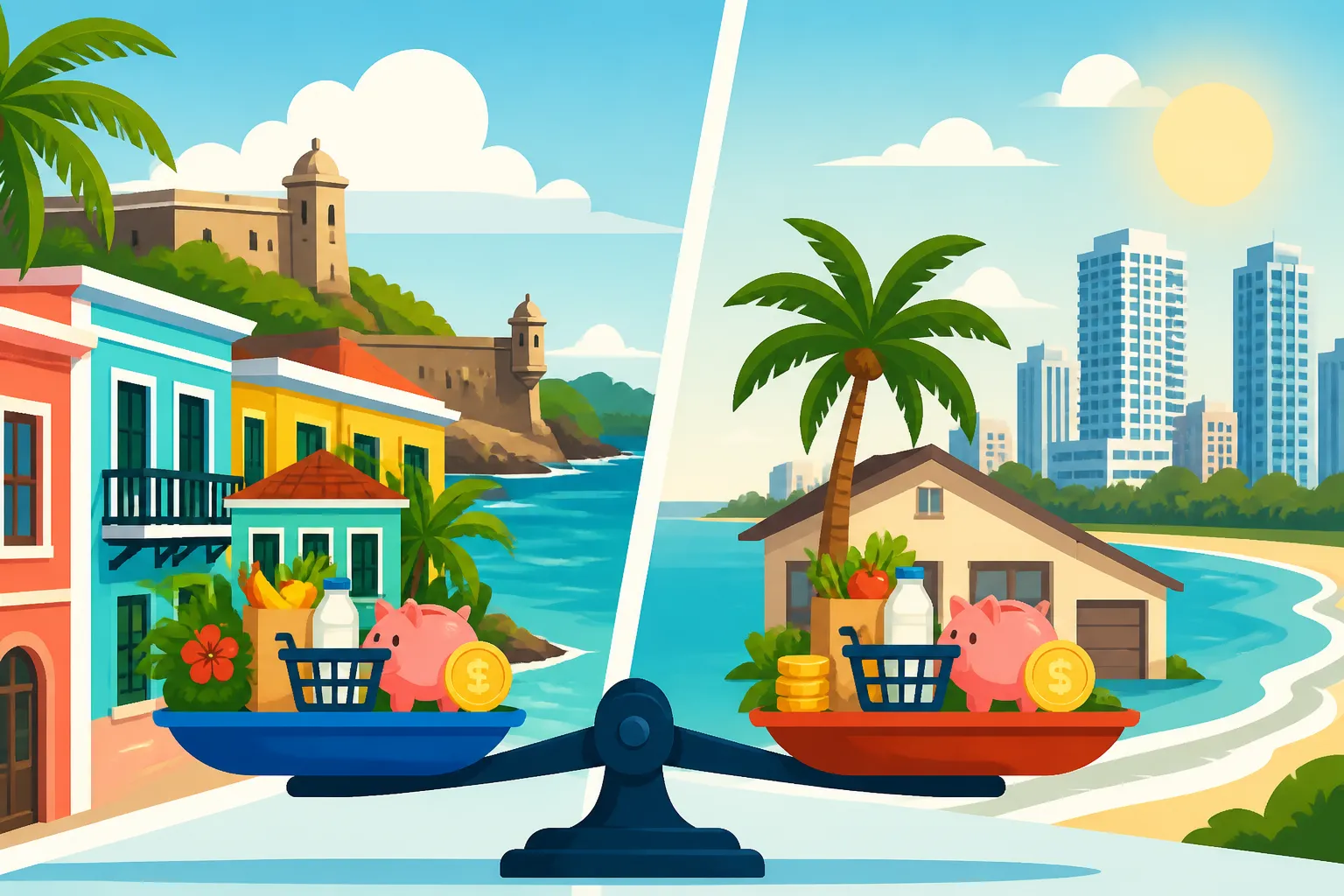
One of the most immediate differences you'll notice in Puerto Rico is the cost of groceries. Because Puerto Rico is an island, a significant portion of its goods, including many foodstuffs, have to be imported. This means higher shipping costs, which are inevitably passed on to the consumer. Fresh produce can be particularly expensive if it's not locally grown, and even everyday staples often carry a higher price tag than on the mainland. You'll often find yourself paying 15-30% more for your weekly grocery haul in Puerto Rico compared to a typical Florida city. Stores like SuperMax or Pueblo tend to be pricier than their mainland counterparts.
In Florida, grocery prices are generally comparable to the national average. Big box stores, numerous discount supermarkets, and competitive markets mean that while specific items might fluctuate, you can usually find good deals and a wide variety without the added "island tax." For example, a gallon of milk or a loaf of bread will almost invariably be cheaper in Florida than in Puerto Rico.
The Utility Gauntlet: Electricity and Water
Ah, utilities. This is where many an expat in Puerto Rico has shed a tear. The cost of electricity in Puerto Rico, managed by LUMA Energy, is notoriously high, often double or even triple what you might pay on the mainland U.S. This isn’t just a slight increase; it’s a significant budget buster. Running air conditioning, a necessity for many, can easily push your monthly electricity bill past $300, $500, or even more, depending on your usage and the size of your home. The power grid itself also experiences more frequent outages, which is why many residents invest in generators or solar power solutions, adding another layer of cost. You can learn more in The Newcomer's Guide to Setting Up Utilities (LUMA/AAA) in Puerto Rico.
Water service, provided by the AAA (Autoridad de Acueductos y Alcantarillados), is generally more affordable in Puerto Rico, often ranging from $30 to $70 per month for a typical household, unless you're watering a large garden.
In Florida, electricity rates are generally more competitive, though they can vary by provider and region. A typical household might expect to pay $150 to $300 per month, even with AC running, depending on the season and usage. Water bills are also usually on par with national averages, often in the $40 to $80 range. While hurricanes can cause power outages in Florida too, the grid is generally more robust, and the utility costs are significantly lower than in Puerto Rico.
Getting Around: Transportation Costs
Transportation costs encompass everything from fuel to vehicle registration and insurance. In Puerto Rico, gasoline prices tend to be on par with or slightly higher than the U.S. national average. However, the cost of purchasing a vehicle can be higher due to import duties and local taxes. Vehicle registration (the marbete) and inspections are annual requirements. Public transportation exists, especially in San Juan with the Tren Urbano, but it’s not as extensive or reliable as what you might find in a major U.S. city. Most residents rely on cars, and the roads can be challenging. Understanding Driving in Puerto Rico: Licenses, Registration and Rules for Newcomers (2027) is critical.
Florida benefits from extensive highway systems and a competitive car market. Gasoline prices are often below the national average. Vehicle purchase prices are generally standard, and while registration and insurance are necessary, they are typically less burdensome than in Puerto Rico. Many Florida cities also offer more developed public transportation options, and ridesharing services are widely available and often more affordable.
Taxes and Financial Considerations
Beyond the daily expenses, how much of your hard-earned money goes to the government is a crucial part of the cost of living equation. This is where Puerto Rico often presents a unique proposition, particularly for those looking into the Act 60 tax incentives, though it’s not a universal benefit.
Income and Sales Tax
Florida is famous for having no state income tax, which is a huge draw for many residents. You only pay federal income tax. The state sales tax rate is 6%, with local county surtaxes potentially adding up to 2.5%, making the combined rate up to 8.5%.
Puerto Rico, as a U.S. territory, has a more complex tax structure. While U.S. citizens residing as bona fide residents of Puerto Rico are generally exempt from federal income tax on Puerto Rico-sourced income, they do pay income tax to Hacienda, Puerto Rico's treasury department. These local income tax rates can be substantial, depending on your income bracket. For those without Act 60, the local income tax can feel higher than what you might expect on the mainland. However, it's also true that many U.S. federal benefits and programs still apply. This is a big topic, so it's worth exploring How Puerto Rico Taxes Work: Federal vs Local (Hacienda) Explained (2027) in detail.
The sales and use tax (IVU) in Puerto Rico is 11.5%, which is one of the highest in any U.S. jurisdiction. This higher sales tax applies to most goods and services, so every purchase you make carries that extra cost, significantly impacting your overall spending.
Property Taxes (CRIM)
When it comes to property taxes, Puerto Rico often holds an advantage. Property taxes, managed by the Municipal Revenue Collection Center (CRIM), are generally much lower than in most U.S. states, including Florida. Many residential properties in Puerto Rico have very low or even negligible annual property tax bills, especially older homes or those below a certain assessed value. This can be a substantial saving for homeowners.
In Florida, property taxes can vary widely by county but are generally much higher than in Puerto Rico. A homeowner in a typical Florida county might pay anywhere from 1% to 2% of their home’s assessed value annually in property taxes, which for a $400,000 home could mean $4,000 to $8,000+ per year. While there are homestead exemptions, the overall burden is usually much greater than in Puerto Rico.
The Act 60 Factor
For certain individuals and businesses, Puerto Rico offers Act 60, a series of tax incentive laws designed to attract investment and economic development. For qualified individual investors (Act 60 Individual Resident Investors), this can mean a 0% tax rate on passive income (e.g., capital gains, dividends, interest) derived after becoming a resident. For export services businesses (Act 60 Export Services), it can mean a 4% corporate tax rate. This is where the "cost of living" truly gets skewed for a select group, as their overall tax burden can be dramatically reduced, making Puerto Rico an incredibly attractive financial haven.
It’s crucial to understand that Act 60 is not for everyone, nor is it a simple process. You must become a bona fide resident, which involves meeting specific presence, tax home, and closer connection tests. The application process and ongoing compliance require professional guidance and a commitment to genuine residency. For those who qualify, however, the financial benefits can be transformative and dwarf any differences in daily living costs compared to Florida. To understand if this applies to you, you'll need to research Understanding Act 60 Tax Incentives in Puerto Rico: The Full Guide (2026).
Lifestyle, Leisure, and Other Expenditures
Beyond the hard numbers, your lifestyle choices significantly impact your cost of living. Both Puerto Rico and Florida offer incredible opportunities for leisure and outdoor activities, but the underlying costs for these pursuits, and even basic services, can differ.
Entertainment and Dining Out
In both locations, dining out, going to concerts, or enjoying nightlife can be as expensive or as affordable as you make it. High-end restaurants in San Juan or Miami will naturally carry similar price tags. However, local eateries ( fondas in PR, local diners in FL) tend to be more budget-friendly. In Puerto Rico, a local lunch special (almuerzo) can be incredibly inexpensive, offering a hearty meal for under $10. Craft cocktails and imported beers might be a bit pricier in Puerto Rico due to import costs, while local rums are very affordable.
Florida, with its vast tourism industry, also has a wide range of entertainment options. Theme parks are a major draw, but their entry fees and associated costs are substantial. Museums, concerts, and sporting events are plentiful, and pricing is generally on par with other major U.S. cities.
Healthcare and Insurance
Healthcare costs are another critical consideration. While both Puerto Rico and Florida operate under the U.S. healthcare system, there are some differences. In Puerto Rico, many expats opt for private health insurance due to concerns about the public system, though the government's Vital Plan offers coverage for eligible residents. Private plans, whether through an employer or purchased independently, can have premiums similar to mainland plans, but co-pays and deductibles can vary. The overall cost of specific medical procedures or doctor visits might be slightly lower on average in Puerto Rico compared to expensive U.S. metropolitan areas, but the quality and availability of specialist care might require traveling to San Juan or even the mainland for complex cases. For those considering the move, The Complete Guide to Healthcare in Puerto Rico for New Residents (2027) is an essential read.
Florida's healthcare system is part of the broader U.S. market, with a wide array of private insurance options and hospitals. Costs can be high, and insurance premiums are a significant expense for many. However, the sheer volume of providers and competitive market can sometimes lead to more options for consumers.
Connectivity and Communication
Staying connected is non-negotiable in today's world. Internet services in Puerto Rico have improved significantly, but the reliability and speed can still vary, and prices for high-speed fiber internet might be comparable to, or slightly higher than, mainland rates. Mobile phone plans are similar in cost to the mainland, with major carriers having a presence. For new arrivals or those traveling between the island and the mainland, having a reliable eSIM from a provider like Airalo can be a lifesaver to ensure you're always connected without racking up huge roaming charges while you sort out local services.
Florida boasts a highly competitive market for internet and mobile services, often with lower prices and more robust infrastructure due to its mainland connections. High-speed internet is widely available, and cellular coverage is generally excellent across the state.
Preparing for the Move: Beyond the Monthly Budget
The actual process of moving adds a significant cost, regardless of your destination. When comparing Puerto Rico to Florida, the logistics can be quite different. Moving your entire household from the U.S. mainland to Puerto Rico involves shipping, which is a major expense. You'll need to factor in the cost of crating, freight, and potentially import duties for certain items, though most personal belongings are exempt. This can easily run into thousands, or even tens of thousands, of dollars. Services like Sirelo can help you find reputable international movers and compare quotes, taking some of the headache out of this complex process.
Moving within the U.S. to Florida, while still costly, generally avoids the complexities and higher prices associated with overseas shipping. It's usually a truck drive, not a container ship.
Here's a simplified comparison table to give you a quick overview, based on averages in popular areas, acknowledging that individual experiences will vary widely:
| Category | Puerto Rico (e.g., San Juan) | Florida (e.g., Miami/Tampa) | Key Differences/Notes |
|---|---|---|---|
| Rent (1-2 BR) | $1,800 – $3,500+ | $1,500 – $3,000+ | High-end PR can rival FL, but PR has fewer mid-tier cities. |
| Home Purchase (Median) | $300,000 – $700,000+ (prime areas) | $350,000 – $600,000+ (prime areas) | PR outside San Juan is cheaper. FL has broader range across many cities. |
| Groceries (Monthly) | $600 – $1,000+ (1-2 people) | $500 – $800 (1-2 people) | PR typically 15-30% higher due to import costs. |
| Electricity (Monthly) | $250 – $600+ | $150 – $300 | PR much higher; frequent outages. |
| Water (Monthly) | $30 – $70 | $40 – $80 | Generally comparable. |
| Gasoline | Similar to US national average (sometimes higher) | Often below US national average | Car purchase costs potentially higher in PR. |
| Sales Tax (IVU) | 11.5% | 6% – 8.5% (with local surtaxes) | PR's IVU is significantly higher. |
| State Income Tax | Yes (to Hacienda, unless Act 60) | No | Huge difference for many; Act 60 can mitigate PR's income tax for some. |
| Property Tax (Annual) | Generally very low (often <0.5%) | Moderate to High (1% – 2% of assessed value) | PR significantly lower, a major saving for homeowners. |
| Internet (Monthly) | $60 – $100+ (variable reliability) | $50 – $90 (more competitive) | PR improving, but reliability can be a factor. |
Keep in mind that this table provides broad estimates. A detailed personal budget will be essential for your specific situation. This guide to The Complete Guide to Cost of Living in Puerto Rico (2026) can give you more granular data.
Ultimately, choosing between Puerto Rico and Florida isn't just about comparing dollar figures. It's about comparing lifestyles, priorities, and what you value most. Florida offers the familiarity of the mainland U.S. system, often with slightly lower daily living costs (especially for groceries and utilities) and no state income tax, but higher property taxes and a more traditional U.S. urban/suburban experience. Puerto Rico offers a rich, vibrant culture, unique tax incentives for qualifying individuals and businesses, and incredibly low property taxes, but often comes with higher costs for electricity, imported goods, and the logistical challenges of island living. Your personal financial situation, career, and desire for a specific cultural experience will be the true determinants of which sun-drenched paradise is the right fit for you.
Disclaimer
This article is for general informational purposes only and does not constitute professional advice. Laws, prices and regulations vary by location and change over time. Consult a qualified professional for guidance on your specific situation.