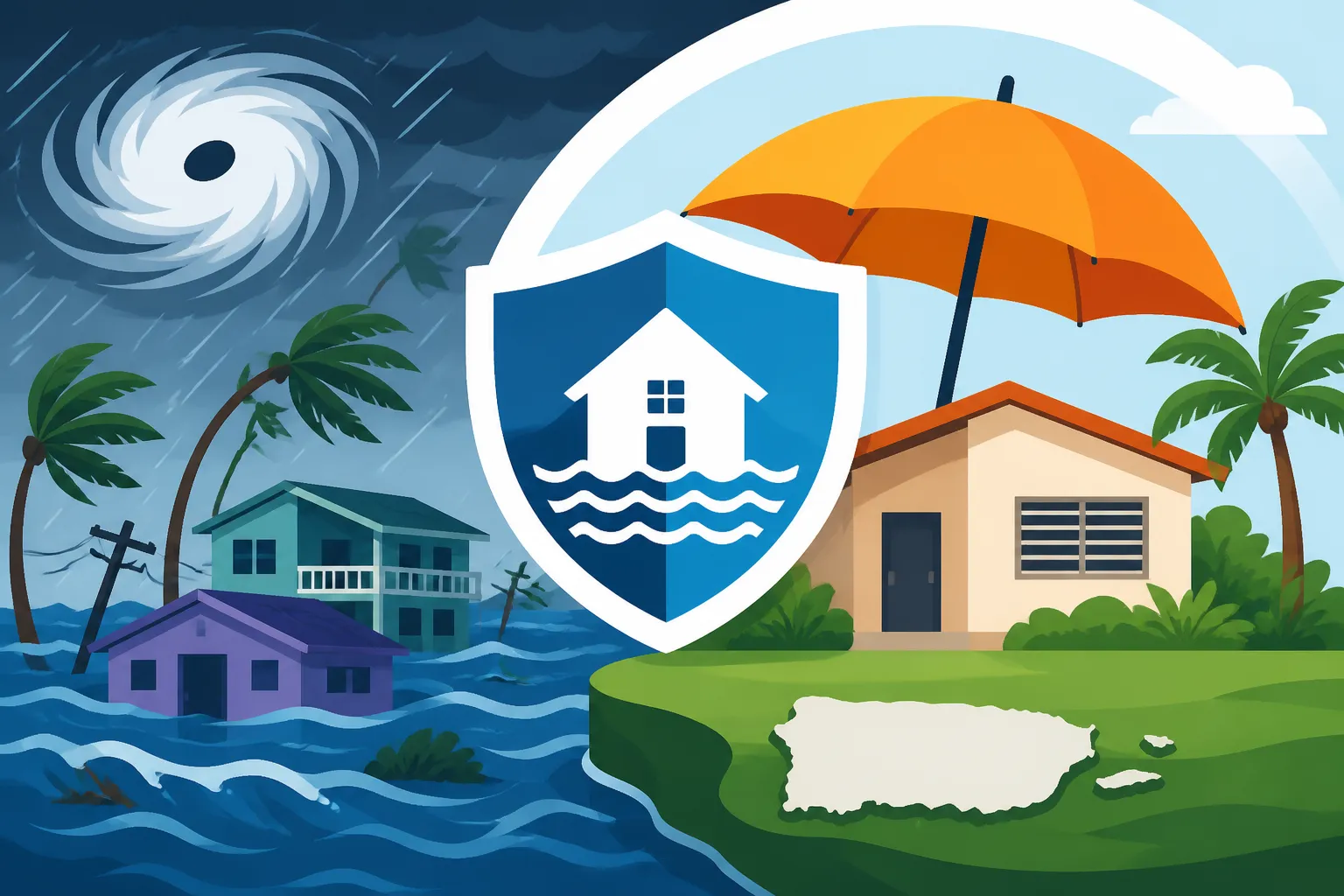
Understanding Flood Zones and Hurricane Insurance in Puerto Rico
One of the biggest anxieties many newcomers face when considering a move to Puerto Rico, especially those from areas less prone to intense weather events, is the looming presence of hurricane season and the very real threat of flooding. It’s a completely valid concern, believe me, I’ve been there. The process of understanding obscure flood zone maps and deciphering dense insurance policies can feel like navigating a bureaucratic labyrinth blindfolded, adding layers of stress to an already complex relocation. This guide is here to cut through the jargon, share hard-won insights, and walk you through everything you need to know about flood zones and hurricane insurance in Puerto Rico, so you can make informed decisions and sleep a little easier.
The Reality of Living in Puerto Rico's Flood Zones
Let’s be honest, the thought of your dream home becoming submerged is terrifying, and it's a fear many of us expats here in Puerto Rico have had to confront head-on. The island, while breathtakingly beautiful, is indeed susceptible to heavy rainfall and coastal storm surges, making flood zones a critical consideration for any property owner or renter. It’s not just about hurricanes either; even a persistent tropical wave can dump enough rain to turn streets into rivers. Understanding where your potential home sits in relation to these zones is step one in responsible homeownership on the island. Ignoring it is like playing Russian roulette with your biggest investment.
Decoding FEMA Flood Maps and Their Importance
So, you’ve found a place you love, maybe a charming little spot in Old San Juan or a peaceful retreat in Rincón. Before you sign anything, the absolute first thing you need to do is consult the Federal Emergency Management Agency (FEMA) flood maps. These maps delineate areas into different flood risk categories, providing crucial information about a property's vulnerability. They're not just theoretical lines on a map; these designations directly impact everything from building codes to, crucially, your insurance premiums and requirements.
When you look at a FEMA map, you'll see various zones. Zone AE, for instance, indicates areas with a 1% annual chance of flooding (the 100-year flood zone), and often comes with a base flood elevation (BFE) — a critical number that tells you how high floodwaters are expected to rise during that 100-year event. Zone VE indicates a high-risk coastal area with additional hazards associated with storm waves. Then there are zones like X, which denote moderate to low flood risk. Your mortgage lender will absolutely be checking these maps, as properties in high-risk zones (like A or V) usually require mandatory flood insurance if you have a federally-backed mortgage. But even if you don't, it’s a non-negotiable step for your own peace of mind and financial protection. Trust me, you don't want to find out you're in a flood zone after the water starts rising.
Common Misconceptions About Flood Risk
A huge misconception I hear often from folks new to the island is, "Oh, I'm not on the coast, so I don't need flood insurance." My friend, that couldn't be further from the truth in Puerto Rico. Inland flooding from torrential rains is a very real and frequent occurrence. Rivers swell, drainage systems get overwhelmed, and even seemingly gentle slopes can become torrents. Subdivisions far from the ocean can get swamped simply because the ground couldn't absorb any more water, or because a nearby creek overflowed its banks.
Another myth is that standard homeowners' insurance will cover flood damage. This is a biggie, and it's absolutely false. Your typical homeowners' policy explicitly excludes flood damage. This is why a separate flood insurance policy, typically through the National Flood Insurance Program (NFIP) or a private insurer, is so vital. People also sometimes assume that if their house is elevated, they're safe. While elevation certainly helps and can lower your premiums, it doesn't make you impervious to flooding, especially in severe events. There's a reason why building codes in flood-prone areas often mandate specific elevation requirements; it's a mitigation strategy, not a magic shield. Always, always check the flood maps, regardless of how "safe" a property might appear. For more detailed information on insuring your home, you might want to read about How to Get Health Insurance When You Move to Puerto Rico—though that's for people, the principle of needing specific coverage for specific risks is the same!
Understanding Hurricane Insurance: Beyond the Basics
Okay, so we've talked about flood. Now, let's tackle the other big one: hurricanes. The term "hurricane insurance" itself can be a bit misleading because it's not a standalone policy you just go out and buy. Instead, coverage for hurricane-related damage is typically woven into your standard homeowners' policy, but with some very specific nuances that are critical to understand here in Puerto Rico. This is not like buying a simple policy on the mainland; you need to dig deep into the clauses and understand the local context.
What "Hurricane Insurance" Really Covers (and Doesn't)
When you're looking at homeowners' insurance in Puerto Rico, you're primarily concerned with what’s known as "windstorm" or "named storm" coverage. This is the part of your policy that kicks in for damage caused by a hurricane's high winds, wind-driven rain (when it enters through a breach in the building envelope caused by the wind), and other related perils. It covers damage to your dwelling, other structures on your property (like a detached garage), and your personal belongings. However, here's the kicker: this coverage usually does not include flood damage. Remember, flood is almost always a separate policy!
So, imagine this scenario: a hurricane hits. The winds rip off part of your roof, and then the rain pours in, soaking everything. Your hurricane (windstorm) coverage will likely pay for the roof repair and the damage caused by the rain because the wind initially breached the roof. But if your house is fine structurally from the wind, but the nearby river overflows and floods your first floor, that is flood damage, and it needs a separate flood policy. It’s a subtle but profoundly important distinction. Make sure your policy clearly delineates what is covered under "windstorm" versus what requires "flood." It’s a good idea to chat with local brokers who specialize in property insurance, as they can clarify these complex interplays for your home.
The Dreaded Hurricane Deductible Explained
This is where many people get a nasty surprise after a storm. Unlike the standard flat dollar deductible you might be used to for a regular homeowners' claim (like a small fire or theft), hurricane deductibles in Puerto Rico are almost always a percentage of your dwelling's insured value. This percentage can range from 2% to as high as 10% or even higher, depending on your policy and location.
Let me give you a real-world example: Say your home is insured for $300,000, and your hurricane deductible is 5%. If a hurricane causes $50,000 worth of damage, you’re on the hook for $15,000 (5% of $300,000) before your insurance company pays a dime. That's a significant amount of cash to have readily available, especially right after a disaster. This percentage deductible only applies when a named storm (hurricane or tropical storm) causes the damage. For other perils like a regular thunderstorm or fire, your standard dollar deductible would apply. It's vital to understand this percentage, not just the dollar amount, when comparing policies. It can be a major financial hit, so plan for it. Understanding these financial components can be just as crucial as knowing How Much Does Health Insurance Cost in Puerto Rico in 2026?.
Navigating Insurance Options for Your Puerto Rico Home
Finding the right insurance can feel like an overwhelming task. It's not just about getting any policy; it's about getting the right policy for your specific situation in Puerto Rico. Given the unique risks here, you can’t afford to just pick the cheapest option or assume a mainland approach will suffice. You need local expertise and policies tailored to the environment.
Finding the Right Insurer and Policy
When searching for insurance, your best bet is to work with local insurance brokers. They have an intimate understanding of the Puerto Rico market, the common risks, and which carriers are reliable. While some mainland insurers might operate here, local companies or brokers with strong ties to the community often provide more personalized service and understand the nuances of local construction and repair costs. Look for brokers who specialize in property insurance for coastal and hurricane-prone areas. Ask them about different policy types, what kind of windstorm deductibles are available, and whether they can bundle your flood insurance with your homeowners' policy for convenience (though they will still be separate coverages).
Don't be afraid to shop around and get multiple quotes. The pricing and coverage can vary significantly. Some of the well-known local carriers might include Universal Insurance, Triple-S Propiedad, MAPFRE, and Antilles Insurance Company. It's not just about the premium; scrutinize the terms, the deductibles, the exclusions, and the claims process. Ask about their catastrophe response plan – how do they handle claims immediately after a major storm when everyone needs help? This due diligence will pay off significantly if you ever need to file a claim. You can also gain deeper insights into the broader financial landscape by exploring resources like Banking in Puerto Rico A Complete Guide for Newcomers.
The Role of the Puerto Rico Insurance Department
Just like every state, Puerto Rico has its own regulatory body for insurance: the Oficina del Comisionado de Seguros de Puerto Rico (Office of the Insurance Commissioner of Puerto Rico, or OCS). This department regulates the insurance industry on the island, ensures companies comply with local laws, and provides consumer protection. If you have a dispute with an insurance company, or if you feel you're being unfairly treated, the OCS is the body you would turn to for assistance.
They are there to help ensure that insurance companies are solvent, that their policies are fair, and that they fulfill their obligations to policyholders. Before committing to an insurer, you can even check with the OCS to see if there have been any complaints against them. It’s a good layer of protection to know about. They are particularly active after major hurricane events, working to facilitate claims and protect consumers from unscrupulous practices. Understanding how regulatory bodies function in different sectors, like those for The Newcomer's Guide to Setting Up Utilities LUMA AAA in Puerto Rico, can be empowering.
| Insurance Type | Primary Coverage | Typical Exclusions | Deductible Structure | Mandatory for Mortgages? |
|---|---|---|---|---|
| Standard Homeowners' | Fire, theft, liability, some wind damage (non-hurricane), property damage | Flooding, earthquake, hurricane wind | Flat dollar amount | Yes |
| Flood Insurance | Damage from rising water (rivers, storm surge, heavy rain) | Wind, fire, earthquake, pipe bursts | Flat dollar amount | Yes, in high-risk zones |
| Hurricane (Windstorm) Endorsement | Damage from named hurricanes/tropical storms (wind, wind-driven rain) | Flooding, earthquake, general wear | Percentage of dwelling value | Often included/required |
Practical Steps for Protecting Your Home and Family
Moving to Puerto Rico means embracing a new lifestyle, and part of that is becoming proactive about hurricane preparedness. It’s not about living in fear, but about living smart. You wouldn't move to a desert without understanding water conservation, and you shouldn't move here without a robust plan for hurricane season.
Mitigating Flood Risk on Your Property
Beyond insurance, there are tangible steps you can take to reduce your property's vulnerability to flooding. If you're buying, consider homes already elevated or built with flood-resistant materials. For existing homes, simple actions can make a difference. Clear gutters and downspouts regularly to ensure proper drainage away from your foundation. Grade your landscaping so that water flows away from your house, not towards it. Consider installing French drains or rain barrels. If you're in a known flood zone, investing in flood vents or even raising critical utilities (like your electrical panel) can be invaluable.
For extreme scenarios, having sandbags or barriers ready can temporarily protect lower-level entrances. Securing outdoor furniture and loose items will prevent them from becoming projectiles in high winds or floating debris in floodwaters. These seemingly small efforts contribute significantly to safeguarding your property. Many residents here also consider supplemental power sources; you can learn more about this by looking into Understanding Solar Power and Backup Generators in Puerto Rico.
Preparing for Hurricane Season: A Pre-Emptive Approach
Hurricane season in the Atlantic runs from June 1st to November 30th, but the peak months are typically August, September, and October. Don't wait until a storm is barreling towards the island to start preparing. My advice? Treat early June as your personal "hurricane readiness deadline."
Here’s a checklist that I, and many other long-time expats, swear by:
- Develop a Family Plan: Where will you go if you need to evacuate? How will you communicate if cell towers are down? Consider having an emergency contact outside of Puerto Rico.
- Assemble an Emergency Kit: This means at least a week’s supply of non-perishable food and water (one gallon per person per day), a battery-powered radio, flashlights, extra batteries, a first-aid kit, important documents (copies in waterproof bags), cash, and any necessary medications. Don't forget pet supplies!
- Secure Your Home: Trim trees and remove dead branches. Secure loose items outside. Consider storm shutters or plywood for windows.
- Fuel Up: Keep your car’s gas tank full during hurricane season. Gas stations can be out of power or fuel for days, if not weeks, after a major storm.
- Stay Informed: Follow local weather advisories from the National Weather Service in San Juan (NOAA NWS San Juan) and local news outlets. During the initial move and before you have established reliable internet, you might rely on services like Sirelo to handle logistics, but for immediate local information, local news is key. Have multiple ways to get information—radio, TV, and phone (if service is available).
It sounds like a lot, but once you have a system down, it becomes second nature. It’s all about being prepared, not panicked.
The Financial Implications of Underinsurance in a Disaster
This is the grim reality check. Many expats end up in heartbreaking situations when they've skimped on insurance or misunderstood their policies. A tropical paradise quickly loses its luster when you're facing hundreds of thousands of dollars in uninsured losses, or you're stuck in bureaucratic limbo trying to rebuild your life.
The True Cost of Skipping or Skimping on Coverage
Imagine you’ve just invested in a beautiful home in Puerto Rico, perhaps a charming bungalow with ocean views. You think, "I'll save a few bucks and skip the flood insurance, or maybe opt for the highest possible hurricane deductible." Then, a major storm hits. Your home is devastated by wind and then inundated by a storm surge. Your homeowners' policy covers some wind damage, but the majority of the destruction is from water—which isn't covered. On top of that, your high hurricane deductible means you still have a huge out-of-pocket expense for the wind damage.
The "savings" you thought you made on premiums quickly become a drop in the bucket compared to the massive financial burden of rebuilding or repairing your home out of your own pocket. This can lead to total financial ruin for some, forcing them to abandon their property or take on crippling debt. It’s not just the cost of repairs either; think about temporary housing, replacing all your personal belongings, and the emotional toll. The true cost of underinsurance isn't just the missing premium; it's the complete disruption and potential destruction of your financial stability and peace of mind. To truly grasp the financial landscape, consider reading The Complete Guide to Cost of Living in Puerto Rico 2026.
Government Aid vs. Personal Insurance: Don't Get Confused
After a major disaster, you'll often hear about federal disaster assistance from FEMA. This is fantastic and provides a vital safety net for many, but it's crucial to understand that FEMA aid is not a substitute for adequate insurance. FEMA assistance is typically designed to provide minimal assistance for essential needs, to get you back on your feet, not to rebuild your entire life or return your home to its pre-disaster condition.
FEMA grants for housing, for example, are capped and generally much lower than what it would cost to repair or replace a significantly damaged home. Loans are available, but they are loans, meaning you'll have to pay them back. Furthermore, if you are offered flood insurance and decline it, you might be ineligible for future FEMA assistance for flood damage. The government's role is to help; your insurance company's role is to fulfill a contractual obligation that you paid for. Relying solely on government aid after a catastrophic event, especially when insurance was available, is a gamble you absolutely do not want to take in Puerto Rico. Take proactive steps to protect your investment, and that starts with comprehensive insurance.
Disclaimer
The information provided in this article is for general informational purposes only and does not constitute professional financial, legal, or insurance advice. While we strive to provide accurate and up-to-date information, local laws, regulations, and insurance policies can change rapidly. Always consult with qualified local insurance professionals, legal advisors, and real estate experts for advice tailored to your specific situation and property in Puerto Rico. We recommend obtaining multiple quotes and thoroughly understanding policy terms before making any insurance decisions.