Understanding the School System (Public, Private, Charter) in Puerto Rico
Moving your family to Puerto Rico is an adventure, but let’s be real, the thought of navigating a whole new school system for your kids can feel like a massive puzzle. You’re likely wondering about language barriers, curriculum quality, and simply where to even begin. This guide is here to walk you through the ins and outs of public, private, and the emerging charter schools on the island, helping you make an informed decision for your family's educational journey.
The Landscape of Education in Puerto Rico: An Overview
When you first arrive in Puerto Rico with children, one of the most pressing concerns, right after figuring out how to keep the power on or where to find a good panadería, is definitely schooling. It’s a huge decision, and the local education system can seem quite different from what you might be used to on the mainland. The island offers a mix of educational paths, each with its own quirks, strengths, and challenges. Understanding these distinctions is crucial for new expat families.
A Blend of Systems: Public, Private, and the Emerging Charter
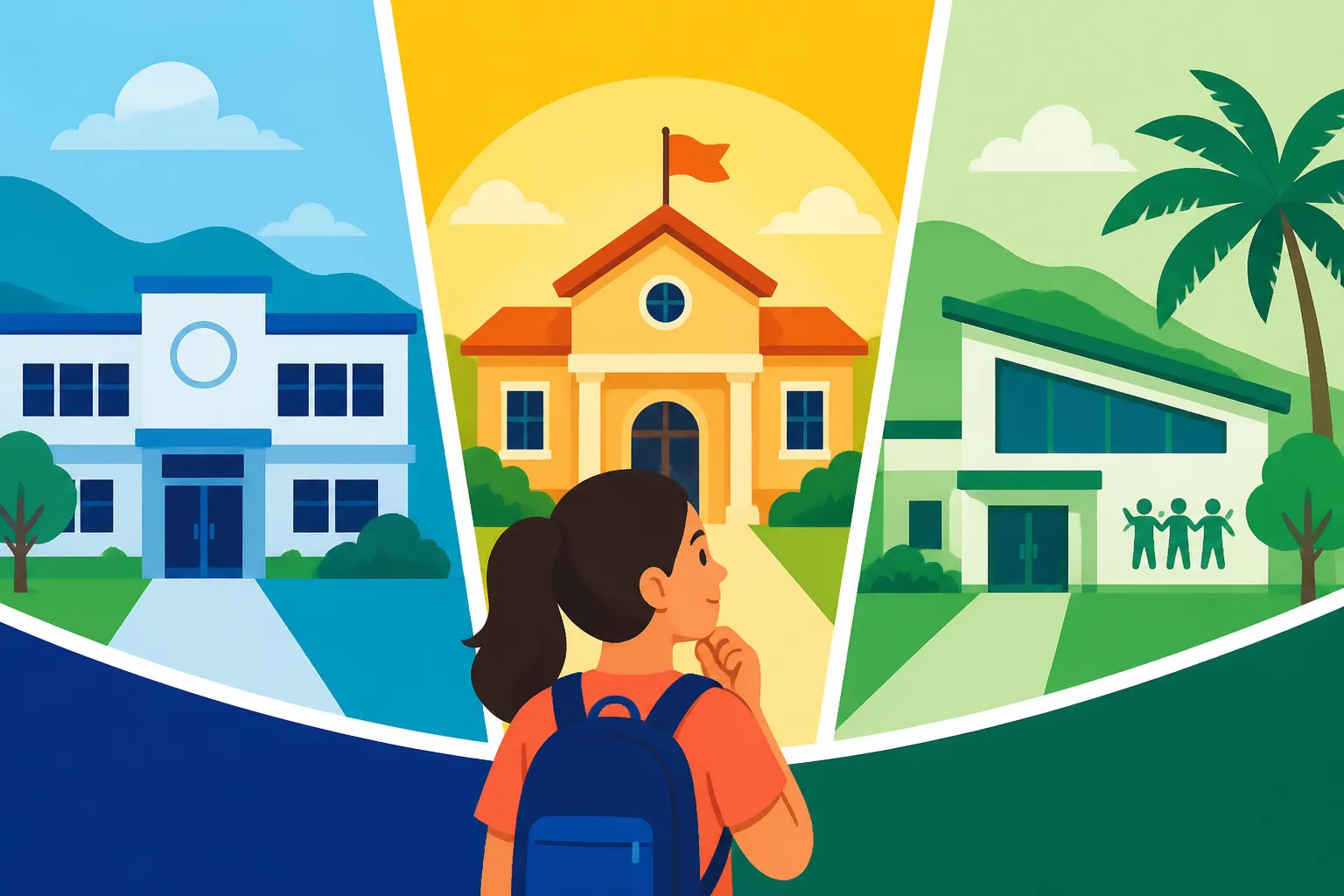
Puerto Rico's educational framework is primarily divided into public and private sectors, with a newer, albeit smaller, third option in charter schools. The public school system, managed by the Departamento de Educación de Puerto Rico (DEPR), is by far the largest, serving the majority of the island's students. These schools are spread across all municipalities, from the bustling cities to the quiet, mountainous regions. Historically, the public system has faced significant challenges, including underfunding, infrastructure issues, and teacher shortages, which were exacerbated by Hurricane Maria and subsequent earthquakes. For many newcomer families, these realities often prompt a deeper look into alternatives.
Private schools, on the other hand, have long been a popular choice for those seeking a more consistent educational experience, often with a stronger emphasis on bilingual instruction and broader resources. These institutions vary widely in their philosophy, curriculum, and, naturally, their cost. They often cater to a diverse student body, including a significant percentage of expat children. Then, we have the emerging charter school system, a relatively new addition to the educational landscape post-Hurricane Maria, designed to offer innovative learning models and more autonomy in management. While still small in number, they represent a growing alternative for families looking for specialized programs or different teaching approaches within the publicly funded framework.
Navigating the Language Barrier: English vs. Spanish
One of the most significant considerations for expat families is, undoubtedly, the language of instruction. Puerto Rico is a Spanish-speaking territory, and this is reflected heavily in its public education system. While English is a mandatory subject from kindergarten through high school, the primary language of instruction in most public schools is Spanish. This can be a huge hurdle for children who arrive without a strong foundation in Spanish, leading to a difficult adjustment period, both academically and socially. Many parents moving from the mainland find this challenging, fearing their children will fall behind or struggle to integrate. It’s a valid concern, and one that absolutely needs to be at the forefront of your decision-making.
Private schools typically offer a more varied approach. Many of the larger, more established private institutions, particularly in and around San Juan, are fully bilingual or even predominantly English-speaking, especially at the elementary levels. Schools like St. John's School in Condado or Baldwin School in Guaynabo are well-known for their American-style curricula and English-first environments, making the transition much smoother for non-Spanish-speaking children. However, even within these schools, a strong emphasis is placed on Spanish as a second language, ensuring students become proficient over time. Charter schools also present a mixed bag; some might focus on English immersion or bilingual models, while others might lean more towards Spanish, depending on their specific mission. The key is to thoroughly investigate the language policy of any school you are considering, and really think about your child’s current language skills and how quickly they might adapt. If you're still on the mainland planning your move, consider beginning some Spanish language exposure for your kids, even if it's just through apps or cartoons – every little bit helps in easing the transition.
Deciphering the Public School System (Departamento de Educación)
For many local families, the public school system in Puerto Rico is the backbone of their children's education. It's free, accessible (theoretically), and deeply ingrained in the local community fabric. However, for newcomers, especially those from the mainland U.S., it can be a stark contrast to what they might expect. It's not a direct translation of state-side public education; there are distinct realities you need to be aware of.
The Realities and Challenges of Public Education
Let's not sugarcoat it: the public school system, overseen by the Department of Education (DEPR), has faced immense challenges for decades. Infrastructure often needs significant repair, resources can be scarce, and class sizes can sometimes be quite large, particularly in urban areas. Following Hurricane Maria in 2017, many schools were severely damaged, leading to widespread closures and consolidations, which disrupted education for countless students. While there have been ongoing efforts to rebuild and modernize, progress can be slow, and the effects are still palpable. You might encounter schools with aging facilities, limited technology, or fewer specialized programs compared to what you might find stateside. This isn't to say there aren't dedicated teachers and good intentions; there absolutely are. But the systemic issues can be a significant hurdle for providing a consistent, high-quality education across the board. The bureaucracy, too, can be a source of frustration, with administrative processes sometimes moving at a slower pace than one might anticipate.
For expat parents, the biggest reality check is often the language. As mentioned, Spanish is the primary language of instruction. While English is taught, full immersion in a Spanish-speaking classroom can be overwhelming for children with no prior Spanish. This is a common point of contention and concern for parents, and frankly, it's a valid one. You want your child to thrive, and being dropped into an environment where they don't understand the teacher or their peers can lead to feelings of isolation and academic struggle. It requires a lot of patience, support, and sometimes supplementary language lessons. Furthermore, extracurricular activities might be less varied or robust than what you're accustomed to, though local sports leagues and community programs can often fill some of these gaps outside of school hours.
Enrollment and Logistics for New Residents
If you're considering the public school route, prepare for some administrative legwork. The process for enrollment isn't always straightforward and can vary slightly depending on the municipality and the specific school. Generally, you'll need to present a collection of documents to the school registrar. These typically include your child's birth certificate, their immunization records (often called Récord Verde), proof of residency in Puerto Rico (like a utility bill or lease agreement), and potentially previous school transcripts. One common challenge new residents face is ensuring that documents from the mainland, such as birth certificates or academic records, are properly authenticated or translated. Sometimes, an apostille might be required for certain documents, which can add an extra layer of complexity and time to the process.
You'll also need to consider your child's age and grade level. The school year generally runs from August to May, similar to the mainland, but it's always best to verify specific start dates with the local school district. It's highly recommended to start this process well in advance of the school year or your move, as things can take time. Don't be shy about asking for help or clarification from school staff, although remember that many interactions will likely be in Spanish. If you need a full rundown, our guide on How to Enroll Your Child in a Puerto Rico School can walk you through the specifics and what to expect. Patience is truly a virtue when navigating this system, and don't hesitate to reach out to local expat groups for shared experiences and tips.
Curriculum, Calendar, and Extracurriculars
The curriculum in Puerto Rico's public schools is designed by the Department of Education and is generally aligned with local standards, which naturally have a strong focus on Puerto Rican history, culture, and literature, all delivered primarily in Spanish. While core subjects like mathematics, science, and social studies are taught, the approach and resources might differ from what you're used to. For instance, textbooks might be older, and access to advanced labs or specialized equipment could be limited depending on the school. The school calendar typically starts in early August and concludes in late May or early June, with a winter break around Christmas and a spring break around Easter. This is generally consistent with mainland schedules, making transitions easier in that regard.
When it comes to extracurriculars, public schools often have fewer options compared to their private counterparts. Sports programs, music, and art clubs exist, but their availability and quality can vary significantly from school to school. Funding plays a major role here, and dedicated parent-teacher associations can sometimes boost these offerings. For parents seeking a broader range of activities for their children, they often look to community organizations, private academies, or local sports leagues outside of the school system. This means that while the core education is provided, you might need to actively seek out and arrange additional activities for your child's holistic development. This can add to the logistical challenges of settling in, but it also provides a great opportunity to explore local culture and make new connections.
Exploring Private School Options: The Popular Choice for Expats
For many expat families, private schools in Puerto Rico aren't just an option; they become the primary consideration, often due to perceived quality, language of instruction, and familiarity with curriculum standards. These schools offer a diverse range of educational philosophies and environments, from large, well-established institutions to smaller, specialized academies.
Why Private Schools Attract Newcomer Families
The allure of private schools for expat families is multi-faceted and, for many, quite compelling. One of the most significant draws is the promise of a more consistent, often higher-resourced learning environment. Private schools typically boast smaller class sizes, which can mean more individualized attention for students, a huge plus, especially for those adjusting to a new island. You'll often find better facilities, including modern science labs, extensive libraries, and robust athletic complexes. These institutions also tend to have more stable funding, which translates into a broader range of academic programs, advanced placement courses, and extracurricular activities, from competitive sports to arts and debate clubs. This predictability and wealth of resources can offer a sense of stability that’s incredibly valuable during a big relocation.
Furthermore, language is a major factor. Many of the top private schools, particularly in the San Juan metropolitan area and affluent surrounding communities like Dorado, offer an American-style curriculum primarily taught in English. This is a massive relief for parents whose children are not fluent in Spanish, as it eases the academic and social transition immensely. Schools like St. John's School in Condado, Baldwin School in Guaynabo, and TASIS Dorado are prime examples, known for their rigorous academics and college preparatory programs that often align closely with mainland U.S. standards. Some even offer the International Baccalaureate (IB) program, catering to families seeking a global curriculum. For a family fresh off the plane, this familiarity can be a lifeline, ensuring their child can immediately engage with their studies and peers without the added stress of a language barrier.
The Application and Admissions Gauntlet
Don't underestimate the process of getting into a good private school here; it can be quite competitive, especially for the most sought-after institutions. These schools often have limited spots, and demand, particularly from incoming families, is high. The application process typically involves submitting an application form, paying an application fee (which can range from $50 to $200), and providing a host of supporting documents. These usually include your child's academic transcripts from previous schools, letters of recommendation from former teachers, and their immunization records. Many schools will also require entrance exams, which might test English proficiency, math skills, and sometimes Spanish. Additionally, parent and student interviews are common, giving the school a chance to assess fit and the family a chance to ask questions.
A crucial piece of advice: apply early! Applications for the following academic year often open in the fall and close by late winter or early spring. Waiting until summer, or even after you've physically moved to the island, might mean you'll find waiting lists for popular grades, particularly at the elementary level. It’s not uncommon for families to apply to several schools simultaneously to increase their chances. This competitive landscape means that simply wanting to attend a private school isn't enough; you need to be prepared for a thorough and sometimes lengthy admissions process. Think of it like applying to college, but for your kindergartner!
Understanding the Costs: Tuition and Additional Fees
Now, let's talk about the elephant in the room: the cost. Private school tuition in Puerto Rico can be substantial, and it's a major factor for most families. Just like on the mainland, costs vary widely based on the school's reputation, facilities, and location. For top-tier schools in the San Juan metro area, you can expect annual tuition to range anywhere from $10,000 to $20,000+ per child for elementary and middle school, and often even higher for high school. This is a significant financial commitment, especially if you have multiple children. If you want a more detailed breakdown, our guide on How Much Are Private School Fees in San Juan? dives deeper into the numbers.
But tuition is just the beginning. There are often numerous additional fees that can quickly add up. These might include:
- Application fees: As mentioned, non-refundable fees just to submit an application.
- Enrollment/Registration fees: A one-time or annual fee to secure your child's spot, often non-refundable.
- Technology fees: For computers, software, and IT support.
- Book and supply fees: Textbooks, workbooks, and other classroom materials.
- Uniforms: Most private schools require uniforms, which can be a recurring expense as children grow.
- Extracurricular activities: Fees for sports teams, clubs, music lessons, and field trips.
- Transportation: Many private schools don't offer bus services, so you'll need to factor in gas, car maintenance, or potentially private carpool arrangements.
- Lunch programs: If your child eats school lunch, that's another daily cost.
When budgeting for private education, it's essential to look at the total annual cost, not just the base tuition. These cumulative fees can significantly increase your overall expenses, so make sure to get a comprehensive fee schedule from any school you’re considering. While the price tag is high, many expat parents view it as a worthwhile investment in their children's stability, academic future, and ease of transition to island life.
The Emerging World of Charter Schools in Puerto Rico
Charter schools represent a newer, evolving segment of the educational landscape in Puerto Rico, brought about by educational reform efforts in the wake of Hurricane Maria. They aim to offer alternative models to traditional public schools, but they come with their own set of characteristics and considerations for families.
What Are Charter Schools in the Puerto Rico Context?
In Puerto Rico, charter schools are publicly funded but independently operated schools. This means they receive taxpayer money, similar to traditional public schools, but they are managed by non-profit organizations or educational groups under a charter or contract with the Department of Education. The idea behind them is to foster innovation, flexibility, and provide specialized educational programs that might not be available in a conventional public school setting. They often have more autonomy over their curriculum, staffing, and operational decisions, allowing them to experiment with different teaching methods or focus areas, such as STEM, arts, or dual-language immersion. For families seeking something different than either the traditional public or high-cost private school options, charter schools aim to bridge that gap.
The implementation of charter schools on the island is still relatively recent, gaining momentum after the 2018 education reform bill, Law 85. This means the system is still maturing, and the number of operational charter schools is growing but not as widespread as in some mainland U.S. states. They are often seen as part of an effort to improve overall educational outcomes by introducing more choices and competition within the public sector. For newcomers, understanding that this is a developing system is key; you won't find a charter school on every corner, but they are steadily increasing their presence, particularly in more populated areas.
Enrollment, Selection, and Availability
Enrollment in Puerto Rico's charter schools typically operates on a lottery system, especially if the number of applicants exceeds the available spots. This is to ensure fair access, as these are still public institutions and cannot select students based on academic performance or other criteria like private schools. Families interested in a specific charter school need to submit an application during the designated enrollment period, and then a random lottery draw determines who gets a spot. It’s a bit like playing the odds, and you might not always get in on your first try.
Due to their relatively recent introduction, the availability of charter schools can be limited, both in terms of the total number of schools and their geographic distribution. Most are concentrated in or around the major metropolitan areas, such as San Juan, Bayamón, or Ponce, where there is a larger population and often more interest from families seeking alternatives. If you're planning to live in a more rural or remote part of the island, your chances of finding a nearby charter school might be slim. It's crucial to research specific locations and individual school missions if you're leaning towards this option. Keep an eye on the Department of Education’s announcements or local educational news for updates on new charter schools or expansion plans, as the landscape is continually evolving.
The Promise and Perils of Charter Education
Charter schools, in theory, offer a compelling promise: the benefits of publicly funded education combined with the flexibility and innovation often found in private institutions. They can provide specialized programs that cater to specific student needs or interests, like strong science and technology tracks, performing arts academies, or unique project-based learning models. Smaller class sizes, dedicated teachers, and a strong sense of community can also be hallmarks of successful charter schools, leading to environments where students feel more engaged and supported. For some families, this model can be a perfect fit, offering a high-quality education without the steep tuition costs of private schools.
However, it's not without its perils. As a relatively new and evolving system in Puerto Rico, charter schools can face challenges related to funding stability, particularly as political and economic landscapes shift. Their long-term sustainability can sometimes be a concern, and a school's charter can be revoked if it doesn't meet its performance goals. This can lead to uncertainty for families, something any parent wants to avoid. Additionally, because they are independent, the quality and effectiveness can vary greatly from one charter school to another. What works wonderfully in one location might not be replicated elsewhere. It requires diligent research from parents to understand each school's track record, leadership, and community support before committing. While the promise of innovation is appealing, the reality can sometimes be a mixed bag that requires careful consideration and ongoing engagement from families.
Making the Right Choice for Your Family
Deciding where your children will go to school in Puerto Rico is a deeply personal and often complex decision, fraught with anxieties for expat parents. It's not just about academics; it's about cultural integration, emotional well-being, and finding a community that truly supports your family's transition to island life. There’s no single "best" option, only the best fit for your family.
Factors to Consider Beyond the Obvious
When you're weighing your options, it's easy to get caught up in tuition fees or school ratings. But take a step back and think about the less obvious, yet equally important, factors. First, consider your child's personality and learning style. Is your child adaptable and resilient, capable of thriving in a Spanish-dominant public school with some extra support? Or do they need a more structured, English-speaking environment to feel secure? A shy child might struggle more with a sudden language immersion than an outgoing one. Second, assess your family’s budget. While public schools are tuition-free, private schools, as we’ve seen, come with a hefty price tag. Be realistic about what you can comfortably afford, remembering that living on the island also has its unique costs. Our guide on The Cost of Healthcare in Puerto Rico: A Complete Breakdown for Newcomers (2026) reminds us that every aspect of life here has a cost, so budget holistically.
Third, think about the commute. Puerto Rico traffic, especially in metropolitan areas, can be challenging. A school that looks perfect on paper might become a daily nightmare if it involves an hour-long drive each way. Location often ties into our guide, The Best Places to Live in Puerto Rico for Newcomers: A Complete Guide (2027), as good schools often influence residential choices. Finally, consider your long-term plans. Do you envision your family staying in Puerto Rico for the foreseeable future, or is this a temporary relocation? If you plan to return to the mainland, a school with a curriculum easily transferable to U.S. standards might be a higher priority. All these nuances play into finding the ideal educational home for your kids.
Practical Steps for Research and Due Diligence
Moving to a new country and finding a school is a huge undertaking. You can't just rely on internet searches alone. The absolute best thing you can do is visit the schools in person. Take a How Do I Plan a Scouting Trip Before Moving to Puerto Rico? before your full relocation. Walk the halls, observe classrooms, and try to get a feel for the school's atmosphere. Talk to the admissions staff, ask specific questions about curriculum, class sizes, teacher qualifications, and support for new students. Don't be afraid to press for details, especially on topics like special education services or extracurricular offerings, as these can vary significantly.
Beyond school visits, talk to other expat parents. They are an invaluable resource, having navigated these same waters. Join online forums, Facebook groups for expats in Puerto Rico, or local community organizations. Their firsthand experiences, both positive and negative, can provide insights that no brochure ever will. They can also offer tips on things like What Vaccinations Are Required for Children in Puerto Rico Schools? or how to handle registration paperwork. Furthermore, compare curricula carefully. If your child is heading to high school, understand what colleges they typically send students to, and if their credits will be easily recognized back on the mainland if that’s a concern. Use services like Airalo to ensure you have reliable data to do your research on the go, whether you’re scouting schools or looking up parent reviews. Every piece of information helps paint a clearer picture.
Navigating the Transition and Settling In
Once you’ve made a decision and your child is enrolled, the real work of settling in begins. The transition to a new school, especially in a new country and potentially a new language, can be emotionally taxing for children. Be prepared for a period of adjustment. Validate their feelings of frustration or loneliness, and create a supportive home environment. Maintaining routines and open communication can make a huge difference. Encourage them to talk about their day, any struggles they're facing, or new friends they’ve made. Consider supplementary Spanish lessons if they’re in a Spanish-dominant school, or even just fun, immersive activities that boost their confidence in the language.
For parents, getting involved in the school community is an excellent way to integrate and stay informed. Join the PTA, volunteer for school events, or simply be present at pick-up and drop-off to chat with other parents. This not only benefits your child by showing your engagement but also helps you build your own support network on the island. Moving to Puerto Rico is a journey for the entire family, as our guide The Complete Guide to Moving to Puerto Rico: Your First 90 Days (2027) highlights. Companies like Sirelo can help ease the logistical burdens of moving, freeing you up to focus on your family's emotional and educational transition. Remember, adaptability is key, and while there will be bumps in the road, the experience of a new school system in a vibrant culture like Puerto Rico can ultimately be incredibly enriching for your children.
| School System Type | Primary Language of Instruction | General Cost (Annual per Child) | Typical Class Size | Pros for Expats | Cons for Expats |
|---|---|---|---|---|---|
| Public | Spanish (English as subject) | Free | Large | No tuition, cultural immersion, local community. | Language barrier for non-Spanish speakers, variable resources/facilities, bureaucracy. |
| Private | English, Bilingual, or Spanish | $8,000 – $25,000+ | Smaller | American-style curriculum, often English-speaking, better resources, stability, robust extracurriculars. | High tuition and fees, competitive admissions, potentially less cultural immersion. |
| Charter | Varies (often bilingual/English) | Free | Moderate | Innovative programs, often specialized focus, publicly funded, more autonomy. | Limited availability, lottery-based admission, system still evolving, quality can vary. |
Disclaimer
The information provided in this guide is intended for general informational purposes only and does not constitute professional advice. While we strive to offer accurate and up-to-date content, educational policies, school availability, and costs in Puerto Rico can change frequently. It is essential to conduct your own thorough research, contact individual schools directly, and consult with relevant educational authorities or local experts to ensure you have the most current and specific information for your family's situation.