Understanding Property Ownership and Titles in Puerto Rico
Moving to a new place is always an adventure, full of exciting possibilities and, let's be honest, a fair share of bureaucratic hurdles. When it comes to something as fundamental as property ownership in Puerto Rico, you might expect it to be a straightforward process, especially as a U.S. citizen. But let me tell you, navigating the intricacies of property titles here can feel like trying to untangle a very old, very complex fishing net. This guide is here to walk you through the unique landscape of property ownership and titles in Puerto Rico, helping you understand the system so you can make informed decisions and avoid common pitfalls.
The Unique Landscape of Property Ownership in Puerto Rico
You've probably heard that Puerto Rico operates under a blend of legal systems, and nowhere is this more apparent than in property law. It's not quite like the mainland, and it’s not entirely like a foreign country either. This unique blend often catches newcomers off guard, leading to confusion and, at times, significant frustration.
Property Law: A Blend of Traditions
Puerto Rico's property law is a fascinating, sometimes challenging, mix. On one hand, you have the overarching framework of U.S. federal law and constitutional protections. On the other, the island's foundational civil law heritage, stemming from Spanish legal traditions, dictates much of how private property is owned, transferred, and managed. This means that concepts and procedures that are second nature in Florida or California might be entirely different here.
For example, the civil code heavily influences aspects like inheritance (sucesiones), marital property regimes (sociedad legal de gananciales), and the precise requirements for legal documents. Unlike common law systems where judges often create precedent, civil law relies more heavily on codified statutes. This can lead to a more rigid, detailed approach to transactions. When you're dealing with land here, you're not just dealing with the parcel itself, but with centuries of legal evolution that have shaped how that land is recorded, divided, and transferred. This historical depth is part of Puerto Rico's charm, but it's also a source of complexity for those not accustomed to it. Understanding this duality is the first step to successfully navigating the real estate market.
Key Terminology You'll Encounter
To truly understand property ownership in Puerto Rico, you'll need to get acquainted with some specific terms. These aren't just fancy words; they represent fundamental legal concepts that will define your rights and responsibilities as a property owner. Don't be shy about asking for clarification from your legal team; they’re there to help demystify this for you.
You'll hear the term escritura thrown around a lot. This isn't just a deed; it’s a public instrument prepared by a notary public that formalizes the transfer of property. It's a much more robust document than a simple deed you might find on the mainland, carrying significant legal weight. Then there's finca, which refers to a specific, identifiable piece of real estate, usually a plot of land or a property unit. It's the unique identifier for your property within the Registry system. When you hear about segregación, it means the division of a larger finca into smaller, independent parcels, each getting its own finca number. This is crucial if you're buying a piece of land that was once part of a larger estate.
For those looking at apartments or townhouses, condominio will be a familiar term, but understanding its legal framework and the Reglamento del Condominio (condo bylaws) is paramount. Finally, older properties might sometimes involve concepts like dominio útil and dominio directo, which refer to complex historical forms of ownership where one party held the right to use and profit from the land (útil), while another held the ultimate title (directo). While less common today for new transactions, these can still surface in historical title searches, highlighting the need for thorough due diligence.
Here’s a quick overview of some essential terms you'll encounter:
| Term | Definition | Practical Implication for Owners |
|---|---|---|
| Escritura | Public instrument prepared by a Notary Public, formalizing property transfer or transaction. | It is your primary proof of ownership; the Notary keeps the original, so keep your certified copy safe. |
| Finca | A unique, identifiable piece of real estate recorded in the Property Registry. | Your property's legal identity; crucial for all transactions and record-keeping. |
| Registro de la Propiedad | The official government office where all property records are recorded and made public. | Where your ownership is legally recognized; central to proving clear title. |
| Segregación | The legal process of dividing a larger finca into smaller, independent parcels. | Necessary when buying a portion of a larger plot; each new parcel gets its own finca number. |
| Declaratoria de Herederos | A judicial or notarized declaration identifying the legal heirs of a deceased person's estate. | Essential for clearing title on inherited properties, especially if prior owners passed without a will. |
| Notario Público | A public official with extensive powers to draft, authorize, and certify public instruments like escrituras. | They play a far more significant role than mainland notaries in real estate transactions. |
| CRIM | Centro de Recaudación de Ingresos Municipales, the municipal property tax collection agency. | You'll pay your property taxes here; clear standing with CRIM is vital for selling property. |
| Gravamen | A lien or encumbrance on a property, such as a mortgage, judgment, or tax lien. | Must be cleared to ensure a "clean" title for purchase or sale. |
Decoding Property Titles in Puerto Rico: The Registry and Beyond
When you buy a home, the goal is always to get a "clear title." But what does that really mean in Puerto Rico, and how do you achieve it amidst the island's unique legal framework? It starts with understanding the bedrock of property legality: the Property Registry.
The Importance of the Property Registry (Registro de la Propiedad)
Imagine a massive, meticulously maintained ledger that holds the legal history of every piece of property on the island. That's essentially the Registro de la Propiedad (Property Registry). This institution, deeply rooted in Spanish civil law, is the cornerstone of property security in Puerto Rico. Its primary function is to record all legal acts affecting real estate, such as sales, mortgages, inheritances, easements, and liens. When a document is inscribed (recorded) in the Registry, it becomes public knowledge and creates a legal presumption of validity that is hard to challenge.
For anyone purchasing property here, a thorough review of the Registry records associated with the finca is absolutely non-negotiable. This is where your attorney will trace the chain of ownership, verify boundaries, and uncover any existing gravámenes (encumbrances or liens). Without proper inscription in the Registry, even a valid escritura executed by a notary might not fully protect your ownership rights against third parties. It’s a powerful system designed to provide transparency and legal certainty, which is a good thing, but it means you can’t skip steps or assume things are recorded just because they should be. You can learn more about how to check these records in our guide on How to Check a Property Title in Puerto Rico.
What Constitutes a "Clear Title" in Puerto Rico
A "clear title" in Puerto Rico means that the property has a clean and undisputed chain of ownership, free from any unrecorded claims, significant liens, or other legal encumbrances that could challenge your right to possess and transfer the property. Sounds simple, right? Well, sometimes it's anything but.
Common issues that can "cloud" a title here include unrecorded inheritances, especially from multiple generations back where informal transfers occurred without being formalized in the Registry. You might find a property still technically in the names of grandparents who passed away decades ago, even if the current occupants have lived there and paid taxes for years. Boundary disputes are another frequent culprit; properties might lack precise surveys or have fences that don't match legal descriptions. Unpermitted construction is also a big one – additions or modifications made without the necessary municipal permits can complicate things. All of these require specific legal processes to resolve and "clear" the title before a sale can proceed smoothly.
The Role of the Notary Public and Land Surveyors
The Notary Public in Puerto Rico holds a position of immense responsibility and power, far beyond what you might be used to on the mainland. Here, a notario público is a highly trained attorney authorized by the Supreme Court to draft, interpret, and authenticate public instruments like your escritura. They don't just witness signatures; they are the legal architects of your property transaction, ensuring it complies with all civil code requirements and the parties involved understand the implications. Your closing will almost certainly take place in their office, and they will be the one submitting the documents for inscription at the Registry.
Equally crucial are certified land surveyors. Given the historical challenges with property boundaries and informal divisions, getting an updated, precise survey (mensura) is often a vital step, especially for rural properties or those that have undergone segregación. A good surveyor can identify encroachments, verify the actual size and shape of the land, and ensure the physical reality matches the legal description in the Registry. Trying to cut corners here can lead to headaches down the road, so always engage reputable professionals for both your legal and surveying needs.
Common Challenges and Pitfalls for New Property Owners
Even with the best intentions, the unique aspects of Puerto Rico's property system can present some daunting challenges for newcomers. It’s not about doing anything wrong, but about navigating a landscape that simply operates differently.
Navigating Unrecorded Inheritances and Heirship Issues
This is probably one of the biggest headaches you can encounter, and it's frustratingly common, particularly with older properties that have been in families for generations. In many cases, when a property owner passes away, the heirs simply continue to live in or manage the property without formally going through the legal process of declaratoria de herederos (declaration of heirs) or división de herencia (division of inheritance). This means the property's legal title at the Registry might still be in the name of the deceased, or in the names of multiple unrecorded heirs.
Imagine falling in love with a charming colonial home in Old San Juan, only to find out that it's legally owned by five siblings, two of whom live off-island and one who passed away without a will, leaving their share to their three children. Suddenly, you're not just buying a house; you're buying into a multi-generational family saga that needs to be legally unraveled. This process can be lengthy, costly, and requires the cooperation of all heirs, which isn't always easy to secure. Your attorney will have to initiate these legal proceedings to get the title cleared, and patience will be your best friend.
Boundary Disputes and Informal Property Divisions
Another common issue stems from properties, particularly in rural or semi-rural areas, that have fuzzy boundaries. Perhaps the original fincas were massive tracts of land, and over time, family members simply "divided" them with a fence or a row of trees, never formally going through the segregación process at the Registry. This can lead to situations where the property you think you're buying doesn't quite match its legal description, or where a neighbor's fence might actually be encroaching on the legal boundaries of your potential new home.
These disputes can range from minor annoyances to full-blown legal battles. This is precisely why a current and accurate land survey is so critical. A good surveyor will place physical markers on the ground, verifying the property lines against the legal description and flagging any discrepancies. If a dispute arises, legal action like an acción de deslinde (boundary demarcation action) might be necessary to establish clear lines. It’s definitely not a pleasant discovery mid-transaction, but it's a reality here, and being prepared for it mentally can save you a lot of stress.
Unpermitted Construction and Municipal Regulations
Ah, the "island special" – a beautifully renovated patio or a new annex that was built without the proper permits from the Oficina de Gerencia de Permisos (OGPe) or local municipality. While it might look great and add value to the property in the owner's eyes, unpermitted construction can be a major red flag during a sale. Not only can it lead to fines, but it can also make securing a mortgage difficult, as banks are very hesitant to finance properties with unregularized structures.
The process of legalizing unpermitted construction can be bureaucratic and time-consuming, requiring plans, inspections, and potentially modifications to bring structures up to code. It often involves engaging architects or engineers and navigating the local permit offices, which, let's just say, requires a significant amount of persistence. Always make sure that any significant additions or changes to a property you're considering buying have the necessary permits, or at least understand the exact steps and costs involved in regularizing them before you commit.
The Essential Steps to Ensuring Secure Property Ownership
You’re ready to dive in, but how do you protect yourself? This isn't just about handing over money; it's about making sure your investment is legally sound. From choosing the right professionals to understanding insurance, these steps are your shield against future headaches.
Engaging a Qualified Real Estate Attorney
I cannot stress this enough: engaging a qualified, experienced real estate attorney in Puerto Rico is not an option; it's an absolute necessity. Please, do not try to navigate this complex legal landscape on your own, or rely solely on a real estate agent for legal advice. A Puerto Rico attorney is intimately familiar with the civil code, the nuances of the Registry, and the common pitfalls specific to the island. They will act as your legal advocate, performing crucial due diligence, reviewing all contracts, and ensuring your interests are protected throughout the entire process.
Your attorney will conduct the title search, analyze any liens or encumbrances, review the escritura, and guide you through the closing process. They will also be your primary point of contact for any questions or concerns that arise, translating complex legal jargon into understandable terms. When choosing an attorney, look for someone with specific experience in real estate transactions involving expats or new residents, as they'll be more attuned to the unique concerns you might have. Finding one who is fluent in both English and Spanish is usually a huge plus. This investment in legal expertise will pay dividends by preventing costly mistakes down the line. For more guidance, check out our article on How to Find a Reliable Real Estate Agent in Puerto Rico, many of whom can also recommend good attorneys.
The Title Search Process: What to Expect
Once you’ve identified a property, your attorney’s first major task will be to initiate a comprehensive title search. This is much more than a quick database query; it’s a deep dive into the property's recorded history at the Registro de la Propiedad. They will look at the finca number and meticulously examine every entry related to that specific property, often going back decades.
What are they looking for? They're confirming the continuous chain of ownership, ensuring that the seller truly has the legal right to sell the property. They'll search for any gravámenes (liens) such as mortgages, judgments, tax liens (from CRIM, which is the municipal property tax authority), or utility debts (from AAA for water or LUMA for electricity) that are attached to the property. They'll also look for any easements, rights of way, or other restrictions that might impact your use of the land. This detailed investigation aims to uncover any "clouds" on the title that could jeopardize your ownership or create future legal problems. Be prepared for this process to take some time, as it requires careful review of historical documents, and sometimes the Registry itself can have backlogs.
Understanding Title Insurance in Puerto Rico
Given the complexities of property titles in Puerto Rico, title insurance, while technically not mandatory in all cash transactions, is very, very strongly recommended. Think of it as your safety net against unforeseen legal challenges to your property ownership that might arise from issues in the past. Even the most diligent title search can sometimes miss deeply buried issues like forged documents, errors in public records, undisclosed heirs, or other defects that might not surface until years later.
Title insurance protects you, the buyer, and your lender (if you have one) from financial losses stemming from such title defects. If a claim is made against your property due to a past issue that the title insurance company should have discovered, they will defend your ownership in court and, if necessary, compensate you for your losses up to the policy amount. Companies like First American Title or Fidelity National Title operate here and can provide this crucial protection. It’s a one-time premium paid at closing, and considering the potential risks, it’s a small price for peace of mind. For those navigating mortgages, understanding How to Get a Mortgage to Buy a Home in Puerto Rico will likely involve discussing title insurance requirements with your lender.
Different Types of Property Ownership Structures
Just like on the mainland, how you hold title to your property can have significant legal, financial, and estate planning implications. It’s not a one-size-fits-all situation, and understanding your options is key.
Individual vs. Joint Ownership (Comunidad de Bienes)
When a single person buys property, it's pretty straightforward: they hold individual title. However, things get a bit more nuanced when couples or multiple individuals are involved, due to the civil law influence on marital property. In Puerto Rico, if you are married without a prenuptial agreement, you generally fall under the sociedad legal de gananciales, or community property regime. This means that any property acquired during the marriage, regardless of who paid for it or whose name is on the escritura, is considered community property and belongs equally to both spouses. This can have significant implications in case of divorce or inheritance.
If you wish to keep assets separate, you would need a prenuptial agreement establishing bienes separados (separate property) before marriage, or a post-nuptial agreement. For unmarried individuals or multiple owners, property can be held in comunidad de bienes, similar to tenants in common, where each owner holds an undivided share. The precise legal language in your escritura will define these ownership rights, so it’s vital to discuss your specific situation with your attorney to ensure the title is held in a way that aligns with your personal and financial goals.
Condominiums and Homeowners Associations (HOAs)
Buying into a condominio (condominium) in Puerto Rico is a very popular option, particularly in urban centers like San Juan, Dorado, or Ponce. Condominium ownership means you own your individual unit (from paint to paint, so to speak) and an undivided percentage share of the common areas, such as hallways, lobbies, pools, and grounds. The legal framework for condominiums is governed by Puerto Rico’s Horizontal Property Law, which outlines the rights and responsibilities of unit owners.
You will automatically become a member of the Asociación de Titulares (Homeowners Association or HOA), which is responsible for managing, maintaining, and administering the common elements of the property. This comes with monthly maintenance fees, and adherence to the Reglamento del Condominio (condominium bylaws) is mandatory. These bylaws cover everything from pet policies and noise restrictions to rules for renovations and use of common areas. It's absolutely crucial to obtain and thoroughly review these documents with your attorney before purchasing, as they can significantly impact your lifestyle and financial obligations. Ignoring these can lead to unpleasant surprises, as detailed in our guide Understanding HOA and Condo Maintenance Fees in Puerto Rico.
Corporate Ownership and Trusts
For some investors or individuals with complex estate planning needs, holding property through a corporate entity like a Puerto Rico LLC or a trust can offer certain advantages, such as privacy, liability protection, or streamlined inheritance processes. For example, if you plan to rent out your property, an LLC can help separate your personal assets from potential liabilities related to the rental business.
However, establishing and maintaining these structures involves additional legal and administrative requirements, including annual filings with the Department of State and specific tax considerations. While they can provide strategic benefits, they also add layers of complexity and cost. Your attorney and tax advisor can help you determine if corporate ownership or a trust is the right structure for your specific situation and investment goals, especially considering the local legal and tax environment.
Property Ownership and Act 60 Tax Incentives
Many newcomers are drawn to Puerto Rico by the promise of Act 60 tax incentives, and property ownership plays a role, albeit an indirect one, in qualifying for these benefits. It’s important to understand the connection clearly to avoid misconceptions.
How Act 60 Relates to Property Holdings
First and foremost, Act 60 (formerly Act 20 and Act 22) primarily offers tax incentives on certain types of income, such as passive income (for individual resident investors under Act 60, formerly Act 22) or income from eligible export services (for businesses under Act 60, formerly Act 20). It does not, in itself, directly grant tax breaks on the property you purchase or the act of owning real estate. However, owning property is often a critical component of establishing and maintaining the required "bona fide residency" in Puerto Rico.
For individual investors, for instance, a major requirement to qualify for Act 60 benefits is to become a bona fide resident of Puerto Rico. One of the key tests for bona fide residency, specifically the "closer connection test," heavily relies on demonstrating your intent to make Puerto Rico your permanent home. And what better way to show that than by owning (or at least renting) a primary residence here? So, while your property itself isn't directly tax-advantaged by Act 60, it's often a foundational element in fulfilling the residency criteria necessary to access the income tax benefits. For a deeper dive into these incentives, check out The Complete Guide to Act 60 Tax Incentives in Puerto Rico: The Full Guide (2026).
Establishing Bona Fide Residency Through Property
Becoming a bona fide resident for tax purposes in Puerto Rico involves meeting three crucial tests: the Presence Test, the Tax Home Test, and the Closer Connection Test. Owning or renting a home significantly contributes to two of these.
For the "Tax Home Test," your tax home must be in Puerto Rico. This means your main place of business or employment, or if you don't have one, your regular place of abode, must be on the island. Having a permanent residence that you actively inhabit here solidifies this. More importantly, the "Closer Connection Test" requires you to demonstrate that you have a "closer connection" to Puerto Rico than to any other place. This is where owning a home, setting up utilities in your name (which is a whole adventure in itself, as explored in The Newcomer's Guide to Setting Up Utilities (LUMA/AAA) in Puerto Rico), getting a local driver's license, registering your car, and having your family here all come into play. Your property becomes the tangible anchor of your life on the island. It’s not enough to simply buy a house and leave it vacant; you need to genuinely establish your life here, with your home being the central hub. This aspect is thoroughly explained in Bona Fide Residency in Puerto Rico: The Definitive Tax Guide (2027).
Maintaining Your Property Records and Legal Documents
Once you've navigated the purchase and secured your property, the journey isn't over. Proper record-keeping is vital, not just for legal compliance but for your peace of mind and future transactions.
Keeping Your Escritura and Related Documents Secure
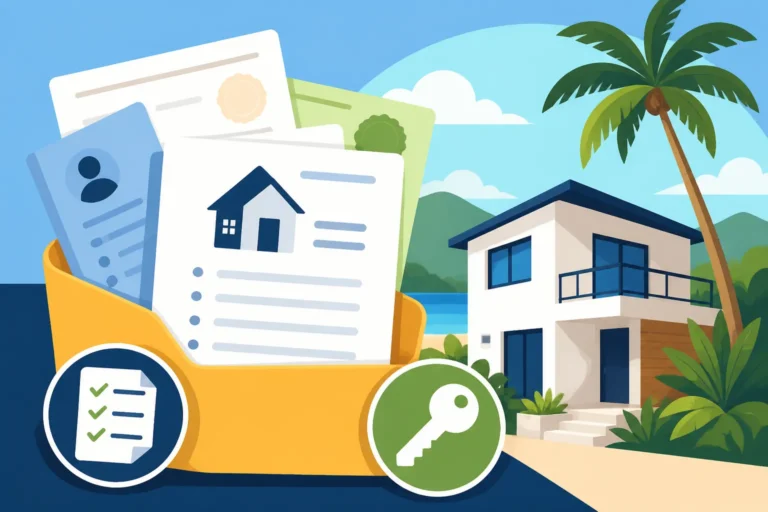
Your escritura pública is arguably the most important document you will possess as a property owner in Puerto Rico. This is your official proof of ownership, meticulously drafted and authorized by a Notary Public. While the original remains in the Notary’s protocol book (a bound ledger of all instruments they have authorized), you will receive a certified copy. Treat this document, and any subsequent certified copies, with the utmost care. Losing it won't mean losing your property, as the official record is at the Registry, but it will be a significant hassle to replace if needed for future transactions.
My advice? Get certified copies, make digital backups, and store both physical and digital versions in secure locations. Consider a fireproof safe at home for physical documents and encrypted cloud storage for digital copies. Also, keep all related documents – surveys, title insurance policies, mortgage documents, property tax receipts, and any permits for construction – organized and accessible. This diligence will save you countless headaches should you ever need to prove ownership, deal with insurance claims, or eventually sell the property.
Regular Review of Property Tax (CRIM) and Utility Records
Property taxes in Puerto Rico are managed by the Centro de Recaudación de Ingresos Municipales (CRIM). It's absolutely crucial to monitor your property tax statements annually and ensure they are accurate and paid on time. Unpaid property taxes can accumulate significant penalties and, more critically, result in a lien on your property that would need to be settled before you could sell or refinance. Even after buying, always double-check that the property's assessed value and ownership details are correct with CRIM. Sometimes, historical errors can persist, and it's better to address them proactively.
Similarly, keep a meticulous record of your utility bills from LUMA (electricity) and AAA (water). These bills not only serve as proof of residency, which is essential for various administrative processes, but also confirm that all services are current. Unpaid utility balances can, in some cases, become a lien on the property, especially for commercial properties or in certain situations with water accounts. Plus, having an organized history of your payments and usage can be invaluable if you ever need to dispute a charge or simply understand your monthly expenses. For a detailed breakdown of these costs, refer to our article, Understanding Property Tax (CRIM) for Homeowners in Puerto Rico.
Selling Property in Puerto Rico: What to Know as an Owner
Eventually, the time may come to sell your piece of paradise. Just as buying involves unique steps, so does selling. Being prepared can make the process much smoother and less stressful.
Preparing Your Property for Sale and Clearing Any Clouds
When you decide to sell your property in Puerto Rico, the best thing you can do is anticipate the issues a buyer’s attorney will uncover during their due diligence. This means proactively addressing any potential "clouds" on your title before you even list the property. Did you inherit the property and never formalized the declaratoria de herederos? Get that process started. Did you add a new patio or garage? Make sure you have the necessary permits or understand the process to legalize it. Are your property boundaries perfectly clear, or do you need an updated survey?
Taking these steps upfront can significantly shorten the sales timeline and prevent a buyer from walking away due to unforeseen legal complications. It also allows you to present a "clean" package to potential buyers, signaling that you are a serious and prepared seller. Remember, the goal is to make your property as attractive and legally sound as possible for the next owner.
The Sales Process and Legal Requirements
The general sales process in Puerto Rico will feel somewhat familiar but with distinct local nuances. Once you've listed your property (often through a real estate agent), received an offer, and agreed on terms, a purchase agreement (contrato de compraventa) will be drafted. This legally binding document outlines the terms and conditions of the sale, including timelines for due diligence, inspections, and closing.
The closing itself will take place before a Notary Public, who will draft the new escritura de compraventa (deed of sale). All parties – buyer, seller, and lender representatives (if applicable) – will sign this document, formalizing the transfer of ownership. Critical legal requirements you, as the seller, need to be aware of include the potential for capital gains tax on the sale of your property, which is handled by Hacienda (the local tax authority). For non-residents, a retenida (withholding tax) is often applied to the sale price unless specific exemptions apply. You’ll also need a "Good Standing" certificate from CRIM, proving all property taxes are paid. Understanding these financial and legal obligations is vital, and your attorney and a tax professional (like those who can help with Filing Your Puerto Rico Tax Return with Hacienda: The Complete Walkthrough (2027) or understanding How Puerto Rico Taxes Work: Federal vs Local (Hacienda) Explained (2027)) will guide you through these calculations and ensure compliance. If you're managing these complex matters from a distance or on a scouting trip, having reliable international connectivity, perhaps with an eSIM from Airalo, can be a lifesaver for communication. And if you’re planning a move to Puerto Rico after selling, a service like Sirelo can assist with the logistics of getting your belongings to the island.
Disclaimer
The information provided in this guide is intended for general informational purposes only and does not constitute legal, financial, or real estate advice. Property laws and regulations in Puerto Rico are complex and subject to change. It is essential to consult with qualified local attorneys, real estate professionals, and tax advisors for advice tailored to your specific situation before making any decisions related to property ownership or transactions in Puerto Rico.