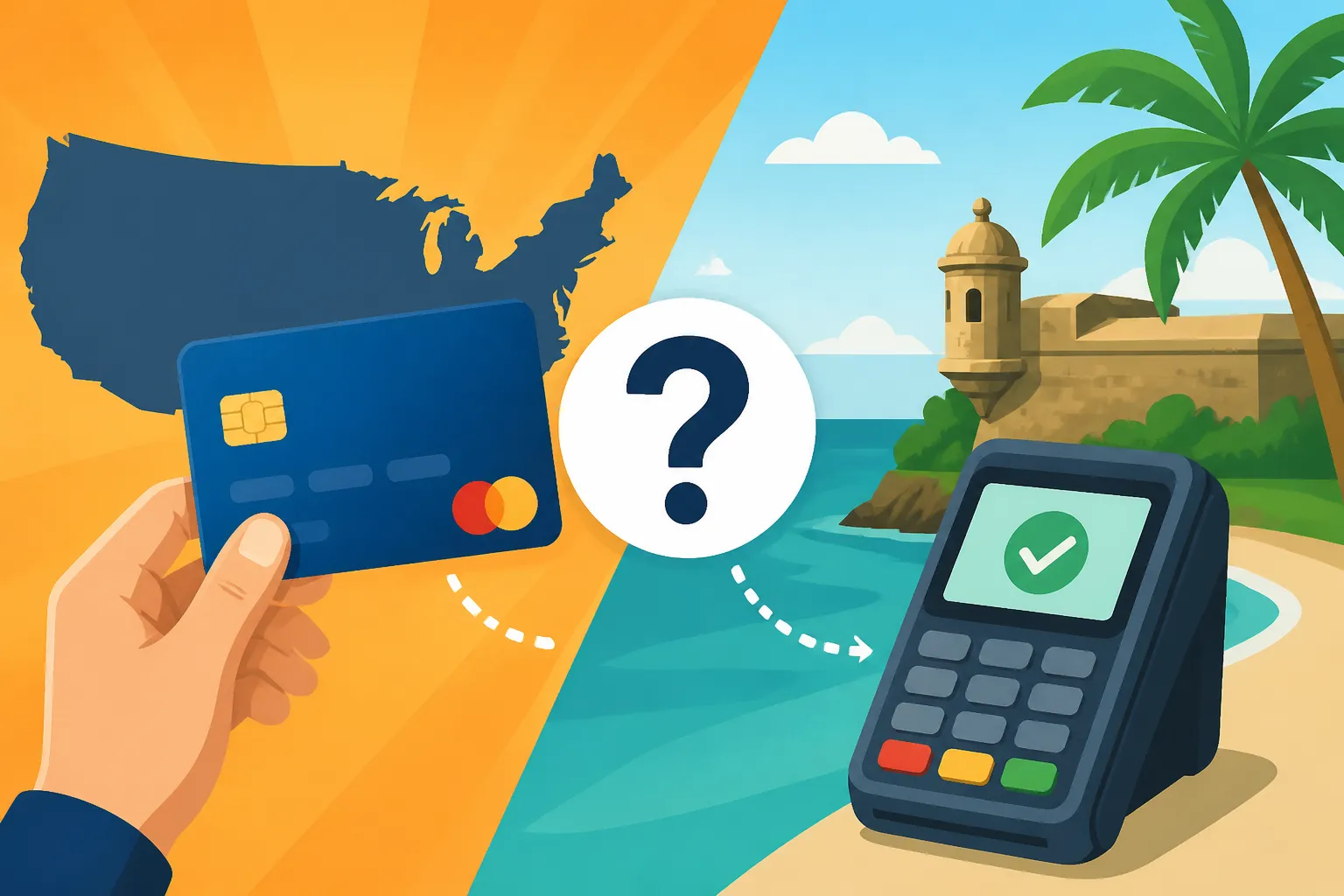
Can I Use My Mainland Bank Card in Puerto Rico?
One of the first things that keeps newcomers and even seasoned visitors up at night when contemplating a move or an extended stay in Puerto Rico is the eternal question: "Will my money actually work here?" Specifically, everyone worries about their bank cards from the mainland. You've got your whole financial life tied to that little piece of plastic, and the thought of being stranded without access to your funds in a new place is, frankly, terrifying. This guide is here to put those fears to rest, giving you the full rundown on how your mainland bank cards will fare on the island, what to watch out for, and how to set yourself up for financial peace of mind.
The Short Answer: Yes, But There Are Caveats
Let's cut right to it: yes, your mainland bank cards will absolutely work in Puerto Rico. It’s part of the U.S. financial system, uses the U.S. dollar, and most major credit and debit card networks are widely accepted. However, as with most things in expat life, there's a "but" that comes with a few layers of nuance.
Understanding the "United States" Aspect and Its Limits
Puerto Rico operates within the U.S. banking infrastructure, which means that for all intents and purposes, your Visa, MasterCard, American Express, and Discover cards should function just as they do back in Florida or California. You’ll see the same logos on card readers, and your transactions will be processed in U.S. dollars. This is a huge relief for many, as it eliminates the complexity of currency exchange rates that you'd face when traveling to a foreign country. You don’t need to worry about converting your dollars to pesos or anything like that.
For routine purchases at supermarkets like SuperMax or Amigo, gas stations, larger retail stores, and popular restaurants, you'll likely swipe, tap, or insert your card without a hitch. Most online purchases from Puerto Rico-based businesses will also accept your mainland cards. It truly feels like an extension of the mainland in many respects when it comes to electronic payments, which makes the initial transition much smoother than you might anticipate.
However, the "U.S. aspect" can sometimes lull you into a false sense of security. While the technical infrastructure is there, the practical application can vary, especially when dealing with local nuances. It's not always a seamless, identical experience to what you're used to, and understanding those differences is key to avoiding frustration.
The Hidden Costs: Foreign Transaction Fees and Exchange Rates
This is where many mainland residents get tripped up. Even though Puerto Rico uses the U.S. dollar, some banks, particularly smaller regional ones or credit unions on the mainland, might still classify transactions in Puerto Rico as "international" or "foreign." Why? Because it’s a U.S. territory, not a U.S. state. This distinction, while seemingly minor, can trigger foreign transaction fees, typically ranging from 1% to 3% of your purchase total.
Imagine you're buying groceries for $150. A 3% foreign transaction fee means an extra $4.50 tacked onto your bill. Individually, it might not seem like much, but over weeks and months, these small fees can add up to a significant amount, quietly eroding your budget. It's a frustrating surprise for many who assume "U.S. dollar, U.S. territory" means no such fees apply. So, before you jet off, it's absolutely crucial to call your bank or credit card company and specifically ask about their policy on transactions made in Puerto Rico. Don't just ask about "international" fees; specifically mention Puerto Rico to get a clear answer.
For those coming from outside the U.S. or managing multi-currency accounts, the situation is a bit different but equally important. If your card is linked to a non-USD account, standard currency conversion fees will apply. Services like Wise (formerly TransferWise) can be incredibly helpful here, offering multi-currency accounts that allow you to hold USD and convert at more favorable rates, or to send money back and forth between different currencies efficiently. This avoids the often-inflated exchange rates and hidden fees levied by traditional banks.
ATM Access and Withdrawal Fees
ATMs are ubiquitous across Puerto Rico, available in banks, supermarkets, pharmacies, and even some gas stations. You’ll find familiar names like Banco Popular, Oriental Bank, and FirstBank. Your mainland debit card will work for cash withdrawals, but brace yourself for fees. There will almost always be a fee charged by the local ATM operator, usually between $2.50 and $5.00 per transaction. On top of that, your own mainland bank might impose an "out-of-network" or "foreign ATM" fee, adding another $2-$3 to each withdrawal.
So, withdrawing $100 could easily cost you $5-$8 in fees. This quickly becomes unsustainable if you rely on small, frequent withdrawals. It's a common expat frustration, feeling like you're constantly bleeding money just to access your own cash. For this reason, many long-term residents and savvy travelers try to limit their ATM visits, opting for larger withdrawals when they do, or finding banks that offer ATM fee reimbursements (though these are rare for international transactions, even within the U.S. territories).
It's also worth noting that while ATMs are plentiful in metropolitan areas like San Juan, Caguas, or Ponce, they become less frequent as you venture into more rural parts of the island. Don't expect to find one on every corner if you're exploring the central mountains or some of the more secluded beaches. Always plan ahead and ensure you have enough cash for your adventures off the beaten path.
Potential Pitfalls and Frustrations You Might Encounter
While the good news is that your cards generally work, the reality on the ground can sometimes throw you a curveball. Being prepared for these common frustrations will save you a lot of headaches (and maybe a few embarrassed moments at the checkout).
Merchant Acceptance and Card Readers
You'll find that card acceptance is excellent at larger establishments – department stores, major supermarkets, chain restaurants, and tourist-focused businesses. However, step into a smaller, family-run panadería (bakery), a roadside kiosko selling alcapurrias, a local hardware store, or even a smaller doctor's office, and you might encounter a "Cash Only" sign. Or, perhaps even more common, they have a card reader, but it’s an older model that struggles with chip cards, or their internet connection is spotty, making transactions glacially slow or outright impossible.
I can't tell you how many times I've stood in line, my card poised, only for the machine to beep angrily at the cashier, who then shrugs and says, "Cash?" in a way that implies this happens fifty times a day. It’s frustrating when you’re used to seamless tap-to-pay everywhere, and their machine just won’t cooperate. This isn't a reflection on you or your card; it’s just the reality of varying technological infrastructure and business practices here. So, while credit cards are great for protection, you absolutely must have some physical cash on hand for these situations.
Even when they do accept cards, some smaller businesses might only accept specific networks, often preferring Visa and MasterCard over American Express or Discover. Always check for the logos displayed. Don't be surprised if your Discover card, which you use extensively on the mainland, gets a blank stare at a small local shop. It’s not universal.
Security Concerns and Best Practices
Puerto Rico, like any other place, has its share of credit card fraud. While major banks offer good protection, it's wise to be extra vigilant. Always keep an eye on your card when handing it over, and be cautious at gas pumps or less reputable ATMs where card skimmers might be present. These devices can silently steal your card information. If an ATM or card reader looks suspicious, wobbly, or has any attachments that don't seem to belong, trust your gut and find another one.
Another crucial step is to notify your mainland bank and credit card companies of your travel plans to Puerto Rico. Seriously, do it before you leave. If your bank suddenly sees transactions popping up in San Juan when your usual activity is in Seattle, they might flag it as suspicious activity and freeze your card. This is meant to protect you, but it’s a massive inconvenience when you’re trying to pay for something. A quick phone call or a few clicks on your bank's app can save you from being denied at the register.
Finally, and this is a general travel tip that applies doubly here: use a credit card for purchases whenever possible, and keep your debit card safely tucked away. Credit cards offer better fraud protection. If your credit card number is compromised, it's generally easier to dispute charges and you're less liable. If your debit card is compromised, the fraudulent charges come directly out of your bank account, which can cause much more immediate financial distress and a longer recovery period.
The Importance of Having Cash on Hand
Despite the increasing prevalence of card payments, you'll learn quickly that a twenty-dollar bill can be your best friend here. Cash is king for many everyday situations, particularly outside the main tourist zones and larger cities. You’ll need it for tips (valets, restaurant staff, cleaners), small purchases from street vendors, local chinchorros (small bars or eateries), and often for things like public parking, tolls (unless you have an AutoExpreso transponder, which is another journey entirely), and even some government services.
During one of Puerto Rico’s infamous power outages, which unfortunately still happen with some frequency, card readers are often the first thing to go down. Having cash means you can still buy water, food, and essentials when the electricity is out and electronic systems are down. It’s not just about convenience; it’s about preparedness. Always carry a reasonable amount of small bills ($5s, $10s, $20s) so you're not caught off guard. You don't want to be that person holding up the line at the panadería because you only have a $100 bill for a $3 coffee.
Smart Strategies for Managing Your Money in Puerto Rico
Now that you know the landscape, let's talk about how to navigate it like a pro. These strategies will help you minimize fees, maximize convenience, and avoid those frustrating moments.
Notifying Your Bank and Understanding Fees
As mentioned, a simple phone call to your bank can prevent a lot of headaches. Inform them of your travel dates and destination (Puerto Rico). Many banks also allow you to set travel notifications online through their banking portal or mobile app. This simple step tells them that legitimate transactions from the island should be approved.
Beyond travel notifications, take the time to understand your specific cards' fee structures. Different cards from the same bank might have different policies. Check for:
- Foreign Transaction Fees: As discussed, even for U.S. dollar transactions in Puerto Rico. Some premium travel credit cards specifically advertise no foreign transaction fees, which can be a huge benefit here.
- ATM Withdrawal Fees: Both your bank’s fee for using an out-of-network ATM and the local ATM operator’s fee.
- Daily Withdrawal Limits: Your bank might have a lower daily cash withdrawal limit when you’re away from home.
Knowing these details upfront empowers you to choose the best card for different types of transactions and to budget accordingly. It’s also a good practice to carry at least two different cards (e.g., a Visa and a MasterCard, or a debit and a credit card) from different institutions, just in case one gets lost, stolen, or frozen.
Consider Local Alternatives and Specialized Cards
For those planning an extended stay or a permanent move, relying solely on mainland cards isn’t the most efficient or cost-effective long-term solution. Eventually, you'll want to dive into the local banking scene.
However, before you fully commit to a local bank, you might consider certain specialized mainland bank accounts that are particularly expat-friendly. Some online banks, like Charles Schwab or Ally Bank, offer debit cards with no foreign transaction fees and often reimburse all ATM fees worldwide. While this isn’t a substitute for a local account, it can be a fantastic bridge solution for tourists or new residents while they get settled.
For broader financial management, especially if you're dealing with income or expenses in multiple currencies, a service like Wise (formerly TransferWise) is invaluable. They offer multi-currency accounts, allowing you to send, spend, and receive money internationally with low fees and transparent exchange rates. This is especially useful for freelancers or those who still have financial ties to different countries. They can provide a debit card that works globally, often with significantly lower fees than traditional banks. This can be a game-changer if you’re a digital nomad or an expat whose financial life isn't entirely consolidated in one place.
Ultimately, if you’re becoming a full-time resident, the goal should be to open a local bank account. You can learn more about The Newcomer's Guide to Opening a Bank Account in Puerto Rico to get started. This will streamline your daily finances, make paying local bills easier, and help you establish a local financial footprint.
Leveraging Technology: ATH Móvil and Digital Wallets
Puerto Rico has its own unique payment system that is incredibly popular and efficient: ATH Móvil. This is a local peer-to-peer payment app, similar to Zelle or Venmo on the mainland, but with near-universal acceptance among individuals and many small businesses on the island. Once you have a local bank account, getting set up with ATH Móvil is a must. Many small vendors, artisans, and even some service providers prefer it because transactions are instant and often fee-free for them.
You’ll see the ATH Móvil logo everywhere, and people will ask, "Tienes ATH?" (Do you have ATH?) It’s how you split restaurant bills with friends, pay your neighbor for a delivery, or buy crafts at a local market. Relying solely on your mainland cards will mean missing out on the convenience and widespread acceptance of ATH Móvil for many local transactions.
Digital wallets like Apple Pay and Google Pay are also gaining traction, particularly at larger retailers and newer establishments that have NFC (Near Field Communication) enabled card readers. If your mainland card is linked to one of these digital wallets, you’ll find it quite convenient where accepted. However, don't rely on them exclusively, as many smaller places still don't have the technology.
When to Open a Local Bank Account
For visitors, sticking with your mainland cards and some cash is perfectly fine. But for anyone planning to live here long-term, opening a local bank account is not just convenient; it's practically essential. It's about more than just avoiding ATM fees. A local account allows for:
- Seamless bill payments: Setting up direct debits for utilities like LUMA (electricity) and AAA (water), rent, and local services becomes effortless.
- Easier payroll: If you get a job in Puerto Rico, your employer will likely pay you via direct deposit into a local bank.
- ATH Móvil access: This unlocks a huge part of the local payment ecosystem.
- Establishing local financial history: Important for things like renting an apartment, getting a local car loan, or even just building trust with local businesses.
- Avoiding potential "foreign" fees: All transactions within Puerto Rico will be considered local.
You’ll find comprehensive guidance on this topic in our article Banking in Puerto Rico: A Complete Guide for Newcomers (2027), which delves into all the details, including How to Open a Bank Account at a Puerto Rico Bank as a Newcomer and What Documents Do I Need to Open a Bank Account in Puerto Rico?. Don't fret about bringing over stacks of paper, but do have your passport or Real ID ready, along with proof of local address.
Optimizing Your Financial Strategy for Puerto Rico
Moving to Puerto Rico isn't just a geographical change; it's a financial shift. Thinking ahead can save you money and ensure your transition is smooth.
Long-Term Financial Planning and Tax Implications
For those making Puerto Rico their home, how you manage your bank accounts and card usage can have implications for establishing bona fide residency for tax purposes. While the focus of this article is on card usage, it's worth a quick mention that your financial activities are part of the overall picture that the IRS and Hacienda (Puerto Rico's Treasury Department) look at when determining your tax residency. Maintaining your primary bank accounts, direct deposits, and main credit cards on the island reinforces your "closer connection" to Puerto Rico.
Many newcomers move here specifically to take advantage of Act 60 tax incentives, which offer significant tax benefits for qualifying individuals and businesses. If you're considering this, understanding how your financial infrastructure plays into your residency claim is critical. Consulting with a tax expert specializing in U.S. and Puerto Rico tax law, such as the professionals at Taxes for Expats, is highly recommended to ensure compliance and optimize your financial strategy. They can help you navigate the complexities of your income streams, assets, and how they should be managed from a tax perspective while establishing your new life here. For a deeper dive, check out The Complete Guide to Taxes in Puerto Rico for New Residents (2027) and Bona Fide Residency in Puerto Rico: The Definitive Tax Guide (2027).
Using Credit Cards vs. Debit Cards Wisely
Reiterating a crucial point: favor your credit card for most purchases. The robust fraud protection offered by credit card companies is your best defense against unauthorized transactions. If a merchant's system is compromised, or if you accidentally use your card at a less-than-reputable establishment, the potential damage to your financial well-being is much lower with a credit card than with a debit card.
Your debit card should primarily be used for ATM withdrawals (strategically, to minimize fees) or for direct purchases where you are absolutely certain of the vendor's trustworthiness. Avoid using it for online purchases from unknown sites, or for transactions where you have to hand it over and it leaves your sight. Treat your debit card number and PIN with the same reverence as access to your bank vault.
| Feature | Mainland Bank Card (Debit/Credit) | Local Puerto Rico Bank Card | Specialized No-Fee Mainland Card |
|---|---|---|---|
| Acceptance | High (major chains), Moderate (small businesses) | Very High (all local businesses, ATH Móvil) | High (major chains), Moderate (small businesses) |
| Foreign Transaction Fees | Possible (check your bank's policy) | None (for PR transactions) | None (check card terms) |
| ATM Withdrawal Fees | Likely (local + your bank's fee) | Possible (local ATM fee if out-of-network) | Local ATM fee only (your bank reimburses) |
| Fraud Protection | Good (credit cards), Moderate (debit cards) | Good | Good |
| ATH Móvil Access | No | Yes | No |
| Bill Payments | Possible (online banking), but less integrated | Seamless (direct debit) | Possible (online banking) |
| Long-Term Residency | Less ideal (fees, local integration) | Essential for full integration | Good bridging solution |
In conclusion, while your mainland bank cards are definitely functional here in Puerto Rico, being aware of the nuances – potential fees, variable merchant acceptance, and the prevalence of cash and local payment apps – will make your financial life much smoother. For long-term residents, eventually integrating into the local banking system is the smartest play.
Disclaimer
The information provided in this article is for general informational purposes only and does not constitute financial, legal, or tax advice. While we strive to provide accurate and up-to-date information, banking policies, fees, and local regulations in Puerto Rico can change. It is highly recommended to consult directly with your bank, credit card company, and a qualified financial or tax advisor specializing in Puerto Rico for personalized advice tailored to your specific situation.