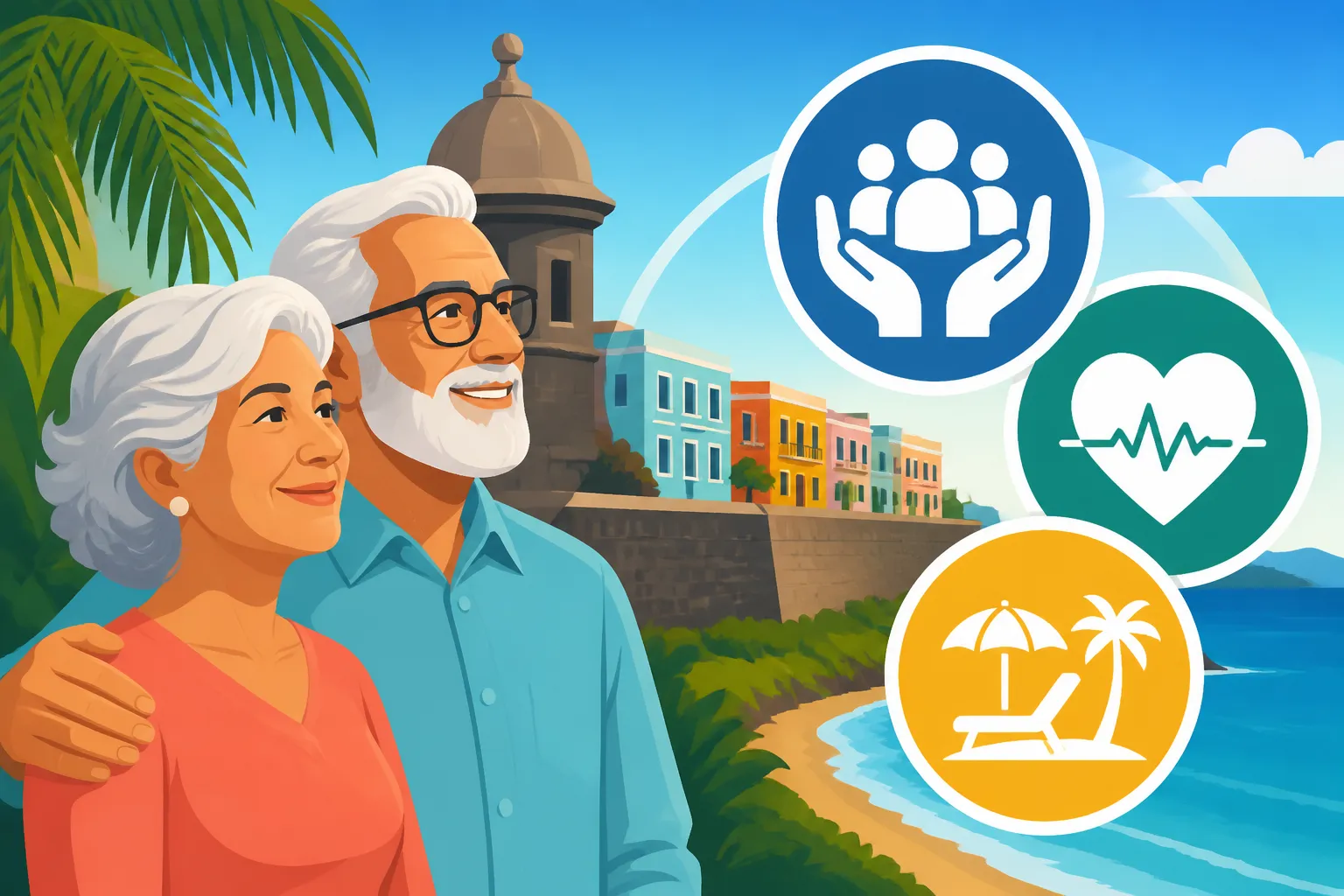
Understanding Social Security, Medicare and Retirement in Puerto Rico
Moving to a new place always brings a swirl of questions, but when you're thinking about retirement in Puerto Rico, those questions often center on crucial financial pillars: Social Security, Medicare, and how your carefully planned retirement savings will fare. It’s a common worry, this fear of the unknown, of benefits changing or disappearing entirely. This guide is here to walk you through the ins and outs, offering clear, empathetic, and realistic insights to help you navigate your golden years on our beautiful island without unnecessary stress.
Social Security in Puerto Rico: Your Benefits Are Safe
One of the biggest anxieties I hear from mainland friends considering the move is, "Will I lose my Social Security benefits if I move to Puerto Rico?" Let me assure you, unequivocally: no, you will not. As a resident of Puerto Rico, you are a U.S. citizen, and your Social Security benefits are absolutely yours, just as they would be if you moved from New York to Florida. The system might feel a little different on the ground, but your fundamental eligibility remains unchanged.
Your US Social Security Benefits Don't Disappear
It’s completely normal to feel a pang of uncertainty when you’re relocating, especially when something as vital as your Social Security income is on the line. But here’s the truth: the Social Security Administration (SSA) treats Puerto Rico as part of the United States for all benefit purposes. This means that if you’ve worked and paid into the system, your retirement, disability, or survivor benefits will continue without interruption. You'll still receive your monthly payments, typically via direct deposit, into your U.S. bank account, whether that's a mainland bank or a local Puerto Rico institution like Banco Popular or Oriental Bank.
Many people feel relief when they realize this. The benefits are calculated and disbursed exactly the same way. The rules for eligibility, earnings limits, and cost-of-living adjustments (COLAs) are identical to those in the 50 states. You don't need a special "Puerto Rico Social Security" number; your existing one works perfectly fine. The key thing is to ensure your contact information, especially your mailing address and direct deposit details, are up to date with the SSA. It's a simple administrative step, but one that can prevent a lot of headaches later.
How Social Security Taxes Work in Puerto Rico
Now, while receiving benefits is straightforward, the taxation side can sometimes cause a bit of confusion for newcomers, especially those who are still working or considering part-time work in retirement. Residents of Puerto Rico, like those in the mainland, contribute to Social Security and Medicare through FICA (Federal Insurance Contributions Act) taxes. This means if you’re employed in Puerto Rico, or self-employed, you will see FICA deductions from your paycheck or pay them as self-employment tax.
Here's where it gets interesting and often misunderstood: while your Puerto Rico-sourced income is generally exempt from federal income tax, it is not exempt from FICA taxes. So, if you’re working here, even under some of the local tax incentive laws, you're still paying into the Social Security and Medicare system. This is a good thing, as it continues to build your eligibility and benefit base if you're not yet retired. For those who are already receiving benefits, these payments are treated the same as they would be on the mainland, meaning they may be subject to federal income tax if your total income exceeds certain thresholds. However, remember that Puerto Rico itself does not tax Social Security benefits received by its residents. Navigating this interplay of federal and local tax rules can be tricky, which is why some people find professional advice invaluable. Companies like Taxes for Expats specialize in these cross-jurisdictional tax situations and can help clarify your individual obligations.
Applying for and Managing Your Benefits
Applying for Social Security benefits when you're already living in Puerto Rico is pretty much the same as if you were on the mainland, but with the added convenience of local SSA offices. You can start the process online, which is often the easiest route, especially for retirement benefits. However, if you prefer face-to-face interaction or need assistance with a more complex situation, there are Social Security Administration field offices throughout the island, including in San Juan, Bayamón, Ponce, and Mayagüez.
When you visit an office, be prepared with all your necessary documentation: your Social Security card, birth certificate, proof of U.S. citizenship or lawful alien status (if applicable), and your W-2 forms or self-employment tax returns for the past two years. While many SSA employees are bilingual, it's always a good idea to bring someone who can help with translation if your Spanish isn't fluent, just to ensure nothing gets lost in translation. Once you're enrolled, managing your benefits is simple. You can create an online "my Social Security" account to check your benefit status, update your address, and get benefit verification letters. It’s a surprisingly smooth process, designed to be accessible to all U.S. citizens, regardless of their current residence within U.S. territories.
Medicare in Puerto Rico: Navigating Your Healthcare Coverage
Healthcare is often a top concern for anyone moving in their later years, and understanding Medicare in Puerto Rico is absolutely vital. The good news is, just like Social Security, Medicare is fully available to eligible U.S. citizens and residents in Puerto Rico. However, the way it's structured and commonly used here can be quite different from the mainland experience. It's a system you'll want to understand thoroughly to ensure seamless access to care.
Medicare Eligibility and Enrollment for PR Residents
If you’re a U.S. citizen or legal resident who has lived in the U.S. (including Puerto Rico) for at least five years and you’re 65 or older, or if you have certain disabilities, you’re eligible for Medicare. Enrollment works exactly the same way here as it does on the mainland. If you're already receiving Social Security benefits for at least four months before you turn 65, you'll typically be automatically enrolled in Medicare Parts A (hospital insurance) and B (medical insurance). Your Medicare card should arrive in the mail a few months before your 65th birthday.
If you’re not automatically enrolled, you’ll need to sign up during your Initial Enrollment Period (IEP), which is a seven-month window starting three months before your 65th birthday, including the month you turn 65, and ending three months after. Missing this window can lead to late enrollment penalties, especially for Part B, so pay close attention to the deadlines. You can enroll online through the Social Security website or by visiting a local SSA office. Understanding Medicare and Medicare Advantage in Puerto Rico is a crucial first step for any retiree considering moving here, as the choices you make during enrollment will significantly impact your healthcare experience.
Medicare Advantage Plans Part C in Puerto Rico
Here's where Puerto Rico's Medicare landscape truly diverges from the mainland: Medicare Advantage (MA) plans, also known as Medicare Part C, are incredibly popular and often the preferred choice for residents. While Original Medicare (Parts A and B) is available, many find that a Medicare Advantage plan offers more comprehensive benefits, often including prescription drug coverage (Part D), dental, vision, and wellness programs, all wrapped into one convenient plan. These plans are offered by private insurance companies that contract with Medicare.
In Puerto Rico, major players in the Medicare Advantage market include familiar names like Humana and UnitedHealthcare, as well as strong local providers such as MMM Healthcare and MCS Healthcare. These plans typically operate within networks of doctors and hospitals, so choosing a plan that includes your preferred providers is key. The co-pays, deductibles, and premiums can vary significantly between plans, so it's essential to compare options carefully based on your health needs and budget. Many plans even offer $0 premium options, making them very attractive. It’s worth noting that the subsidies available for Medicare Advantage plans are generally more generous in Puerto Rico, which contributes to their widespread adoption and comprehensive benefits. It's a system that truly allows you to get more bang for your buck on your healthcare coverage.
Supplementing Your Medicare: Medigap and Other Options
While Medicare Advantage plans are widely embraced in Puerto Rico, some individuals still consider Original Medicare. If you choose Original Medicare (Parts A and B), you might also consider supplementing your coverage. On the mainland, this often involves a Medigap policy (Medicare Supplement Insurance) and a standalone Part D plan for prescription drugs. Medigap policies help cover out-of-pocket costs like deductibles, co-payments, and coinsurance that Original Medicare doesn’t.
However, in Puerto Rico, Medigap plans are less common and typically less robust than their mainland counterparts, primarily because Medicare Advantage plans here are so comprehensive and cost-effective. The landscape is simply different. Most people who opt for Original Medicare will still need to purchase a separate prescription drug plan (Part D). If you’re considering Original Medicare, it's vital to carefully weigh its benefits against the comprehensive offerings of local Medicare Advantage plans. Many find that the all-in-one nature of MA plans, with their integrated benefits and often lower out-of-pocket costs, makes them a more practical choice. It's a good idea to speak with a local insurance broker who specializes in Medicare plans for Puerto Rico residents to fully understand your options and tailor a plan to your specific needs. This will help ensure you're covered for any eventuality, from routine check-ups to Emergency Medical Care in Puerto Rico: What Every Resident Needs to Know.
Retirement Planning Considerations for Puerto Rico
When you move for retirement, it's not just about where you'll live, but how your financial life will adapt to a new jurisdiction, especially when it comes to taxes and wealth management. Puerto Rico has its own unique financial ecosystem, and understanding how your existing retirement accounts and income streams fit into it is critical for a comfortable transition.
Understanding Your Retirement Accounts: 401(k), IRAs, and Pensions
For most people, a significant portion of their retirement nest egg is held in various mainland-based accounts: 401(k)s, Traditional IRAs, Roth IRAs, and employer-sponsored pensions. The good news is that these accounts don't just disappear or become inaccessible when you move to Puerto Rico. They remain under the federal laws governing those accounts. However, how distributions from these accounts are taxed can become a bit more nuanced.
Distributions from your 401(k) or Traditional IRA are typically taxed at the federal level. As a bona fide resident of Puerto Rico, your Puerto Rico-sourced income is generally exempt from federal income tax. However, income from these retirement accounts is often considered U.S.-sourced for federal tax purposes. This means that while you won't pay Puerto Rico income tax on these distributions (as PR doesn't tax retirement income from qualified plans), you will likely still be subject to federal income tax on them. Roth IRA distributions, being tax-free at the federal level if qualified, remain tax-free. Employer pensions are similar; if they're considered U.S.-sourced, they're generally federally taxable. This interplay is one of the most complex aspects of moving, and it often requires careful planning to avoid any unwelcome surprises. Professional advice is often key here to ensure you're compliant on both federal and local fronts.
Retirement Income Streams and Local Taxation
Beyond your qualified retirement accounts, you might have other income streams in retirement, such as annuities, investment income from non-retirement accounts, or even rental income if you have properties. Puerto Rico has its own tax system, which is separate from the federal U.S. income tax system. As a bona fide resident, your Puerto Rico-sourced income is subject to local income tax, and generally exempt from federal income tax. Conversely, U.S.-sourced income is typically subject to federal income tax, but not Puerto Rico income tax (unless specific exceptions apply).
This distinction between U.S.-sourced and Puerto Rico-sourced income is paramount. For example, interest and dividends from U.S. mainland bank accounts or investment portfolios (not held in a qualified retirement account) would generally be considered U.S.-sourced and subject to federal income tax. If you invest locally in Puerto Rico, that income would be Puerto Rico-sourced and subject to local tax rules. This is where programs like Act 60 can sometimes come into play for high-net-worth individuals, offering significant tax exemptions on Puerto Rico-sourced capital gains, interest, and dividends for qualified Individual Resident Investors. However, it's critical to understand that Act 60 does not apply to Social Security benefits or most traditional pension and 401(k) distributions, as these are typically classified as U.S.-sourced income. The intricacies mean that a thorough understanding of The Complete Guide to Taxes in Puerto Rico for New Residents (2027) is highly recommended.
Financial Planning and Estate Considerations
Moving your life to Puerto Rico also means rethinking your overall financial plan and, crucially, your estate plan. While many U.S. laws still apply, Puerto Rico has its own civil code, which impacts property ownership, inheritance, and wills. It's a nuanced difference from common law systems found in most U.S. states. For example, Puerto Rico's inheritance laws have mandatory heirship provisions, meaning a portion of your estate must pass to certain relatives regardless of your will. This is a significant departure from mainland estate planning.
Finding a local financial advisor and an attorney specializing in Puerto Rico estate law is highly recommended. They can help you structure your assets to align with your wishes, navigate the local tax implications, and ensure your beneficiaries are properly designated under local legal frameworks. You'll also want to review any power of attorney documents and consider creating a local one, as mainland versions may not be as readily accepted in all Puerto Rico institutions. This proactive approach ensures that your hard-earned savings and assets are protected and distributed according to your wishes, minimizing stress for your loved ones down the line. Moreover, understanding how to manage your finances locally is important, and articles like The Newcomer's Guide to Opening a Bank Account in Puerto Rico can provide foundational information.
Cost of Living and Retirement Budgeting in Puerto Rico
Retiring in a tropical paradise sounds idyllic, and it absolutely can be! But like any move, it comes with a need for practical budgeting. Understanding the actual cost of living in Puerto Rico is essential to ensure your retirement income stretches as far as you need it to. While some things might be cheaper than the mainland, others, especially certain imports and utilities, can be surprisingly high.
Managing Your Budget on a Fixed Income
Living on a fixed income, as many retirees do, requires careful planning, and Puerto Rico offers a diverse range of costs depending on where you choose to settle. Urban centers like San Juan, particularly neighborhoods like Condado or Dorado, tend to have higher housing costs, comparable to or even exceeding some mainland cities. Rent for a modest apartment in these areas can easily run over $1,500-$2,500 a month. However, if you venture outside these areas, perhaps to Mayagüez, Ponce, or smaller towns, you can find much more affordable housing options, sometimes for half that price or even less.
Groceries can be a mixed bag. Local produce is often very affordable and fresh, but imported goods, especially processed foods and specialty items, can be significantly more expensive due to shipping costs. Utilities, particularly electricity (LUMA), can be a major budget item, often surprisingly high, especially if you rely heavily on air conditioning. Water (AAA) and internet costs are generally comparable to mainland rates. Transportation is another consideration; owning a car is almost a necessity outside of very specific urban cores, and gas prices can fluctuate, but are usually similar to or slightly higher than U.S. national averages. To truly understand the full picture, it is wise to read The Complete Guide to Cost of Living in Puerto Rico (2026) before making any firm plans.
Healthcare Costs Beyond Medicare Coverage
While Medicare, particularly Medicare Advantage plans, provides robust coverage in Puerto Rico, it's crucial to understand that it won't cover everything. You'll still encounter out-of-pocket expenses such as co-pays for doctor visits and prescriptions, deductibles that must be met before coverage kicks in, and potentially coinsurance. These costs, while often lower with MA plans compared to Original Medicare, still need to be factored into your monthly budget. For example, a specialist visit might have a $30-$50 co-pay, and prescription medications, even with Part D coverage, can have varying tiers of costs.
Beyond standard medical care, consider potential needs for services not fully covered, such as long-term care, certain dental procedures not included in your MA plan, or specialized therapies. While Puerto Rico's healthcare system offers excellent care, especially in private hospitals like Auxilio Mutuo or Ashford Presbyterian, these out-of-pocket costs can add up. Some retirees choose to set aside a dedicated emergency fund for unexpected medical expenses. It’s also wise to check if your chosen Medicare Advantage plan offers robust coverage for ancillary services like How to Get Physical Therapy and Rehabilitation Covered in Puerto Rico, which can be vital for maintaining an active retirement lifestyle.
Banking and Financial Services for Retirees
Setting up your banking life is one of the first things you'll do when you move here, and thankfully, it's quite straightforward. Puerto Rico has a modern banking system, dominated by institutions like Banco Popular and Oriental Bank. You can open checking and savings accounts, often with relatively low minimum balances, and access online banking services similar to those on the mainland. Many mainland banks also have a presence or correspondent relationships here, so it's worth checking if your current bank has a local affiliation. You can find more detailed steps in How to Open a Bank Account at a Puerto Rico Bank as a Newcomer.
For retirees, efficient fund transfers are key. Direct deposit of Social Security and other pensions into your local Puerto Rico bank account is standard. If you maintain mainland accounts and need to transfer funds regularly, services like Wise (formerly TransferWise) can be incredibly efficient for sending money between accounts, often with lower fees and better exchange rates than traditional wire transfers, making your money management simpler and more cost-effective. Additionally, local payment apps like ATH Movil are widely used for person-to-person payments and even in some retail settings, offering a convenient way to handle daily transactions. Having a solid local banking setup ensures you can easily pay bills, manage expenses, and access your funds without hassle.
Special Considerations for Act 60 Beneficiaries
Act 60, Puerto Rico's tax incentive program, often sparks a lot of interest among newcomers. It offers compelling tax benefits, particularly for investors and export services businesses. However, it's crucial for retirees to understand precisely what Act 60 does and, more importantly, what it doesn't do, especially concerning typical retirement income streams like Social Security and pensions. There's a lot of misinformation out there, and separating fact from fiction is key.
How Act 60 Impacts Retirement Income
Act 60, specifically the Individual Resident Investor Decree (formerly Act 22), is primarily designed to attract capital and talent to Puerto Rico by offering significant tax exemptions on Puerto Rico-sourced passive income (like capital gains, interest, and dividends) for qualifying bona fide residents. For entrepreneurs who move here, there's also an Export Services provision (under Act 60-2019) that can offer a low corporate tax rate and exemptions on distributions from qualifying export services businesses.
Here's the critical distinction for retirees: Act 60 does not provide a tax exemption for Social Security benefits. Nor does it typically exempt distributions from your 401(k), Traditional IRA, or most mainland-based pensions. These are generally considered U.S.-sourced income and, as such, remain subject to federal income tax, regardless of your Act 60 status. The power of Act 60 for retirees, if they qualify, lies in potentially exempting new capital gains, interest, and dividends generated from investments sourced within Puerto Rico after obtaining the decree. So, while it can dramatically reduce taxes on new investment income, it’s not a blanket solution for all retirement income. Understanding Act 60 Tax Incentives in Puerto Rico: The Full Guide (2026) is highly recommended to clarify these nuances.
Compliance and Residency Requirements
Becoming an Act 60 beneficiary is not a "set it and forget it" situation. It comes with strict compliance requirements that must be met annually to maintain your decree. The most fundamental requirement for any Act 60 decree holder is to establish and maintain bona fide residency in Puerto Rico. This isn't just about showing up; it means passing three key tests: the Presence Test (typically being physically present in Puerto Rico for at least 183 days during the tax year), the Tax Home Test (your main place of work or business is in PR), and the Closer Connection Test (demonstrating stronger ties to Puerto Rico than to any other place).
Beyond physical presence, Act 60 decrees also stipulate annual charitable donations to local non-profit organizations and annual reporting to the Puerto Rico Treasury Department (Hacienda). Failure to meet any of these requirements can lead to the revocation of your decree, along with potential penalties and back taxes. It’s a serious commitment that demands careful record-keeping and attention to detail. Many decree holders work with local tax attorneys and accountants to ensure ongoing compliance. This diligence is paramount, as detailed in How to Maintain Bona Fide Residency Year After Year in Puerto Rico. It's a fantastic program for those who fit the criteria and are committed to its obligations, but it's certainly not a passive choice.
Working During Retirement Under Act 60
Some retirees choose to engage in part-time work or even start a new venture in their golden years. If you happen to be an Act 60 Individual Resident Investor (formerly Act 22) and decide to work, how your earned income is treated is important. Your decree primarily applies to passive income from investments. Any income earned through employment or active business operations would typically be subject to Puerto Rico's standard income tax rates, unless that work itself qualifies under a separate Act 60 Export Services decree (formerly Act 20).
For example, if you have an Act 60 investor decree and decide to work as a consultant for a local company, that consulting income would be taxed under the regular Puerto Rico income tax schedule. However, if your consulting work qualifies as an "export service" (meaning services provided from Puerto Rico to clients outside of Puerto Rico), you could potentially apply for a separate Act 60 Export Services decree for that business income, which would then subject it to a low 4% corporate tax rate. This distinction is crucial and often misunderstood. It's a layered system, and while beneficial, it requires a clear understanding of which type of income falls under which specific tax incentive. Always consult with a local tax professional to map out your specific situation, especially if you plan to combine retirement living with active income generation.
Practical Steps for a Smooth Retirement Transition
Moving your life, especially in retirement, is a big undertaking. It involves more than just packing boxes; it's about systematically preparing for a new administrative and social environment. Having a clear plan can significantly reduce stress and ensure a smoother transition to your new life in Puerto Rico.
Before You Move: Pre-Relocation Checklist
The preparation phase is critical. Don't underestimate the power of a solid checklist before you even step foot on the island with your moving truck. Start by informing the Social Security Administration of your upcoming address change. While your benefits won't be affected, ensuring they have your correct contact details is paramount. Similarly, if you're already on Medicare, you'll need to update your address. This is also the perfect time to investigate local Medicare Advantage plans and their provider networks in your chosen Puerto Rico community. Researching Health Insurance in Puerto Rico: Plans, Costs and Options Explained (2026) ahead of time can prevent a rush when you arrive.
Beyond government agencies, gather all your essential financial and medical documents. This includes copies of your will, power of attorney, insurance policies, and investment statements. It’s a good idea to consult with a financial advisor and potentially a tax specialist well-versed in Puerto Rico and federal tax law, such as those at Taxes for Expats, to discuss your income streams and any potential tax implications of your move. They can help you understand how your pensions and investments will be treated and whether any adjustments need to be made to your financial plan. This proactive approach ensures you understand the landscape before you fully commit.
Once You Arrive: Setting Up Your New Life
Once you land in Puerto Rico, the real work of establishing your new life begins. Your immediate priorities should be setting up utilities, opening local bank accounts, and, crucially, getting your healthcare sorted.
First, electricity (LUMA) and water (AAA) will need to be connected. This can sometimes be a bureaucratic process, so patience is key. Having copies of your lease or property deed, valid ID, and your Social Security number readily available will help. Next, head to a local bank like Banco Popular or Oriental Bank to open an account. While you might be able to use a mainland bank, having a local account makes paying bills and daily transactions much easier.
Critically, you’ll want to solidify your healthcare. This often means enrolling in a local Medicare Advantage plan and finding a primary care physician. The process of How to Find and Register with a Primary Care Doctor in Puerto Rico can take a bit of time, especially finding one that's a good fit and speaks English, if that's a priority for you. Explore the networks of the major MA providers to ensure you have access to the specialists and hospitals you might need. Remember that while your Medicare eligibility is federal, the plan options and provider networks are very much local.
| Feature | Original Medicare (Parts A & B) | Medicare Advantage (Part C) in PR |
|---|---|---|
| Coverage | Hospital (A) & Medical (B) insurance | All of A & B, plus usually Part D (Rx), vision, dental, etc. |
| Flexibility | Can see any doctor nationwide who accepts Medicare | Typically restricted to a network within Puerto Rico |
| Cost Structure | Monthly Part B premium, deductibles, 20% coinsurance (no cap) | Often $0 plan premium (in PR), co-pays, deductibles, max out-of-pocket |
| Prescription Rx | Requires separate Part D plan | Usually included in the plan |
| Popularity in PR | Less common, often supplemented by Medigap (limited in PR) | Highly popular due to comprehensive benefits & subsidies |
| Referrals | Generally no referrals needed for specialists | May require referrals for specialists |
Building Your Support Network
Retiring in Puerto Rico is not just about the numbers; it's about building a fulfilling life in a new community. Making connections is paramount. Seek out expat groups, both online and in person. There are numerous communities across the island, particularly in areas popular with mainland transplants like San Juan (Condado, Ocean Park), Dorado, Rincón, and the East Coast. These groups can be invaluable sources of practical advice, friendship, and cultural understanding. They've often navigated the same challenges you're facing and can offer insights into local customs, trusted service providers, and social events.
Engaging with the local culture and making an effort to learn Spanish, even just a few phrases, will significantly enhance your experience. Puerto Ricans are incredibly warm and welcoming, and any effort to communicate in their language is deeply appreciated. Participate in local festivals, visit the farmers' markets, and try the amazing local cuisine. Don't be afraid to strike up conversations with your neighbors. The more you immerse yourself, the more Puerto Rico will feel like home, moving from a foreign land to a vibrant, supportive community where you can truly enjoy your retirement years. It's a journey, and like all good journeys, it's best enjoyed with good company and an open heart.
Disclaimer
The information provided in this guide is for general informational purposes only and does not constitute financial, legal, medical, or tax advice. While we strive to provide accurate and up-to-date information, laws and regulations regarding Social Security, Medicare, and taxation in Puerto Rico are complex and subject to change. It is essential to consult with qualified professionals, such as a financial advisor, tax attorney, and healthcare specialist licensed in Puerto Rico, for advice tailored to your specific situation before making any decisions related to your retirement, finances, or healthcare.