How to Find an English-Speaking Doctor in Puerto Rico
Moving to a tropical paradise like Puerto Rico is a dream until you find yourself in a doctor's office trying to explain a sharp pain in your side while everyone around you speaks rapid-fire Spanish. Language barriers should never compromise your medical safety or peace of mind. This guide provides a detailed, empathetic roadmap to finding reliable, English-speaking medical professionals across the island.
The Reality of the Language Landscape in Puerto Rican Healthcare
When you first land in San Juan or relocate to a sleepy coastal town like Rincon, you might assume that because Puerto Rico is a U.S. territory, English will be the default in every professional setting. The reality is more nuanced. Spanish is the soul of the island, and while most doctors are highly educated and often bilingual, the administrative staff, nurses, and technicians who represent your first points of contact may primarily communicate in Spanish.
Public vs. Private Sector Communication
The healthcare system in Puerto Rico is bifurcated into public and private sectors. In public facilities, such as the Centros de Diagnóstico y Tratamiento (CDTs), the environment is almost exclusively Spanish-speaking. These centers are vital for the local community but can be incredibly overwhelming for a newcomer who hasn't mastered the language. On the other hand, the private sector, especially in the metropolitan areas, is much better equipped to handle English-speaking patients. Understanding the How Puerto Rico's Health System Works: Public vs Private Explained (2027) is the first step in managing your expectations and choosing where to seek care.
In private hospitals like Ashford Presbyterian in Condado, the patient demographic includes many expats and medical tourists. Consequently, the systems are designed with bilingualism in mind. However, even in these "English-friendly" hubs, you might encounter a lab technician or a receptionist who is more comfortable in Spanish. Being prepared for this mix is essential to avoid the frustration that often leads to "island fever" among new residents.
The Education Factor and Physician Proficiency
One of the most reassuring facts for expats is the educational background of Puerto Rican physicians. A significant majority of specialists and primary care doctors on the island completed their residencies or fellowships at prestigious universities on the U.S. mainland. This means they are not only fluent in English but are also deeply familiar with the American medical standards and protocols you are likely used to.
When you finally get into the exam room, the language barrier often disappears. The challenge is almost always the "gatekeepers"—the front desk staff who handle the scheduling. If you are struggling with the initial outreach, you might want to look into How to Find and Register with a Primary Care Doctor in Puerto Rico to understand how to bypass these early administrative hurdles.
Staff vs. Doctor Language Fluency
It is a common scenario: you find a world-class cardiologist who speaks perfect English, but you can’t get past the receptionist to book the appointment. This is a specific frustration that veteran expats know all too well. The nursing staff, while incredibly compassionate, may also have varying levels of English proficiency.
To mitigate this, many expats rely on international-friendly insurance options like SafetyWing, which often provides resources or assistance for travelers and nomads navigating foreign healthcare systems. Having a support structure that understands the global nature of your lifestyle can be a massive relief when you're stuck in a linguistic loop at a local clinic.
Strategic Ways to Search for English-Speaking Providers
Finding a doctor shouldn't feel like a treasure hunt, but in Puerto Rico, it often does. The traditional methods like "Googling it" don't always yield the best results because many local offices rely on word-of-mouth or outdated directory listings. You need a multi-pronged strategy to find a provider who truly understands your needs.
Using Insurance Provider Networks
Your first stop should always be your insurance provider's online portal. If you are using a local plan like Triple-S or MCS, their directories usually allow you to filter by language. However, these filters aren't always 100% accurate. A doctor might be listed as English-speaking because they checked a box ten years ago, but their current staff might not be.
If you are a digital nomad or a temporary resident, using a global provider like SafetyWing can simplify this. They are accustomed to the needs of English speakers and can often point you toward facilities known for international standards. Once you have a list, cross-reference it with Understanding Provider Networks and In-Network Care in Puerto Rico to ensure you won't be hit with unexpected out-of-network costs.
Leveraging Local Expat and Community Groups
There is no substitute for the "boots on the ground" knowledge of people who have lived here for a decade. Facebook groups like "Expats in Puerto Rico" or "San Juan Living" are gold mines for recommendations. When you ask for an English-speaking pediatrician or dermatologist, you won't just get a name; you'll get a detailed report on whether the office picks up the phone, how long the wait times are, and if the nurse speaks English.
This community-driven approach is often how people find the best English-Speaking Doctor in San Juan. It’s also a great way to learn about the "bedside manner" of local doctors, which tends to be more warm and personal than the clinical, hurried approach often found in the mainland U.S.
Online Search Tactics and Local Directories
While Zocdoc and Healthgrades have some presence in Puerto Rico, they aren't as comprehensive as they are in the States. Instead, look at the websites of the major hospitals. Hospitals like Auxilio Mutuo have specialized "International Patient" departments or concierge services specifically designed for those who prefer to communicate in English.
When searching online, use specific terms like "English speaking doctor San Juan" or "Bilingual medical clinic Dorado." Always check the most recent reviews. If a patient mentions that the "staff was helpful despite my limited Spanish," that is a green flag. Before you go, make sure you know What Documents Do I Need to See a Doctor in Puerto Rico so you don't have to navigate a complex conversation about paperwork upon arrival.
Top Hospitals and Clinics Known for English Proficiency
If you are feeling overwhelmed, the safest bet is to stick to the major medical hubs. These institutions have the infrastructure to support non-Spanish speakers and often employ staff specifically to bridge the communication gap.
The San Juan Medical Hub
San Juan is the epicenter of bilingual healthcare. Ashford Presbyterian Community Hospital, located in the heart of Condado, is perhaps the most famous "English-speaking" hospital. Historically founded by the Presbyterian church, it has served the expat community for over a century. Nearly every doctor and a high percentage of the staff there are fluent in English.
Another excellent option is the Hospital Pavía system. Their Santurce location is highly regarded for its specialties and attracts a diverse patient base. If you are looking for a more comprehensive guide on these facilities, check out The Guide to Choosing a Private Hospital in Puerto Rico. These hospitals often accept a wide range of insurances, including international plans like SafetyWing, which is a popular choice for those who move between the island and the mainland frequently.
Specialized Clinics and Concierge Medicine
In recent years, there has been a surge in "Concierge Medicine" in areas like Dorado and Palmas del Mar. these private clinics operate on a membership model or higher fee-for-service structure but guarantee that your primary contact speaks English. They provide a level of personalized care that bypasses the long wait times associated with traditional offices.
For specialists, the medical offices in the Ciudad Sanitaria (Medical City) area of Río Piedras are world-class. While the area can be hectic, the level of expertise is equivalent to the best hospitals in New York or Houston. Navigating these can be tricky, so understanding How Specialist Referrals Work Under Puerto Rico Health Plans is crucial before you dive into that complex network.
Regional Options Outside the Metro Area
If you live in Rincon or Aguadilla, your options for English-speaking doctors are fewer than in San Juan, but they do exist. The influx of remote workers to the west coast has encouraged many local clinics to hire bilingual staff. In Ponce, the Hospital Damas and San Lucas are the premier institutions. While the city is more traditionally Spanish-speaking, the specialists at these hospitals are top-tier and almost universally bilingual.
| Region | Primary Hospital / Clinic | English Proficiency Level | Best For |
|---|---|---|---|
| San Juan (Condado) | Ashford Presbyterian | Very High | Expats, Tourists, Maternity |
| San Juan (Santurce) | Hospital Pavía | High | Cardiology, Specialized Surgery |
| San Juan (Hato Rey) | Auxilio Mutuo | High | General Medicine, Oncology |
| Dorado | Dorado Beach Health | Very High | Concierge Care, High-end Primary Care |
| Ponce | Hospital Damas | Moderate/High | Regional Specialists, Emergencies |
| Rincon/Mayagüez | Centro Médico del Oeste | Moderate | Urgent Care, Basic Consultations |
Navigating the Appointment and Consultation Process
Once you’ve found a doctor, the real work begins. The healthcare culture in Puerto Rico is different—it’s more relational and less transactional. This can be a beautiful thing, but it also means things might move a bit slower than you are used to.
Preparing Your Medical History
Don’t assume the doctor’s office can pull your records from a mainland cloud system. Puerto Rico's digital infrastructure is improving, but it is still quite fragmented. You should bring physical or digital copies of your medical history, recent blood work, and a list of your current medications.
Having these documents in English is fine, as the doctor will understand them perfectly. However, having a summary of your "Chief Complaint" written down can help if you need to explain it to a nurse who is less fluent. For more on the logistical side of starting your medical journey here, read The Complete Guide to Healthcare in Puerto Rico for New Residents (2027).
Dealing with Front Desk Staff and Scheduling
The "Secret Weapon" for navigating the front desk is patience and a few key Spanish phrases. Even if you want an English-speaking doctor, starting the conversation with a polite "Hola, ¿habla inglés?" (Hi, do you speak English?) goes a long way. If the answer is "un poquito" (a little), speak slowly and avoid slang.
Many offices in Puerto Rico use WhatsApp for scheduling. This is a lifesaver for non-Spanish speakers because you can use a translation tool like DeepL to craft your messages and understand their replies. It removes the stress of trying to decipher rapid-fire Spanish over a static-filled phone line.
Cultural Nuances in the Exam Room
In Puerto Rico, doctors often take more time with their patients. It’s not uncommon for a "15-minute consult" to turn into a 30-minute conversation about your family, your move to the island, and your health. This is part of "la confianza"—building trust. Embrace it. It leads to better care in the long run.
However, the downside of this personal touch is that doctors often run behind schedule. A 2:00 PM appointment might not start until 3:30 PM. Bring a book, make sure your phone is charged, and perhaps have your SafetyWing documentation handy just in case you need to verify coverage details during the wait.
What to Do in a Medical Emergency
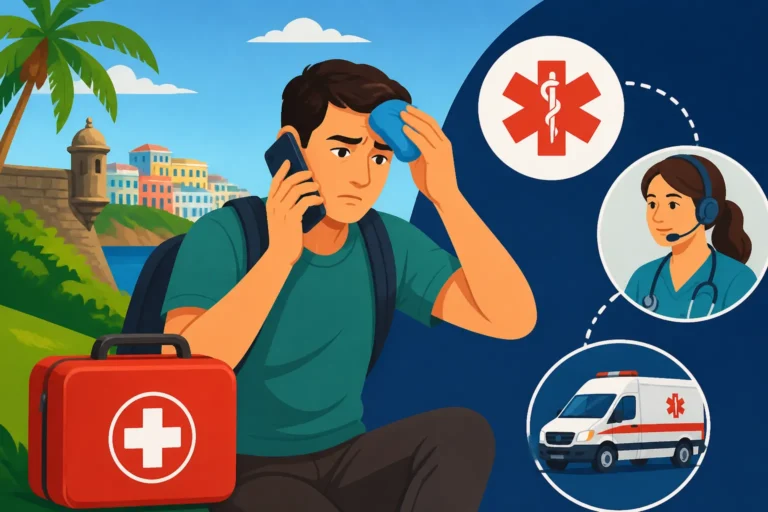
In a true emergency, your priority isn't finding someone who speaks English—it's getting to the nearest stabilization point. However, knowing where to go can ensure that once you are stable, you can communicate your needs effectively.
Emergency Numbers and Immediate Steps
The emergency number in Puerto Rico is 911, just like on the mainland. Most dispatchers in the metro area are bilingual, but in rural areas, this can be hit or miss. If you are in a situation where you cannot communicate, focus on giving your location and the word "Emergencia."
For a deeper dive into what to expect in these high-stress moments, refer to Emergency Medical Care in Puerto Rico: What Every Resident Needs to Know. It covers the logistics of ambulance services and which ERs are best equipped for specific traumas.
Choosing the Right Emergency Room
If you have the luxury of choice (e.g., you are being driven by a friend rather than an ambulance), head to the ERs attached to the major hospitals mentioned earlier. Ashford and Pavía are excellent for English speakers. They have dedicated triage teams that are used to handling tourists and expats.
If you are covered by an international policy like SafetyWing, their emergency assistance line can be a vital resource. They can help coordinate with the hospital and ensure that the facility understands your coverage, which is one less thing for you to worry about while in pain.
Follow-up Care and Prescriptions
After an ER visit, you will likely be given a "receta" (prescription). Most major pharmacy chains like Walgreens and CVS are ubiquitous in Puerto Rico and their systems are entirely in English. If you prefer a local "farmacia," you might find shorter lines, but slightly more Spanish. For a complete walkthrough on how to handle your meds, see Prescription Medications and Pharmacies in Puerto Rico: The Complete Guide.
Practical Tips for Smooth Communication
Even with the best planning, you will encounter moments where things get lost in translation. Here is how to handle them like a pro.
- Use Translation Apps: Google Translate is good, but DeepL is often more accurate for medical terminology. Use the "Conversation" mode to speak into the phone and have it play back in Spanish for the staff.
- Bring a Bilingual Friend: If you are heading into a complex consultation, don't be afraid to ask a local friend or a bilingual neighbor to come along. Puerto Ricans are incredibly helpful and often happy to assist.
- Confirm Insurance Early: Nothing stalls a medical visit like insurance confusion. Whether you have a local plan or an expat-friendly option like SafetyWing, call ahead or check the portal to ensure your doctor is in-network. If you're still in the process of getting set up, read How to Get Health Insurance When You Move to Puerto Rico to understand your options.
Finding an English-speaking doctor in Puerto Rico takes a little more effort than it does in Chicago or Miami, but the quality of care is exceptional once you find your match. Don't let the language barrier stop you from seeking the care you deserve. With the right tools and a bit of "paciencia," you'll find a medical team that makes you feel right at home in the Caribbean.
Disclaimer
The information provided in this guide is for educational and informational purposes only and does not constitute professional medical or legal advice. Always seek the advice of a qualified healthcare provider regarding any medical condition or insurance coverage. Healthcare regulations and provider availability in Puerto Rico are subject to change.