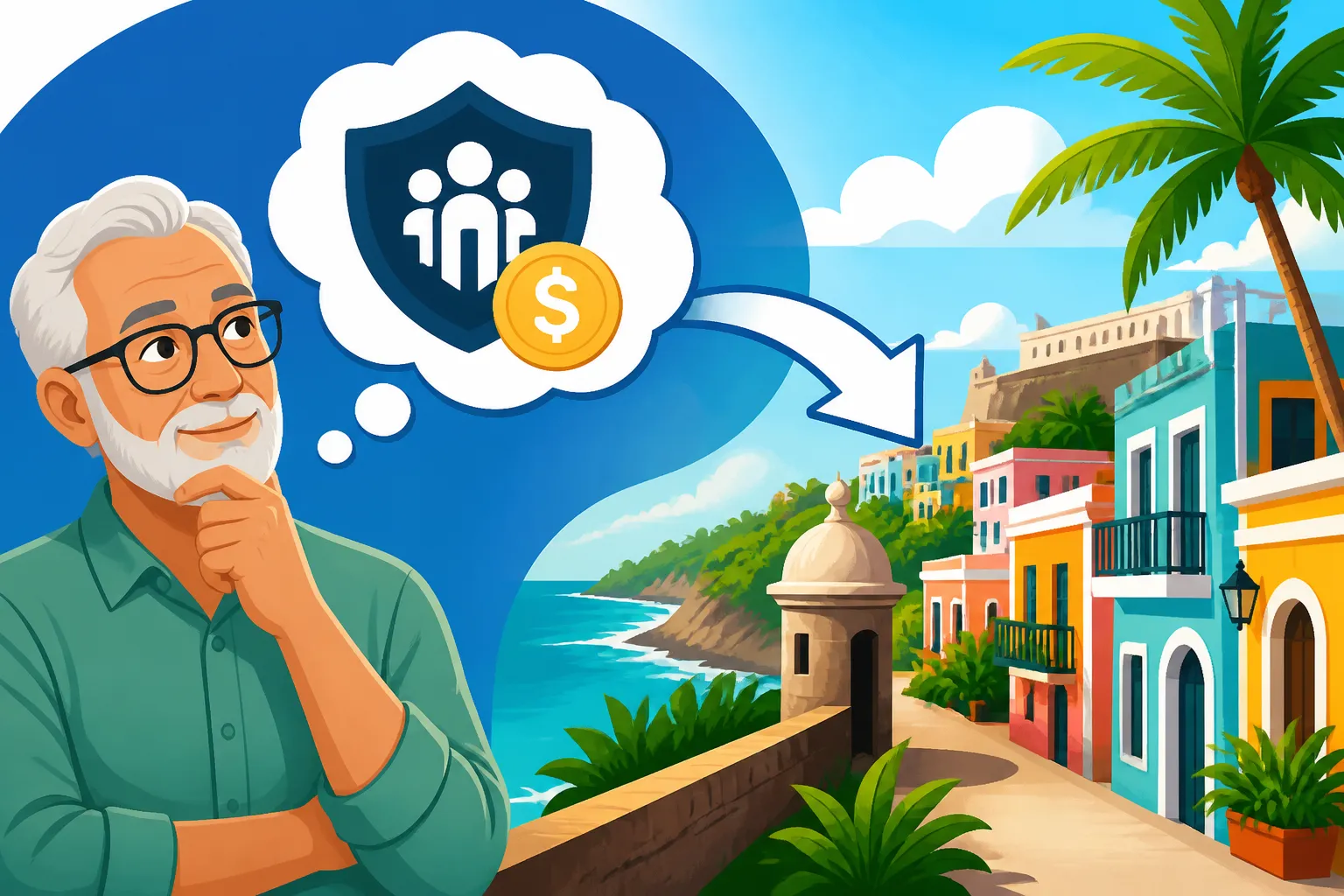
What Happens to My Social Security If I Move to Puerto Rico?
One of the biggest anxieties many folks have when contemplating a move to our beautiful island of Puerto Rico is the big question mark hanging over their hard-earned Social Security benefits. Will they still get them? Will anything change? This guide is here to untangle that knot of worry, providing a clear, empathetic breakdown of exactly how your Social Security works when you establish your life here in Puerto Rico.
Understanding Social Security for Puerto Rico Residents
Let's cut right to the chase and put your mind at ease on a crucial point: if you are a U.S. citizen or legal resident who has contributed to the Social Security system, your Social Security benefits do not stop just because you move to Puerto Rico. Puerto Rico is part of the U.S. system, and the Social Security Administration (SSA) treats residents here much the same as those on the mainland when it comes to eligibility and benefit payments. This is a common misconception, often fueled by other federal programs that do have different rules for the island, but Social Security isn't one of them. You’ve paid into the system, and those benefits are yours.
The continuity of your Social Security benefits is a massive relief for many. Imagine spending decades working, knowing that safety net is there for your retirement or in case of disability, only to wonder if it vanishes when you choose a new home. That’s a valid concern, and thankfully, in this instance, the system works in your favor. It allows you to plan your move with one less enormous variable to worry about, letting you focus on other important aspects, like establishing your new life or even exploring how to get your Puerto Rico Driver's License and ID.
Eligibility and Contributions
The rules for becoming eligible for Social Security benefits don't change when you move to Puerto Rico. You still need to have worked and paid Social Security taxes for a certain number of years, accumulating "credits." Most people need 40 credits, which typically translates to 10 years of work, but the exact number can vary depending on your age and the type of benefit you're applying for. These credits are earned whether you worked on the mainland, in Puerto Rico, or a combination of both. It's a national system, not a state-by-state or territory-by-territory one, in this regard.
For example, if you worked 20 years in New York and then moved to Puerto Rico and worked another 5 years, all those contributions count towards your Social Security eligibility. Your earnings record follows you. The amount of your benefit will still be calculated based on your lifetime earnings, specifically your highest 35 years of earnings, regardless of where those earnings were accumulated within the U.S. system. This means that your monthly check, when it arrives, reflects your overall contributions and not a localized recalculation.
Types of Social Security Benefits
Social Security isn't just about retirement checks; it's a comprehensive program that offers several types of benefits, all of which apply to eligible residents in Puerto Rico.
Retirement Benefits: This is what most people think of when they hear "Social Security." You can start receiving retirement benefits as early as age 62, but your benefits will be permanently reduced. For full retirement benefits, you need to wait until your Full Retirement Age (FRA), which is 66 or 67 depending on your birth year. If you delay claiming benefits past your FRA, up to age 70, you can earn delayed retirement credits, which will result in a higher monthly payment. All these options remain available to you in Puerto Rico.
Disability Benefits: If you become severely disabled and are unable to work, you may be eligible for Social Security Disability Insurance (SSDI). This benefit is for those who have worked long enough and recently enough to be covered. The application process and eligibility criteria for SSDI are the same for residents of Puerto Rico as they are for mainland residents. It involves a medical review to determine the severity of your condition and its impact on your ability to perform substantial gainful activity.
Survivors Benefits: In the unfortunate event of a worker's death, certain family members may be eligible for survivor benefits. This includes widows, widowers, divorced spouses, and dependent children. These benefits help provide a financial safety net for families after the loss of a loved one who contributed to Social Security. The rules for qualifying for and receiving these benefits are also consistent across the entire U.S. system, including Puerto Rico.
Myth vs. Reality: Mainland vs. Island Social Security
One of the biggest sources of confusion and frustration for expats moving to Puerto Rico is distinguishing between the federal programs that do treat the island differently and those that don't. While some federal welfare programs, like Supplemental Security Income (SSI), have different or no applicability here, Social Security (retirement, disability, survivors) is largely seamless.
The reality is that your Social Security account is maintained by the federal government, and your benefits are federal payments. There's no "Puerto Rico Social Security" that differs from "Mainland Social Security." Your benefit amount, the rules for claiming, and the method of payment are uniform. What can differ are related programs, like how Medicare integrates with local health plans or, more notably, the exclusion of most Puerto Rico residents from SSI, a distinct program from Social Security. It's easy to lump all federal benefits together, but it’s crucial to understand these distinctions as you plan your move. For a broader overview of these interactions, you might want to look into Understanding Social Security, Medicare and Retirement in Puerto Rico.
Receiving Your Social Security Benefits in Puerto Rico
So, you've moved, you're enjoying the sunshine, and you're wondering how those Social Security checks will actually land in your bank account. Good news: it's a straightforward process, largely mirroring how payments are made on the mainland. The SSA actively serves residents in Puerto Rico, and they've streamlined the payment process to make it as hassle-free as possible.
However, just like with any major life change, a little proactive planning can prevent a lot of headaches down the line. It's not enough to just assume everything will switch over automatically; you need to inform the SSA of your new address and banking details. This is especially true if you are also in the process of establishing your bona fide residency in Puerto Rico.
Direct Deposit and Banking
The most common and efficient way to receive your Social Security benefits in Puerto Rico is through direct deposit into a local bank account. This is a standard federal requirement, as the U.S. Treasury mandates electronic payments for most federal benefits. If you currently receive your benefits via direct deposit into a mainland bank, you have a couple of options. You can either keep receiving payments into your mainland account, or you can open a new account with a bank here in Puerto Rico.
Many expats choose to open an account with a local bank like Banco Popular, Oriental Bank, or FirstBank. This often makes day-to-day finances easier, especially if you're establishing local roots. When you're ready to make the switch, you'll need to provide your new bank's routing number and your account number to the Social Security Administration. You can usually do this online through your My Social Security account, by phone, or by visiting a local SSA office. Remember, getting your finances in order is a key part of your relocation, so getting a head start on The Newcomer's Guide to Opening a Bank Account in Puerto Rico can save you a lot of time and stress.
Reporting Changes and Staying Compliant
Moving is a big deal, and there are many moving parts. But don't let the excitement of a new life in Puerto Rico distract you from updating your official records. The Social Security Administration needs to know your current address and contact information. This is vital not just for receiving correspondence, but also for ensuring they can reach you if there are any questions about your benefits.
If you're already receiving benefits, it's crucial to inform the SSA of your new Puerto Rico address as soon as possible. You can typically update your address online via your My Social Security account, by phone, or in person at one of the SSA field offices located across the island. Ignoring this step can lead to delays in receiving important notices or, in rare cases, even a temporary suspension of benefits if the SSA can't contact you. Similarly, if your banking information changes, update that promptly too. Being proactive ensures that your benefits continue without a hitch while you focus on enjoying your new home. For those still planning their move, services like Sirelo can help organize the vast number of tasks, including remembering to update essential government agencies.
Impact on Other US Benefits
While your core Social Security benefits remain largely unaffected by a move to Puerto Rico, it's important to understand how this move might interact with other federal programs you might be receiving or be eligible for.
Medicare: This is a big one. Medicare generally does cover U.S. citizens and permanent residents in Puerto Rico. If you're eligible for Social Security retirement or disability benefits, you'll likely be eligible for Medicare Part A (hospital insurance) and Part B (medical insurance). However, the landscape of Medicare Advantage plans (Part C) and Part D (prescription drug plans) in Puerto Rico can differ from the mainland. You'll want to explore local plan options, as the provider networks and specific coverages can vary. It's a critical area to research thoroughly, and articles like Understanding Medicare and Medicare Advantage in Puerto Rico (2027) are excellent starting points.
Supplemental Security Income (SSI): This is where many people encounter a significant difference. Unlike Social Security retirement, disability, and survivors' benefits, the Supplemental Security Income (SSI) program generally does not apply to residents of Puerto Rico. SSI is a needs-based program for low-income individuals who are aged, blind, or disabled, and its rules are different. There are limited exceptions, primarily for certain children and students, but for most adults who would qualify for SSI on the mainland, those benefits cease upon establishing residency in Puerto Rico. This is a point of considerable frustration for many and is a critical factor to consider in your financial planning for your move. You should factor this into your overall financial assessment, along with other considerations such as The Complete Guide to Cost of Living in Puerto Rico (2026).
Navigating Medicare and Supplemental Security Income (SSI) in Puerto Rico
The interplay between your Social Security benefits and other federal programs, particularly Medicare and Supplemental Security Income (SSI), is often where the biggest headaches and surprises lie for new residents in Puerto Rico. While Social Security retirement, disability, and survivor benefits transition relatively smoothly, these two programs have distinct nuances that demand your careful attention and understanding. It’s crucial not to conflate them, as their applicability and structure on the island vary significantly from what you might expect based on mainland experience. This is one of those areas where you really need to drill down into the specifics, because a misunderstanding can have a huge financial impact.
Medicare Enrollment and Coverage
For most individuals receiving Social Security benefits, eligibility for Medicare is often automatic upon turning 65 or after receiving disability benefits for 24 months. Medicare Part A (hospital insurance) and Part B (medical insurance) are available to eligible residents of Puerto Rico, just as they are on the mainland. You'll use your Medicare card to access care at facilities and with providers who accept Medicare in Puerto Rico.
However, the options for Medicare Advantage (Part C) and Part D (prescription drug coverage) can look a bit different. While a wide array of plans are available, the specific plans, their benefits, and their provider networks are tailored to the Puerto Rico market. It's not uncommon to find that a Medicare Advantage plan you had on the mainland isn't offered here, or that the local alternatives have different co-pays, deductibles, and covered services. Therefore, a diligent review of the available plans during the annual enrollment period is essential. Many expats find they need to proactively research local providers and plans to ensure continuity of care and appropriate coverage. Health insurance options, including private plans, are also something to consider to supplement any gaps. In this context, exploring options from providers like Cigna Global might be relevant if you're seeking broader international coverage or specific benefits not easily found in local Medicare Advantage plans. If you're weighing your options, diving into Health Insurance in Puerto Rico: Plans, Costs and Options Explained (2026) will give you a comprehensive picture.
Supplemental Security Income (SSI) Limitations
Now, let's talk about SSI, because this is often the most jarring difference. As mentioned, the Supplemental Security Income (SSI) program, which provides a minimum income floor for low-income aged, blind, and disabled individuals, generally does not extend to residents of Puerto Rico. This is a significant distinction from Social Security retirement, disability, and survivor benefits. The legal framework excludes the Commonwealth from the primary SSI provisions.
What this means in practice is that if you rely on SSI benefits on the mainland, those benefits will cease when you establish your bona fide residency in Puerto Rico. This can create a severe financial hardship for vulnerable individuals who plan to move here. While Puerto Rico does have its own local assistance programs, they are often not equivalent to SSI in terms of benefit levels or scope. It’s absolutely critical to factor this into your financial planning if SSI is part of your current income. For a detailed understanding of the broader financial landscape, including tax implications, ensure you've read The Complete Guide to Taxes in Puerto Rico for New Residents (2027).
Practical Considerations and Resources for Expats
Moving to a new place, even within the U.S. system, comes with its own unique set of administrative challenges. When it comes to your Social Security, Medicare, and other related benefits, being prepared and knowing where to turn for help can make all the difference. As a veteran expat, I can tell you that assuming things will just sort themselves out is a recipe for frustration. You need to be proactive, informed, and know your resources. This means understanding how working might affect your benefits, and crucially, knowing which local offices and online portals are there to support you through the transition. It’s all part of building your new life, whether you’re planning How to Plan Your Move to Puerto Rico Step by Step (2027) or already enjoying the island life.
Working While Receiving Benefits
Many people, even in retirement, choose to continue working part-time or even start a new venture once they move to Puerto Rico. It’s a great way to stay active, integrate into the local community, and perhaps supplement your income. However, if you are receiving Social Security retirement or disability benefits, there are rules about how much you can earn before your benefits might be reduced.
If you are below your Full Retirement Age (FRA) and work, the SSA will deduct a certain amount from your benefits if your earnings exceed specific annual limits. Once you reach your FRA, these earning limits no longer apply, and you can earn as much as you like without affecting your Social Security retirement benefits. For those on disability benefits, there are also limits on how much you can earn through "substantial gainful activity" (SGA) before your disability benefits may be affected. These rules are federal and apply equally in Puerto Rico. So, if you're thinking of picking up a new gig or starting a business, make sure you understand these earning limits to avoid any surprises. This is particularly relevant if you're also figuring out How to Register as Self-Employed (Trabajador por Cuenta Propia) in Puerto Rico.
Key Agencies and Local Support
The Social Security Administration has several field offices throughout Puerto Rico, including major cities like San Juan, Ponce, and Mayagüez. These offices are your primary point of contact for in-person assistance with any Social Security-related questions, updating your information, or applying for benefits. While many services can be accessed online through your My Social Security account, sometimes a face-to-face conversation with a representative is invaluable, especially when navigating complex situations or language barriers.
The SSA website (ssa.gov) is also a treasure trove of information, offering details on benefits, eligibility, and how to manage your account. You can track your earnings, estimate future benefits, and update your personal information. Don’t underestimate the power of these online tools! Additionally, for Medicare-specific questions, the local State Health Insurance Assistance Program (SHIP), known in Puerto Rico as the Programa de Asistencia para el Seguro de Salud (PASS), can offer free, unbiased counseling on Medicare plans and benefits available on the island. Leveraging these resources will empower you to manage your benefits effectively and ensure a smooth financial transition to your new life in Puerto Rico. Remember, ensuring your bona fide residency in Puerto Rico is crucial for all these considerations, so make sure to consult a guide like Bona Fide Residency in Puerto Rico: The Definitive Tax Guide (2027).
Social Security, Medicare, and SSI: A Comparison for Puerto Rico Residents
Here's a quick overview to help clarify the main differences and similarities in how these federal programs operate for residents of Puerto Rico compared to the mainland U.S.:
| Feature | Social Security (Retirement, Disability, Survivors) | Medicare (Part A, B, C, D) | Supplemental Security Income (SSI) |
|---|---|---|---|
| Eligibility | Same as Mainland U.S. (based on work credits) | Same as Mainland U.S. (based on age/disability) | Generally NOT available to PR residents |
| Benefit Amounts | Same calculation as Mainland U.S. | Standard Part A/B; Part C/D plans vary locally | Not applicable (except for very limited cases) |
| Payment Method | Direct deposit to U.S. or PR bank account | Benefits paid to providers | Not applicable |
| Coverage in PR | Fully covered | Fully covered, but local plan options vary | Generally no coverage |
| Reporting Changes | Required to update address, banking, earnings | Managed through SSA/local plans | Not applicable |
| Local Support | SSA field offices on the island | Local Medicare Advantage plans, PASS program | Limited to non-SSI local assistance programs |
Disclaimer
The information provided in this guide is for general informational purposes only and does not constitute legal, financial, or medical advice. While we strive to provide accurate and up-to-date information, rules and regulations regarding Social Security, Medicare, and related benefits can change. It is always recommended to consult with the Social Security Administration, a qualified financial advisor, a tax professional, or a healthcare expert to get advice tailored to your specific situation before making any decisions related to your relocation or benefits in Puerto Rico.