How Much Are Private School Fees in San Juan?
So, you’re thinking about moving your family to San Juan, Puerto Rico, and naturally, one of the biggest questions looming over your head (besides "Where will we live?") is "What about the kids' schooling?" Specifically, you're probably wondering about private school fees, because let's be real, the public system here, while functional, might not be what you envisioned for your children, especially if they're not yet fluent in Spanish. It's a completely valid concern, and figuring out the financial commitment for private education in a new place can feel like trying to solve a Rubik's Cube blindfolded. This guide is going to pull back the curtain on private school costs in San Juan, helping you understand not just the sticker price, but all those little extras that add up faster than you can say "uniforms."
Understanding San Juan's Private School Landscape
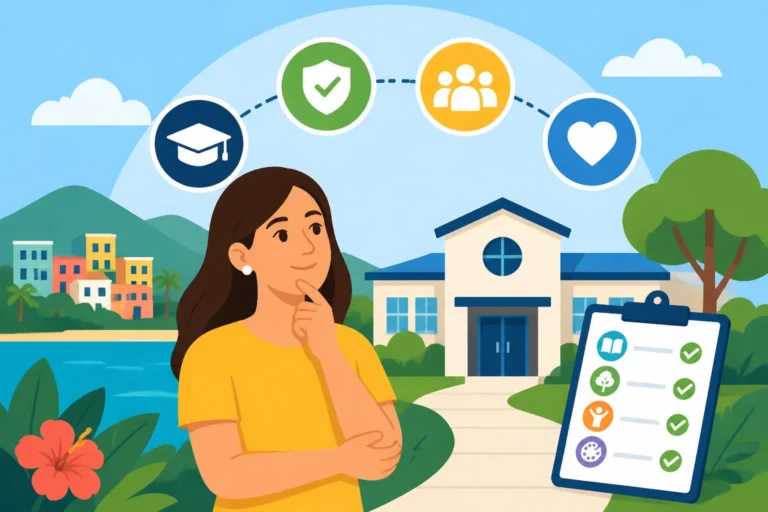
San Juan boasts a diverse array of private schools, each with its own flavor, academic focus, and, you guessed it, price tag. It’s not a one-size-fits-all situation, and the options range from highly selective international schools to more community-focused religious institutions. Navigating this landscape effectively is key to finding a school that fits both your family's educational philosophy and your budget.
Diverse Educational Philosophies and Curricula
When you start looking at private schools in San Juan, you’ll quickly notice there's a spectrum of educational philosophies at play. On one end, you have schools that are incredibly focused on a rigorous, often bilingual, academic curriculum, preparing students for top universities in the States and beyond. These often follow American educational standards, offer Advanced Placement (AP) courses, or even the International Baccalaureate (IB) program. Think schools like St. John's School or Robinson School, both renowned for their challenging academics and diverse student bodies. St. John's, for example, is well-regarded for its college preparatory curriculum, attracting many expat families.
Then you have institutions rooted in religious traditions, predominantly Catholic schools. These schools, such as Academia del Perpetuo Socorro or Colegio San Ignacio de Loyola (for boys), often integrate faith-based instruction with strong academics. While they might still offer a robust curriculum, the overall environment and specific programs could differ significantly from a non-religious institution. The language of instruction in many of these schools can also vary, with some being predominantly Spanish, others fully bilingual, and a few with strong English immersion programs. For newcomers, understanding the language of instruction is critical, as a fully Spanish-speaking environment can be a huge hurdle for a child just arriving from the mainland. It’s not just about the curriculum; it’s about the entire cultural and linguistic immersion your child will experience daily.
The Prestige Factor and Its Influence on Pricing
Let's be honest, in education, as in many things, perceived prestige often correlates directly with cost. Schools with long-standing reputations for academic excellence, state-of-the-art facilities, highly qualified (and often mainland or internationally recruited) teachers, and impressive matriculation rates to elite universities tend to command higher tuition fees. These schools invest heavily in resources, from advanced science labs and athletic facilities to comprehensive arts programs and technology infrastructure.
The demand for these top-tier schools is also high, particularly among expat families who prioritize a seamless transition for their children into a familiar academic system. This demand contributes to their ability to set higher price points. For instance, the Caribbean School in Ponce, or TASIS Dorado (though a drive from San Juan, it’s a premier option for many affluent expat families), are examples of institutions where the investment in facilities and faculty is reflected in their significantly higher tuition. When you’re looking at these schools, you're often paying for a certain level of institutional stability, a proven track record, and a network that can be incredibly valuable for your child's future. It's not just about the classroom; it's about the entire ecosystem the school provides.
Deconstructing Private School Fees in San Juan
Now, for the nitty-gritty: how much are we really talking about? It's never just the "tuition" number you see on the website. There’s a whole universe of fees, some mandatory, some optional, that you need to factor into your annual budget.
Typical Annual Tuition Ranges by School Type
Let's break down what you can expect in terms of annual tuition in San Juan's private schools. Keep in mind these are approximate ranges and can change year to year, so always confirm directly with the schools.
- Top-Tier International/American-Style Schools (e.g., St. John's, Robinson School): For these highly sought-after institutions, you're generally looking at $12,000 to $18,000+ per year for elementary and middle school, often climbing to $15,000 to $20,000+ for high school. If you consider schools like TASIS Dorado, which, while not in San Juan, is a major player, those figures can easily reach $18,000 to $25,000+ annually. These schools pride themselves on a strong English-language curriculum, often preparing students for colleges back on the mainland.
- Reputable Bilingual/Local Private Schools (e.g., Academia del Perpetuo Socorro, Commonwealth-Parkville School, Colegio San Ignacio de Loyola): These schools typically fall into a more moderate range, often between $8,000 and $13,000 per year. They offer strong academics, but might have a more integrated Spanish curriculum or a slightly different emphasis than the more explicitly "international" schools. The exact cost will depend on the grade level, with high school usually being on the higher end.
- Smaller, Community-Focused, or Religious Schools: You might find some smaller private schools, often religiously affiliated, that have lower tuition fees, potentially in the $5,000 to $9,000 per year range. These can be excellent options, but it's crucial to research their accreditation, curriculum, and, importantly for expat families, the prevalence of English instruction.
It’s easy to focus on these tuition numbers, but it’s just the starting point. As you're planning your big move to Puerto Rico, perhaps using a service like Sirelo to compare moving companies and coordinate logistics, remember that budgeting for school needs to be as thorough as planning your household shipment.
Unpacking the "Hidden" Costs and Mandatory Fees
Ah, the "hidden" costs – they’re not truly hidden, just often not explicitly stated on the primary tuition page. These can genuinely inflate your annual expenditure.
- Application Fee: Almost every private school charges a non-refundable application fee, typically ranging from $50 to $250. This is just to get your child's foot in the door for consideration.
- Enrollment/Registration Fee: Once accepted, there's usually a one-time or annual enrollment/registration fee. This can be substantial, anywhere from $500 to $2,000, and is often non-refundable, securing your child's spot.
- Capital Development/Building Fund Fee: Some of the more upscale schools, especially those with ongoing expansions or improvements, might have an annual capital development fee. This can range from a few hundred dollars to over $1,000 per year.
- Uniforms: Most private schools in Puerto Rico require uniforms. The initial cost for a full set (daily wear, PE uniform, perhaps a formal uniform) can be $300 to $800 per child, especially if you need multiple sets. Factor in replacements as kids grow or clothes wear out.
- Books and Supplies: While some schools include basic supplies, textbooks are often an additional cost. Digital textbooks might reduce this, but for physical books, you could spend $300 to $700 per child annually.
- Technology Fee: Many schools now have a mandatory technology fee, covering things like school-provided devices (laptops, tablets), software licenses, and IT support. Expect to pay $200 to $500 per year for this.
- Extracurricular Activities: Sports, clubs, music lessons, debate teams – these are invaluable for a well-rounded education but rarely included in tuition. Fees for these can vary wildly, from $100 per activity to several hundred, plus costs for equipment or travel.
- Lunch Program: If your child participates in the school lunch program, budget for this. It's often comparable to mainland school lunch costs, perhaps $5-$8 per day, adding up to over $1,000 annually.
- Transportation: Unless you live close enough for walking or carpooling, you’ll need to factor in transportation costs. Some schools offer bus services for an additional fee (which can be several hundred dollars per month), or you’ll bear the full cost of gas and wear-and-tear on your own vehicle.
- Field Trips and Special Events: Occasional field trips, school dances, or special events usually come with their own fees.
- ESL/Special Needs Support: If your child requires English as a Second Language (ESL) support or has specific learning needs, some schools offer these services for an additional cost, which can be significant depending on the intensity of support required.
Here’s a quick table to help visualize these common additional costs:
| Fee Type | Estimated Annual Cost (per child) | Notes |
|---|---|---|
| Application Fee | $50 – $250 (one-time) | Non-refundable, paid upon initial application. |
| Enrollment/Registration Fee | $500 – $2,000 (annual) | Non-refundable, secures spot, often covers administrative costs. May be higher for initial enrollment. |
| Capital Development Fee | $0 – $1,500 (annual) | Varies by school, usually for facility upgrades or expansion. |
| Uniforms | $300 – $800 (initial purchase) | Covers a basic set of daily wear and PE uniforms. Replacements will add to this. |
| Books & Supplies | $300 – $700 (annual) | Textbooks, workbooks, and specific school supplies. |
| Technology Fee | $200 – $500 (annual) | Covers device usage, software, IT support. |
| Extracurricular Activities | $100 – $1,000+ (variable) | Depends on participation level, includes sports, clubs, private lessons. |
| Lunch Program | $1,000 – $1,500 (annual) | If utilizing school cafeteria daily. |
| Transportation | $0 – $3,000+ (annual) | Varies widely based on personal transport, carpooling, or school bus services (if available and utilized). |
| Field Trips/Events | $50 – $300 (variable) | Occasional costs for special outings or school events. |
| ESL/Special Needs Support | Variable, potentially $1,000-$5,000+ | Only if required; significant additional costs for individualized support or tutoring. Always inquire about specific programs and their associated fees if applicable to your child. |
This table really drives home that your total annual outlay could be significantly higher than just the tuition figure alone. It's truly eye-opening!
Exploring Financial Aid and Scholarship Opportunities
For many families, especially those new to the island, the thought of these costs can be overwhelming. The good news is that some private schools in San Juan do offer financial aid and scholarships. However, it's a competitive landscape, and the availability and criteria vary widely.
- Need-Based Financial Aid: Many schools have a financial aid program to help families who demonstrate genuine financial need. This often involves a rigorous application process, requiring detailed financial disclosures, similar to what you might encounter for college financial aid on the mainland. The aid is typically disbursed as a grant that doesn't need to be repaid.
- Merit-Based Scholarships: Less common for K-12 private schools in Puerto Rico, but some institutions might offer scholarships based on academic excellence, artistic talent, or athletic prowess. These are usually highly competitive and often reserved for upper-grade levels.
- Sibling Discounts: A few schools offer a discount for families enrolling multiple children. This can be a small percentage off the tuition for the second or third child, which can certainly help ease the burden.
It’s imperative to inquire about financial aid options early in the admissions process. Deadlines for financial aid applications often precede or coincide with general admission deadlines. Don't assume anything; always ask directly what assistance is available and what the application process entails. Remember that while scholarships are a blessing, they are never guaranteed, so you need to budget as if you'll be paying full freight.
Practical Considerations for Expats and New Residents
Moving to Puerto Rico, especially with children, involves a myriad of logistical challenges. Integrating schooling into this transition requires careful planning and realistic expectations.
Navigating the Admissions Process and Timelines
The admissions process for private schools in San Juan can be competitive, especially for the more prestigious institutions and specific grade levels. Here’s what you need to know:
- Early Application is Key: Many schools have application deadlines in the fall or winter for the following academic year. If you're planning a move for the summer, you should ideally be looking at applications the preceding fall. Applying late can mean fewer available spots, particularly for popular grades like kindergarten, middle school entry, or high school freshman year.
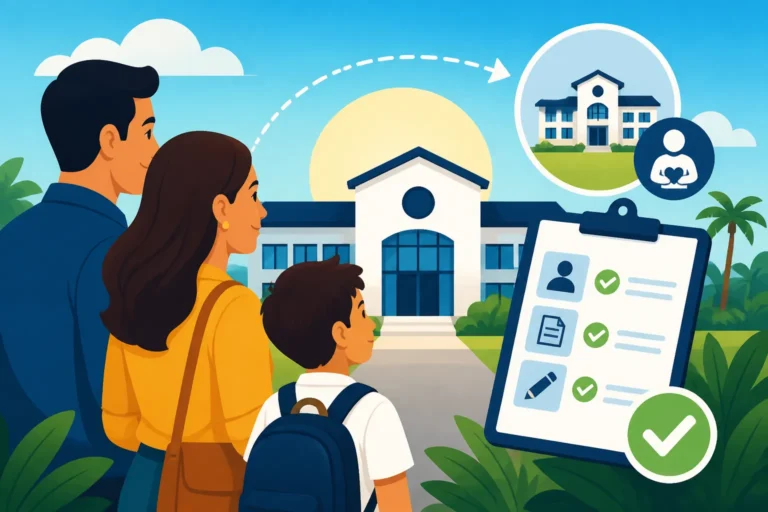
- Required Documentation: Expect to provide a comprehensive package of documents, including academic transcripts from previous schools, standardized test scores (if applicable), teacher recommendations, birth certificates, and sometimes even medical records. If your child is coming from a school with a different grading system, be prepared to explain it. You can find more specific information on what you might need by reading about How to Enroll Your Child in a Puerto Rico School.
- Interviews and Assessments: Many schools require an interview with both the child and parents. Younger children might undergo developmental assessments, while older students could face academic entrance exams in subjects like English, Math, and Spanish. These aren't just formalities; they help the school determine if your child is a good fit and can thrive in their environment.
- School Visits: Whenever possible, plan a scouting trip to Puerto Rico to visit the schools in person. This is invaluable for getting a feel for the campus culture, facilities, and interacting with staff. It also shows your serious interest. As you navigate the island for these visits, having reliable connectivity to schedule appointments or use GPS is critical – remember, an eSIM from a provider like Airalo can be a lifesaver for instant data access without the hassle of a local SIM.
The entire process, from initial inquiry to final acceptance, can take several months. Patience and persistence are crucial here.
Beyond the Classroom: Logistics and Lifestyle Costs
Choosing a school isn't just about the curriculum; it's about how it integrates into your family's daily life.
- Location, Location, Location: San Juan traffic can be intense, especially during school drop-off and pick-up times. Living far from your child’s school can significantly impact your daily commute, adding stress, time, and fuel costs. Many families choose their residential areas based on school proximity. This connects directly to broader decisions about The Best Places to Live in Puerto Rico for Newcomers: A Complete Guide (2027).
- After-School Care and Activities: If both parents work, consider after-school care options. Some schools offer programs, or you might need to arrange private care. Additionally, the availability and cost of external extracurriculars (music lessons, sports clubs outside of school) vary by location and provider.
- Community Integration: Private schools in San Juan often have active parent associations and school communities. Engaging with these can be a fantastic way for your family to meet people, build a support network, and integrate into expat and local circles.
- Curriculum for Life: Think about the long game. Does the school’s curriculum align with your future plans? If you anticipate moving back to the mainland or to another international location, how easily will your child's education transfer?
When you’re mapping out your new life here, it's wise to consider that the choices you make about schooling will profoundly impact your day-to-day existence.
Strategic Budgeting and Long-Term Planning
With all these costs, it’s clear that sending a child to private school in San Juan is a significant financial undertaking. Strategic budgeting is essential.
- Create a Detailed Education Budget: Don't just look at tuition. Factor in all the "hidden" costs discussed earlier. Overestimate slightly to account for unexpected expenses. Revisit this budget annually as fees can increase. For a broader financial picture, you might want to consult The Complete Guide to Cost of Living in Puerto Rico (2026) to see how school costs fit into your overall expenses.
- Consider Multi-Year Costs: If you have multiple children, or if your child is entering a lower grade, multiply these annual costs by the number of years they’ll be attending. This can be a sobering but necessary exercise for long-term financial planning.
- Explore Savings and Investment Options: If you’re coming from the mainland, consider how your existing 529 plans or other education savings vehicles might apply (or not apply) while living in Puerto Rico. Seek professional financial advice for cross-jurisdictional planning.
- Factor in Inflation: Education costs tend to rise steadily. Don't assume today's tuition will be tomorrow's. Build a small buffer into your budget for annual increases.
Choosing a private school in San Juan is a deeply personal decision, balancing academic aspirations with financial realities. It's a journey that starts well before you even set foot on the island, and requires meticulous research, proactive engagement, and a good dose of financial planning. But with the right approach, you can find a wonderful educational home for your children as you embark on your exciting expat adventure in Puerto Rico.
Disclaimer
Please note that the information provided in this article is for general informational purposes only and is subject to change. Tuition fees, additional costs, and admissions policies for private schools in Puerto Rico can vary significantly and are updated periodically by the individual institutions. It is highly recommended to contact the schools directly for the most current and accurate information regarding their fees, financial aid options, and application procedures. We are not financial advisors, and this content should not be construed as financial advice. Always consult with a qualified financial professional for personalized guidance.