Understanding Solar Power and Backup Generators in Puerto Rico
Oh, the joy of moving to a tropical paradise like Puerto Rico! There's so much to love, from the incredible culture to the stunning beaches and vibrant ambiente. But let's be real for a moment: one thing that consistently vexes even the most seasoned expat is the island's electricity situation. If you’re considering making Puerto Rico your home, understanding how to keep your lights on and your AC running is not a luxury; it’s a fundamental part of maintaining your sanity and comfort. This guide is here to walk you through the ins and outs of solar power and backup generators, helping you navigate the sometimes-frustrating reality of our beloved island's power grid.
The Reality of Puerto Rico's Power Grid and Why Alternatives Are Essential
When you first arrive in Puerto Rico, you quickly realize that the rhythm of life here is different. That often includes the rhythm of your electricity supply. While progress is constantly being made, the infrastructure has faced significant challenges, making alternative power solutions less of a 'nice-to-have' and more of an 'absolute necessity' for many residents. It’s not just about comfort; it’s about stability and peace of mind.
The Legacy of Hurricane María and Ongoing Grid Challenges
For those of us who lived through it, Hurricane María in 2017 was a watershed moment. It didn't just knock out power; it decimated the entire grid, leaving many without electricity for months, or even a year or more in some rural areas. That experience fundamentally reshaped how residents view power here. While that was an extreme event, its impact highlighted the grid's vulnerabilities, and unfortunately, those vulnerabilities haven't entirely disappeared.
Today, LUMA Energy manages the transmission and distribution of electricity. They've been working hard to modernize the system, but the grid still experiences frequent, sometimes unpredictable, outages. These can range from a quick flicker to several hours, or even full-day events, especially during bad weather or peak demand. It’s a frustrating reality that many newcomers aren’t prepared for, and it can significantly impact everything from your work-from-home setup to simply keeping your food cold. Understanding your utilities, especially electricity, is crucial here, and you'll find more details in our guide on How to Set Up Electricity (LUMA) in Your Puerto Rico Home.
The Impact of Power Outages on Daily Life
Imagine this scenario: it’s a sweltering July afternoon, 90 degrees with 80% humidity, and suddenly, everything goes silent. Your AC stops, the fridge goes quiet, and your internet router is dark. If you’re working remotely, that means lost productivity. If you have sensitive medical equipment, it could be a serious concern. Beyond the obvious, outages impact food safety, interrupt sleep, and can even compromise the security of your home if your alarm system relies solely on grid power.
For families, it means finding ways to entertain kids without screens or air conditioning, and figuring out how to cook without an electric stove. It's not just an inconvenience; it can be genuinely disruptive and even costly if you have to throw out spoiled groceries or miss important work deadlines. This is precisely why proactively planning for alternative power, whether it’s through solar or a generator, is a key step in truly settling into life here. It ensures that when the unexpected happens, you're not left entirely in the dark, literally or figuratively.
Diving Deep into Solar Power in Puerto Rico
Solar power has become incredibly popular in Puerto Rico, and for very good reason. With abundant sunshine almost year-round, the island is a prime location for harnessing the sun's energy. Many homes and businesses have made the switch, embracing a more resilient and sustainable way of life. It’s a significant investment, but one that offers substantial long-term benefits and a measure of independence from the grid.
The Pros and Cons of Going Solar on the Island
Opting for solar in Puerto Rico comes with a compelling list of advantages, but also some considerations. On the pros side, energy independence is perhaps the biggest draw. Imagine most outages happening and your lights don’t even flicker – that’s the dream. Over the long term, you can achieve significant savings on your electricity bill, especially as energy costs continue to fluctuate. Solar is also environmentally friendly, reducing your carbon footprint, which is a big plus for many who choose to move to an island paradise. Furthermore, a well-installed solar system, particularly one with battery backup, significantly increases your property value and provides incredible resilience during hurricane season. Many new residents consider this a vital part of their overall The Complete Guide to Cost of Living in Puerto Rico (2026).
However, there are cons. The upfront cost is substantial, easily ranging from $20,000 to $50,000 or more for a comprehensive system with battery storage. While there are federal tax credits and some local incentives, this initial outlay can be a barrier. Installation can be complex, requiring permits and coordination with LUMA Energy for interconnection, which can sometimes be a slow process. Finally, while solar panels are durable, they do require occasional cleaning and maintenance, and batteries have a finite lifespan and eventual replacement cost.
Types of Solar Systems and What's Right for You
When considering solar, you'll encounter a few main types of systems, each with its own characteristics:
- Grid-Tied Systems (without battery backup): These are the simplest and most common. Your solar panels generate electricity, and any excess is sent back to the grid, often earning you credits (net metering). When your panels aren't producing enough (at night, or on very cloudy days), you draw power from LUMA. The catch? If the grid goes down, your system automatically shuts off for safety reasons (to prevent backfeeding the grid and endangering utility workers). So, no power during an outage.
- Grid-Tied Systems with Battery Backup: This is the sweet spot for many in Puerto Rico. You get the benefits of grid-tied systems, but with the added resilience of battery storage. When the sun shines, your panels power your home and charge your batteries. If the grid goes down, your home seamlessly switches to battery power, keeping your essential appliances running. Brands like Tesla Powerwall, Enphase, and LG Chem are popular choices for home battery storage solutions here. This option offers the best of both worlds, ensuring you have power even when the grid fails.
- Off-Grid Systems: These systems are entirely independent of the utility grid. All power comes from your solar panels, stored in a large battery bank. While offering ultimate independence, they are generally more expensive and complex for typical residential use, primarily found in very remote areas where grid connection is unavailable or cost-prohibitive.
Choosing the right system depends on your budget, energy needs, and desired level of independence. Most expats gravitate towards grid-tied systems with battery backup for the peace of mind it provides during those inevitable LUMA interruptions.
Navigating Solar Installation and Incentives
Once you've decided to go solar, the next steps involve a bit of homework and patience. First, get several quotes from reputable local installers. They will assess your home's energy consumption, roof suitability, and provide system designs tailored to your needs. Don't just pick the first guy you find on Google; ask for references and check their licenses! Local companies are often well-versed in the specific climate challenges and permitting processes unique to Puerto Rico.
The installation process typically involves:
- Site Assessment and Design: A detailed evaluation of your home and energy usage.
- Permitting: Your installer will handle obtaining necessary permits from the relevant municipal authorities and the Electric Power Authority (AEE) or LUMA. This step can sometimes be the longest due to bureaucratic processes.
- Installation: Mounting panels, installing inverters, wiring, and battery integration.
- Interconnection: This is where your system officially connects to the LUMA grid, allowing for net metering if applicable. An inspection by LUMA is usually required.
Financially, there are still federal incentives like the Investment Tax Credit (ITC), which currently offers a significant percentage off the cost of your solar system. While Puerto Rico doesn't always qualify for all mainland federal programs, the ITC is generally available. It's also worth discussing financing options with your chosen installer or local banks, as many offer specific solar loans. Some companies also offer leasing options, but it's important to understand the terms fully. A system like this also adds considerable value to your home, which is a good point to remember if you’re looking into How to Get a Mortgage to Buy a Home in Puerto Rico.
The World of Backup Generators: Your Immediate Power Solution
While solar offers long-term sustainability and resilience, a backup generator provides an immediate, robust solution for power outages, especially crucial for those who prefer not to make the larger upfront investment in a full solar-plus-battery system. Generators are the workhorses of outage management, providing power reliably as long as they have fuel.
Generator Types and Fuel Options
When it comes to generators, you generally have two main categories:
- Portable Generators: These are the most common and budget-friendly option for many households. They typically run on gasoline, though some models can be dual-fuel (gasoline and propane).
- Pros: They are relatively inexpensive, easy to move around, and can be used for various purposes beyond just home backup. You can find them at local hardware stores or online.
- Cons: They require manual starting (unless you get an electric start model), need to be refueled frequently, and produce exhaust fumes that must be properly vented. They can also be quite noisy, which might upset the neighbors, and storing gasoline safely in a tropical climate requires careful consideration.
- Standby Generators: These are permanently installed outside your home, much like an AC unit, and are designed to kick on automatically when the power goes out. They usually run on propane or natural gas (if available in your area), or diesel for larger commercial units.
- Pros: They offer seamless, automatic power transfer, are generally quieter than portable units (though still audible), and can power a significant portion, or even your entire home, for extended periods, provided you have enough fuel. No more fumbling in the dark to start a machine!
- Cons: They are a substantial investment, often costing many thousands of dollars for the unit and professional installation. They require a dedicated fuel line (for natural gas or a large propane tank) and professional maintenance.
For newcomers thinking about their initial setup and trying to minimize hassle during their first few months, especially if you’re working through The Complete Guide to Moving to Puerto Rico: Your First 90 Days (2027), a portable generator can be a good interim solution. However, for long-term comfort and convenience, a standby unit is often preferred by those with the budget.
Sizing and Installation Considerations
Choosing the right generator isn't about buying the biggest one you can find; it's about accurately assessing your power needs. You'll need to decide if you want to power only essential items (fridge, a few lights, a fan, internet router) or your entire home, including air conditioning.
- For essential items: A 3,000-5,000 watt portable generator might suffice. List out all the devices you want to power, check their wattage, and sum them up. Remember to account for starting wattage (surge) for motors like refrigerators.
- For whole-home power (including AC): You're looking at a larger portable generator (7,000+ watts) or, more realistically, a standby generator (10,000-22,000+ watts). An electrician can help you with this calculation.
Installation for standby generators is complex and must be done by a licensed professional. It involves:
- Placement: Choosing a suitable outdoor location that complies with local codes (setbacks from windows, property lines) and has a sturdy concrete pad.
- Fuel Supply: Connecting to your home's natural gas line or installing a large propane tank.
- Electrical Hookup: Installing an automatic transfer switch (ATS) that senses power outages and safely switches your home's electricity between the utility grid and the generator. This is non-negotiable for safety.
- Permitting: Again, permits are required, and your installer should handle this.
Always consider noise levels when installing a generator. While standby units are engineered to be quieter, they still make noise, and keeping good relations with your neighbors is key. Especially in denser neighborhoods, a noisy generator can quickly become a point of contention.
Maintenance and Safety for Generators
A generator is a machine, and like any machine, it needs regular care to perform when you need it most.
- Regular Exercise: Standby generators typically have an automatic "exercise" cycle, running themselves for a short period once a week or month to keep components lubricated and ensure readiness. For portable generators, you should manually start and run them for 15-20 minutes every month or two.
- Fluid Checks: Just like a car, check the oil levels, and change the oil and filter according to the manufacturer's recommendations (usually every 50-100 hours of operation).
- Spark Plugs and Air Filters: These also need periodic inspection and replacement.
- Fuel Management: For gasoline portable generators, use fresh fuel and consider a fuel stabilizer if storing fuel for extended periods. Keep propane tanks full.
Safety is paramount. Carbon monoxide poisoning is a real and deadly risk. Generators must never be operated indoors, in garages, or too close to windows. Always place them outdoors in a well-ventilated area, far from living spaces. Store fuel in approved containers away from heat sources. Have working carbon monoxide detectors in your home. These precautions are especially critical during hurricane season, so be sure to review our comprehensive guide on Understanding How to Prepare Your Home for Hurricane Season in Puerto Rico.
Cost Analysis: Solar vs. Generator – Making the Investment
Deciding between solar and a generator often boils down to balancing upfront cost with long-term savings, convenience, and your desired level of energy independence. Both are investments, but they offer different returns and address the power challenge in distinct ways.
Upfront Costs and Long-Term Savings
Let's break down the financial picture for both solutions:
-
Solar Power: The initial investment for a robust grid-tied solar system with battery backup in Puerto Rico is significant. Expect to pay anywhere from $25,000 to $60,000 or more, depending on your home's size, energy consumption, and the quality of components (panels, inverters, batteries). This includes equipment, installation, and permitting. However, the long-term savings can be substantial. You're effectively prepaying for decades of electricity. Once the system is paid off, your energy costs plummet, primarily to a fixed minimum connection fee with LUMA (if grid-tied) and occasional maintenance. Your property value will also likely increase. For newcomers, thinking about the overall The Complete Guide to Cost of Living in Puerto Rico (2026), these monthly savings can make a big difference in the household budget over time.
-
Backup Generators: The upfront cost for a generator is generally lower.
- Portable generators: Can range from $500 to $3,000 for a decent unit, plus the cost of extension cords and initial fuel.
- Standby generators: Will cost more, typically $7,000 to $20,000+ for the unit and professional installation (including the concrete pad, electrical work, and fuel line).
However, generators come with ongoing costs. You'll need to purchase fuel (gasoline, propane, or diesel), and fuel prices can fluctuate. Maintenance costs, including oil changes and servicing, are also recurring. Unlike solar, a generator doesn't reduce your monthly utility bill; it merely provides backup during outages.
Financing Options and Return on Investment
For solar, various financing options exist. Many local and mainland banks offer specific solar loans with favorable terms. Some installers also have partnerships with financing companies. Federally, the Investment Tax Credit (ITC) can significantly reduce your net cost, often allowing you to reclaim 30% of the system's cost as a tax credit. The return on investment (ROI) for solar is typically measured over 7-15 years, after which you essentially enjoy free electricity for the remaining lifespan of your system (panels often come with 25-year warranties). The peace of mind and increased home value are additional, less tangible returns. If you're planning to stay in Puerto Rico long-term, solar is a sound financial decision.
Generators, on the other hand, typically don't have a direct financial ROI in terms of savings on your utility bill. The "return" is primarily in convenience, comfort, and the ability to continue essential functions during an outage. While a standby generator can add a small amount to your home's resale value, it's usually not on the same scale as a comprehensive solar installation. Financing for generators is usually through personal loans or home equity lines of credit, as there are fewer specialized incentives compared to solar.
Comparing Resilience and Convenience
When the power goes out, how do these systems perform?
- Solar with Battery Backup: This system shines (pun intended) in resilience. When LUMA power fails, your home seamlessly switches to battery power. Your solar panels continue to charge your batteries during the day, extending your autonomy indefinitely if you manage your consumption wisely and have sufficient sunshine. It’s silent, clean, and requires no manual intervention. This is a game-changer for day-to-day outages and critical during extended events like hurricanes. You simply don't notice the grid went down.
- Backup Generators: Standby generators offer superb, instant power. They sense the outage, automatically start, and provide power quickly. As long as you have fuel, they will run. For portable units, it's a manual process, requiring you to haul it out, fuel it up, start it, and plug in extension cords. Generators are excellent for immediate, robust power. Their main drawbacks are noise, fuel dependency (and the logistics of storing/refueling), and emissions. For many, a generator is a necessity for keeping key systems like air conditioning or crucial medical equipment operational, especially given the unpredictable nature of outages.
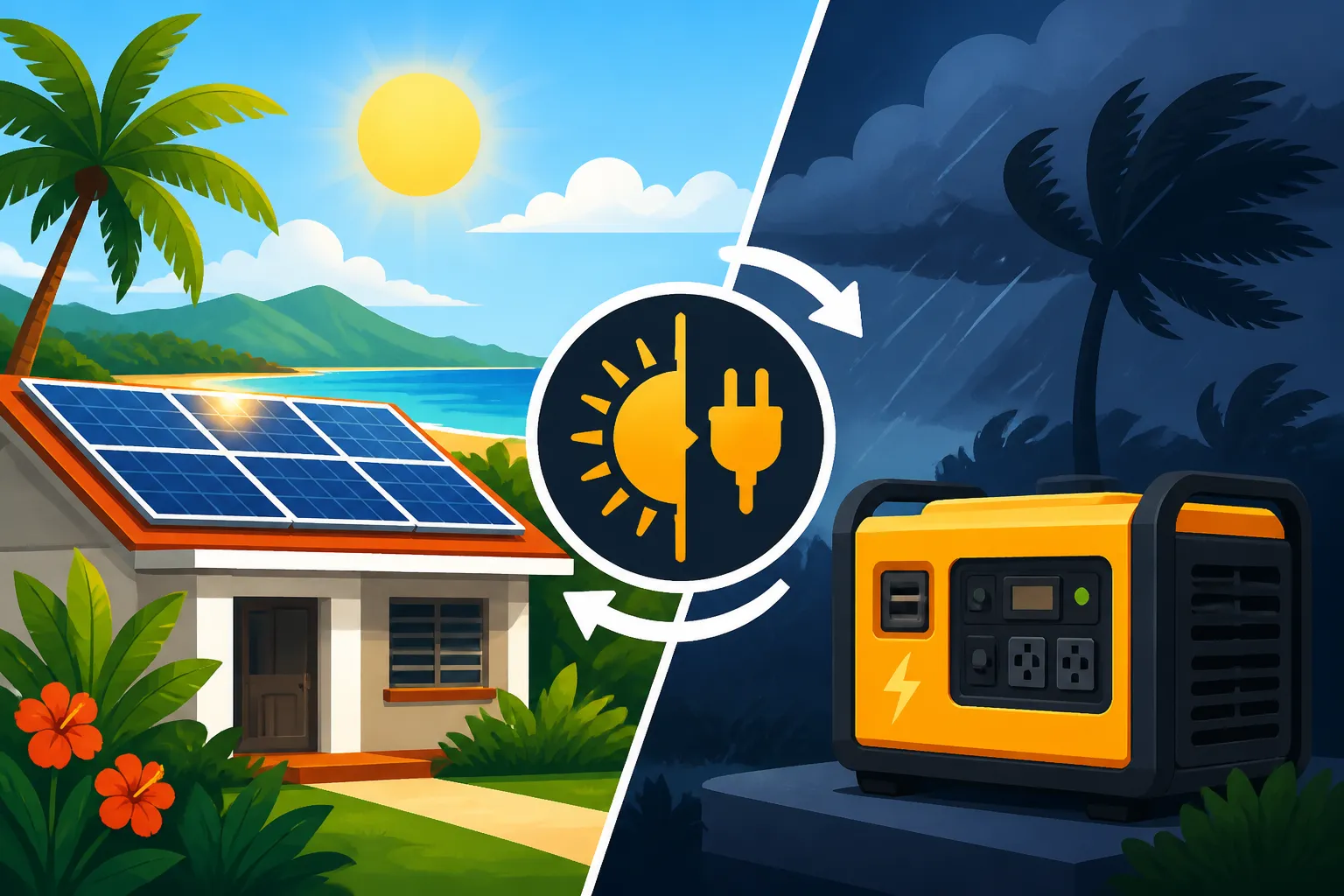
Ultimately, both solutions offer a path to energy security in Puerto Rico. Your choice will depend on your budget, your desire for automation versus manual intervention, and your commitment to renewable energy.
| Feature | Solar Power with Battery Backup | Backup Generator (Standby) |
|---|---|---|
| Upfront Cost | High ($25,000 – $60,000+) | Moderate to High ($7,000 – $20,000+ for standby) |
| Running Costs | Low (minimal utility bill, occasional maintenance) | High (recurring fuel costs, regular maintenance) |
| Fuel Source | Sunlight | Propane, Natural Gas, Diesel, Gasoline |
| Environmental Impact | Very Low (clean, renewable energy) | Moderate to High (fossil fuels, emissions) |
| Noise Level | Silent operation | Moderate to Loud (depending on model and size) |
| Automation | Fully automatic transfer during outages | Fully automatic transfer during outages |
| Maintenance | Panel cleaning, battery monitoring, inverter checks | Oil changes, filter replacement, spark plugs, exercise cycles |
| Lifespan | Panels 25+ years, Batteries 10-15 years | 10-30 years (with proper maintenance) |
| Resale Value Impact | Significantly increases property value | Modestly increases property value |
| Energy Independence | High (can be self-sufficient with sufficient battery storage) | Medium (dependent on fuel supply) |
Practical Tips for Newcomers to Puerto Rico
Moving to Puerto Rico means adjusting to a lot of new things, and managing your home's power supply is definitely one of them. For those who have just completed their relocation or are still in the planning stages, incorporating energy independence into your move plan is a smart move. When you use services like Sirelo to help organize your move, consider how your energy needs fit into the overall picture, from choosing a neighborhood to setting up your new home.
Local Vendors and Professional Help
Choosing the right professionals for solar or generator installation is crucial. Don't underestimate the importance of local expertise. While you might be tempted to go with the cheapest option, vetting your contractors extensively can save you a world of headaches down the road.
- Get multiple quotes: This isn't just about price; it's about comparing proposed systems, warranties, and understanding the different approaches each company takes.
- Check licenses and insurance: Verify that your chosen installer is properly licensed by the Puerto Rico Department of Consumer Affairs (DACO) and has adequate insurance. This protects you in case of accidents or faulty work.
- Ask for references: A reputable company will gladly provide contacts for past clients. Take the time to call them and ask about their experience.
- Look for local expertise: Companies that have been operating on the island for a while understand the unique challenges: the salt air's corrosive effects, hurricane-force winds, and the intricacies of working with LUMA Energy for interconnection and permitting. They'll also be around for service and warranty claims.
For solar, companies like Maximo Solar, Sunrun, and Solarland are common names you might encounter, among many others. For generators, local hardware stores often carry portable units, while specialized electrical contractors handle the sale and installation of standby generators.
Integrating with Your Home Setup and Community
Thinking about how these systems fit into your new island life goes beyond just flicking a switch.
- Noise considerations for generators: If you live in a dense urban area like Condado or Old San Juan, a noisy portable generator can be a source of frustration for your neighbors. Consider quieter inverter generators or the placement of a standby unit to minimize disturbance. In many communities, especially during longer outages, neighbors often work together, sharing resources and checking in on each other, so maintaining good relationships is key.
- Hurricane Season Preparedness: Both solar with batteries and generators are invaluable during hurricane season. If you choose solar, ensure your system is properly installed to withstand high winds. If you have a generator, stock up on fuel well in advance of a storm, as supplies can quickly dwindle. Make sure to consult our detailed guide, Understanding How to Prepare Your Home for Hurricane Season in Puerto Rico.
- Internet and Connectivity: Even with backup power, your internet service might still be affected if the local infrastructure (like the fiber optic lines or cable boxes) loses power. However, with your home powered, you can run your router and charge your devices. For mobile connectivity, consider having an eSIM from a provider like Airalo activated. It can be a lifesaver for staying in touch if your home internet goes down and cell towers are overloaded, allowing you to use cellular data without relying on the local grid entirely. This can also tie into How to Set Up Internet and Cable in Puerto Rico.
- Home Energy Audit: Before making any large investments, consider getting a home energy audit. Understanding where your energy is truly going can help you make more informed decisions about sizing your system and identify ways to reduce consumption, making any backup solution more effective. Investing in energy-efficient appliances, sealing drafts, and optimizing AC usage can reduce your overall power needs.
Living in Puerto Rico is an incredible experience, but it does come with its unique quirks, and managing your electricity is certainly one of them. By understanding your options and planning ahead, you can ensure that your slice of paradise remains a comfortable and reliable haven, no matter what the grid throws your way.
Disclaimer
The information provided in this guide is intended for general informational purposes only and does not constitute professional advice. While we strive to offer accurate and up-to-date information, local regulations, prices, and available incentives can change rapidly in Puerto Rico. We strongly recommend consulting with licensed professionals, such as electricians, solar installers, and financial advisors, to discuss your specific needs and ensure compliance with all applicable laws and regulations before making any decisions related to solar power or backup generators.